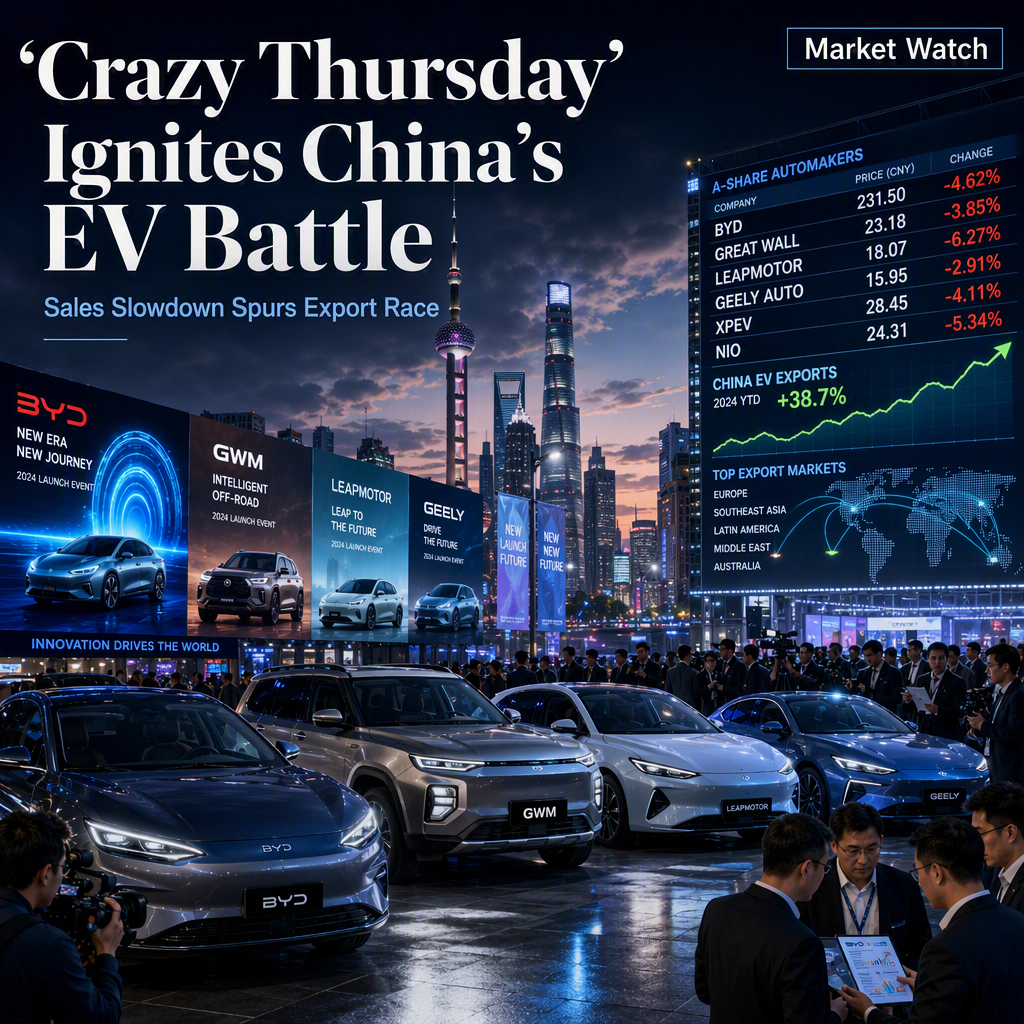
China's electric vehicle (EV) industry recently experienced a surge in new model launches, with at least eight automakers—including major players like Great Wall Motor and smaller companies such as Leapmotor Technology—unveiling new vehicles on a single day last month. Six of these launches were electric or new energy vehicles, underscoring the sector's rapid expansion and the fierce competition among manufacturers. This phenomenon has been dubbed 'Crazy Thursday' by industry insiders, reflecting the intense pace of innovation and market activity [1].
Even BYD, recognized as China's leading EV maker, is feeling the strain of this competitive environment. A BYD executive described the market as 'brutal,' citing the overwhelming number of new EV launches and the pressure to keep up with rivals. The competitive landscape has been further complicated by changes in China's EV subsidy policies, which led to a 16% decline in BYD's first-half sales. This highlights the market's sensitivity to government incentives and regulatory shifts [1].
The influx of new models has raised concerns about oversupply and potential risks to profit margins, especially as domestic demand shows signs of weakening. In response, several automakers, including Great Wall Motor and Leapmotor, are increasing their focus on exports to offset sluggish sales at home. Geely's founder has also warned of 'deglobalization' and advised the company to boost its export targets in light of changing international trade dynamics [1].
Analysts caution that the heightened frequency of launches and the growing number of models could lead to short-term volatility in the shares of EV makers, particularly those unable to differentiate their offerings or secure export markets. BYD's sales decline is expected to exert downward pressure on its stock price, with support anticipated at previous lows seen after subsidy policy changes. Investors are advised to closely monitor government policy updates and export trends as potential catalysts for price movement. Recent sales charts for BYD and other leading automakers show a sharp dip following subsidy adjustments, with a gradual recovery as companies pivot to exports [1].
CONCLUSION
China's EV market is undergoing a period of intense competition and rapid product launches, resulting in both significant risks and opportunities for automakers and investors. With domestic demand softening and profit margins under threat, companies are increasingly looking to exports as a growth strategy. Market participants should remain vigilant regarding policy changes and export developments, which are likely to drive future performance.