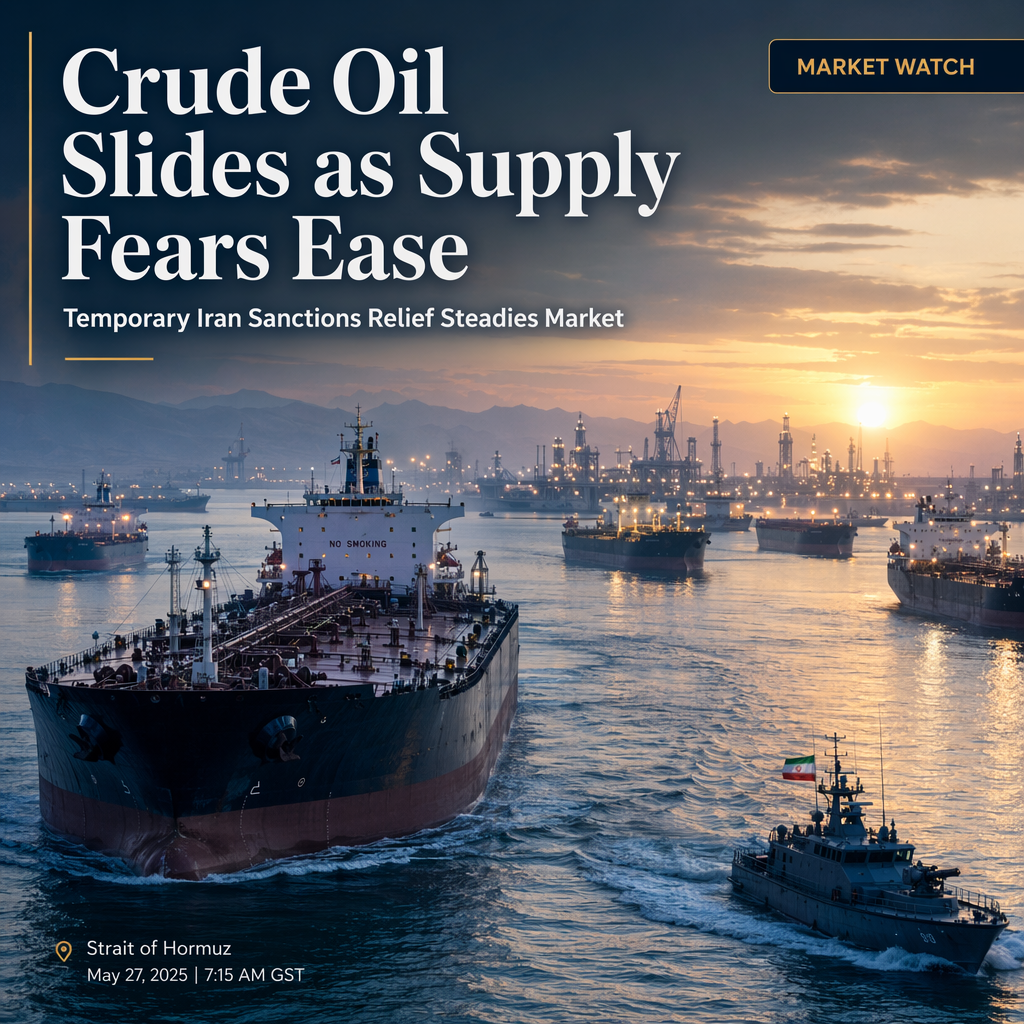
West Texas Intermediate (WTI), the benchmark US crude oil price, is consolidating during the Asian session on Wednesday, trading just above the mid-$72.00s and near its lowest level since early March, which was touched the previous day [1]. The recent decline in WTI prices is attributed to signs of increased shipping activity through the Strait of Hormuz and a temporary easing of sanctions on Iranian crude exports, both of which have alleviated global supply concerns [1]. An Iranian military source told Farsnewsagency that a limited number of vessels are being allowed to pass through the strait each day under coordination with Iran’s Revolutionary Guards Navy [1].
Additionally, the US Treasury Department has issued a temporary 60-day sanctions waiver, authorizing the production, delivery, and sale of Iranian crude oil, petroleum, and petrochemical products. This waiver, valid until August 21, is part of a broader agreement and coincides with progress in US-Iran peace talks and a lull in hostilities in Lebanon, further supporting the case for lower crude oil prices [1].
Despite these bearish factors, traders remain cautious about aggressive selling due to mixed messages regarding Iran’s nuclear commitments. US President Donald Trump stated that Iran had fully agreed to the highest level of nuclear inspections, but Iran's state media, citing the foreign ministry, reported that Tehran had made no new commitments on nuclear inspections [1]. This ongoing uncertainty keeps geopolitical risk premiums in play, providing some support for crude oil prices [1].
Furthermore, the lack of strong follow-through selling below the technically significant 200-day Simple Moving Average (SMA) suggests caution before positioning for deeper losses. Nevertheless, the fundamental backdrop indicates that the path of least resistance for crude oil prices remains to the downside [1].
CONCLUSION
WTI crude oil prices are under pressure due to easing supply concerns and temporary sanctions relief for Iranian exports, but geopolitical uncertainties and technical factors are preventing a sharp decline. The market is likely to remain cautious, with the downside bias prevailing unless new developments shift the supply-demand balance.