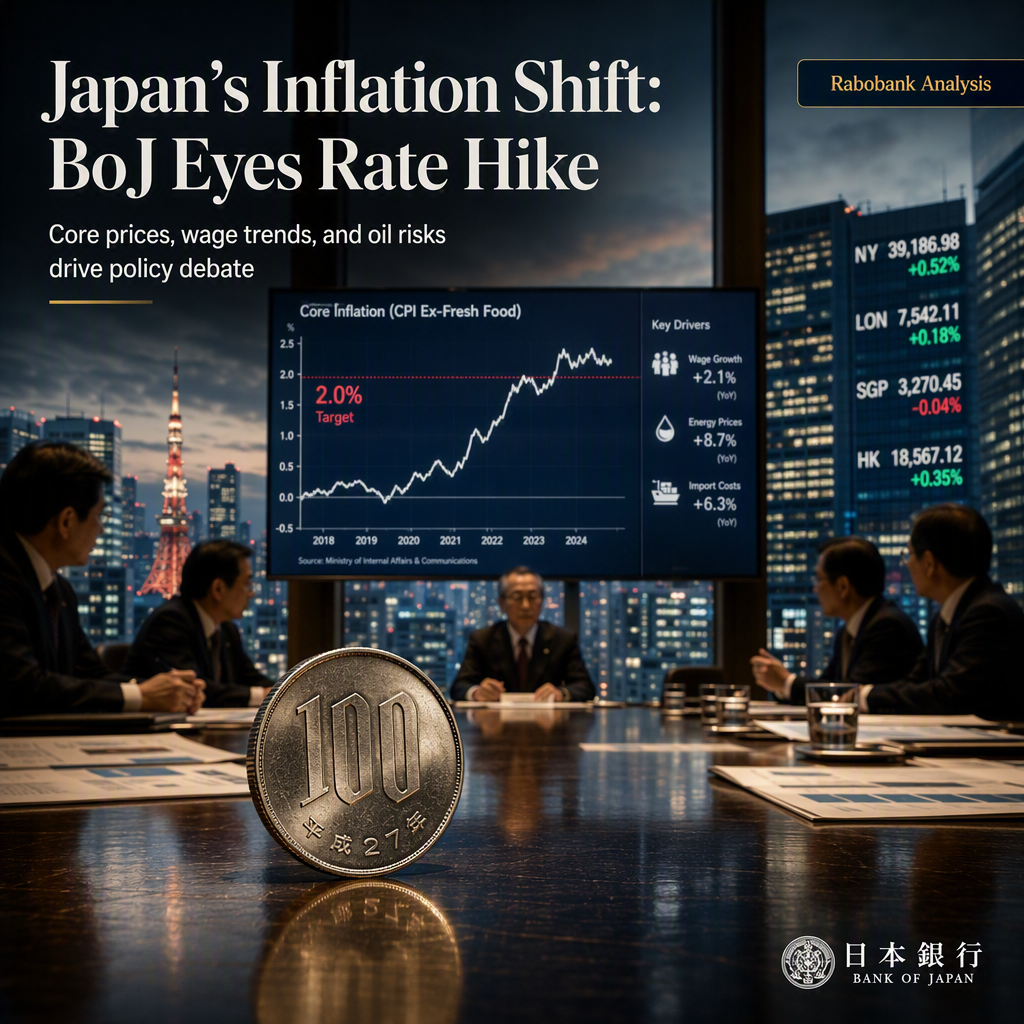
Rabobank's Senior FX Strategist Jane Foley has highlighted the Bank of Japan's (BoJ) increasing focus on core inflation and wage-driven pressures, following decades of deflation in Japan [1]. The report notes that elevated oil prices and ongoing supply risks are contributing to inflationary pressures, with the BoJ warning that core Consumer Price Index (CPI) could exceed its 2% inflation target [1]. This development raises the prospect of a rate hike by the BoJ, with market attention currently centered on a possible move in September or October [1].
Foley points out that while a loosening labor market may reduce the likelihood of second-order price effects, the persistence of high oil prices could prompt more hawkish policy stances among G10 central banks this year, including the BoJ [1]. The report also mentions that the near closure of the Strait of Hormuz presents additional inflationary risks, which could strengthen the US dollar as a safe haven, a scenario considered suboptimal for Japan's Ministry of Finance (MoF) [1].
The BoJ's latest Outlook for Economic Activity and Prices underscores the importance of shifting corporate behavior from cost-cutting to wage hikes, aiming to solidify inflation expectations above the 2% target [1]. Foley suggests that further signs of resilience in the Japanese economy and improved growth expectations would help alleviate fiscal concerns. However, she notes that the Japanese government may need to take additional measures to address market worries about fiscal discipline in order to reassure investors and stabilize the Japanese yen (JPY) [1].
CONCLUSION
Rabobank's analysis indicates that the BoJ is closely monitoring core inflation and wage trends, with a potential rate hike on the horizon if inflation risks persist. Market participants are currently focused on the possibility of a policy move in September or October. The Japanese government may also need to address fiscal discipline concerns to support investor confidence and the JPY.