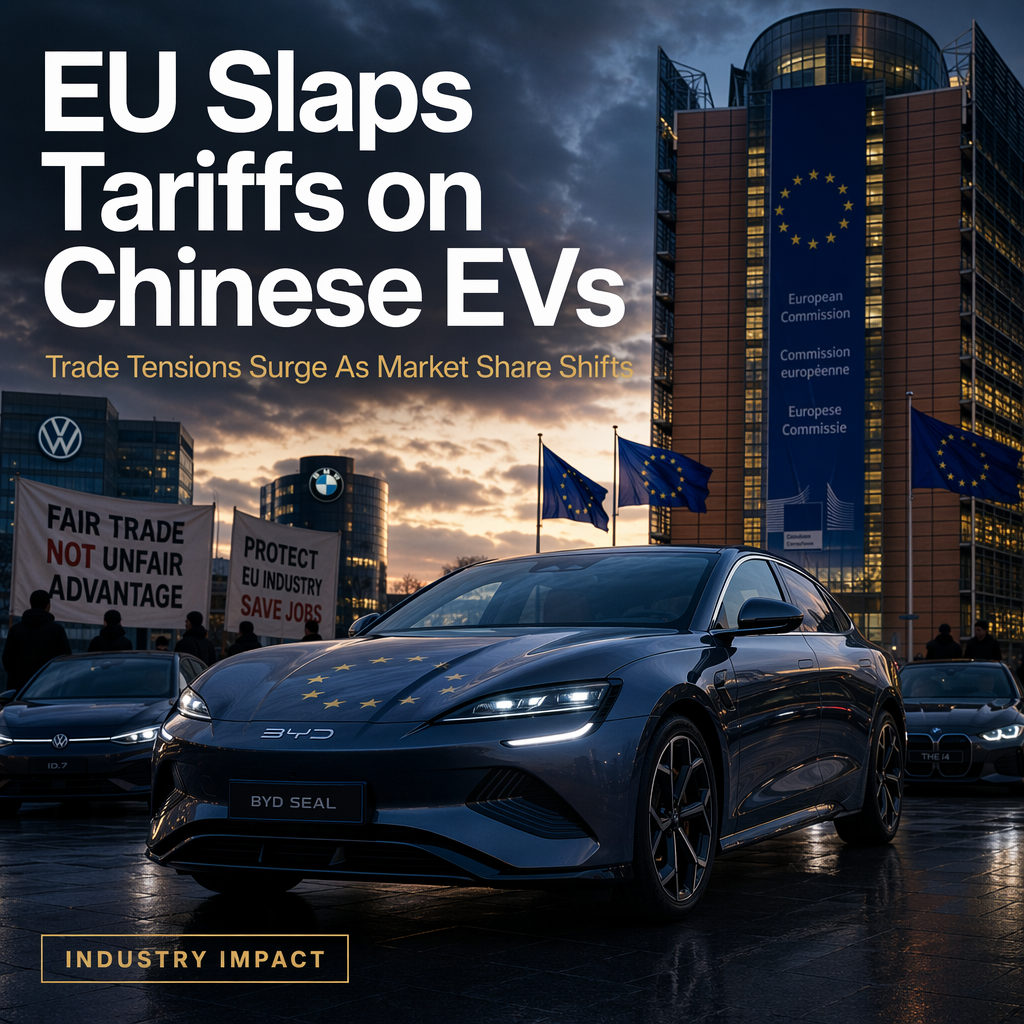
On July 4, 2024, the European Commission announced the introduction of additional import tariffs on Chinese battery electric vehicles (BEVs), citing findings that Chinese manufacturers have benefited from substantial state subsidies. The tariffs are intended to support European automakers who are facing intense competition from lower-priced Chinese vehicles and to level the playing field within the domestic automotive industry [1].
Despite the imposition of these tariffs, Chinese EV and hybrid brands have rapidly expanded their presence in the European market. For the first time, Chinese carmakers have surpassed South Korean competitors in Western Europe, highlighting their growing influence. Brands such as BYD and Leapmotor have been particularly aggressive, with Leapmotor offering German consumers EV leases as low as $57 per month, making Chinese vehicles highly attractive in price-sensitive segments [1].
The EU's move has drawn significant pushback from Germany and its automakers, who are concerned about potential retaliatory measures from China and disruptions to global supply chains. German industry voices argue that higher tariffs could provoke a trade backlash and further complicate the international automotive landscape [1]. In response to the competitive threat, Western automakers have been forced to accelerate innovation and adjust pricing strategies. The EU is also planning to launch a compact EV class to cut costs and counter the influx of affordable Chinese models [1].
Strategically, BYD has chosen Spain as its European launchpad, making significant investments in local operations. Meanwhile, Turkey has halted a tax break for BYD, warning of a clawback if the company fails to meet a $1 billion investment plan, reflecting the shifting regulatory environment Chinese companies face in Europe [1]. In the UK, new pay-per-mile tax policies are seen as potentially benefiting Chinese carmakers, with BYD leading the market in sales and presence [1].
Analysts emphasize that the surge in Chinese EV imports is fundamentally altering the dynamics of Europe’s automotive sector. One industry expert stated, "The European industry must innovate or risk losing significant market share to agile Chinese competitors" [1]. European automakers remain concerned about their ability to compete on price and innovation in the face of this rapid market shift [1].
CONCLUSION
The EU's new tariffs on Chinese EVs mark a significant escalation in trade tensions, reflecting deep concerns over market share and industry competitiveness. Despite these measures, Chinese automakers continue to expand rapidly in Europe, forcing local players to innovate and adapt. The market impact is high, with ongoing regulatory and strategic shifts likely to shape the sector's future.