
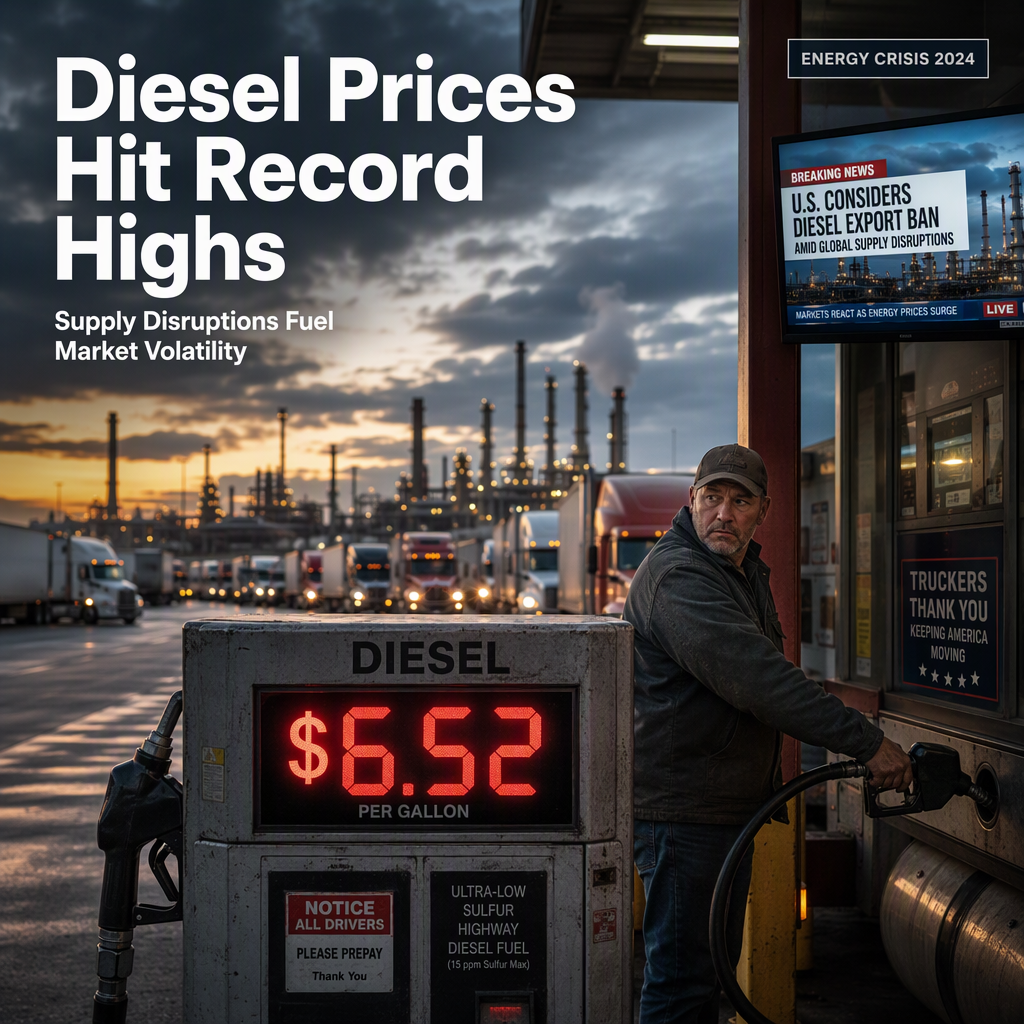
Diesel prices in the United States have reached unprecedented levels, with the average retail price hitting a record-high $6.52 per gallon on September 22, and climbing even higher in certain regions [1]. This surge is attributed to a prolonged decline in exports from the Middle East and Russia, compounded by shortages in refinery capacity across both the U.S. and Europe [1]. The ongoing conflicts in Iran and Ukraine are further disrupting global supply chains, intensifying the tightness in diesel supply and increasing volatility in energy markets [1].
The U.S. government is currently weighing the possibility of imposing an export ban on diesel and related petroleum products, a move that could exacerbate supply constraints and drive prices even higher, particularly in regions dependent on American exports [1]. Market analysts and traders caution that unless new refining capacity is developed or geopolitical tensions subside, diesel prices are expected to remain elevated [1].
This situation poses significant challenges for industries reliant on diesel fuel, as well as for consumers who are facing higher transportation and goods costs due to the sustained price increases [1]. The combination of refinery shortages, geopolitical conflicts, and potential policy changes is creating a highly volatile environment for energy markets [1].
CONCLUSION
Diesel prices in the U.S. have reached record highs due to global supply disruptions, refinery shortages, and ongoing geopolitical conflicts. The potential for an American export ban could further strain markets and keep prices elevated. Analysts warn that without new refining capacity or easing tensions, high diesel prices and market volatility are likely to persist.