
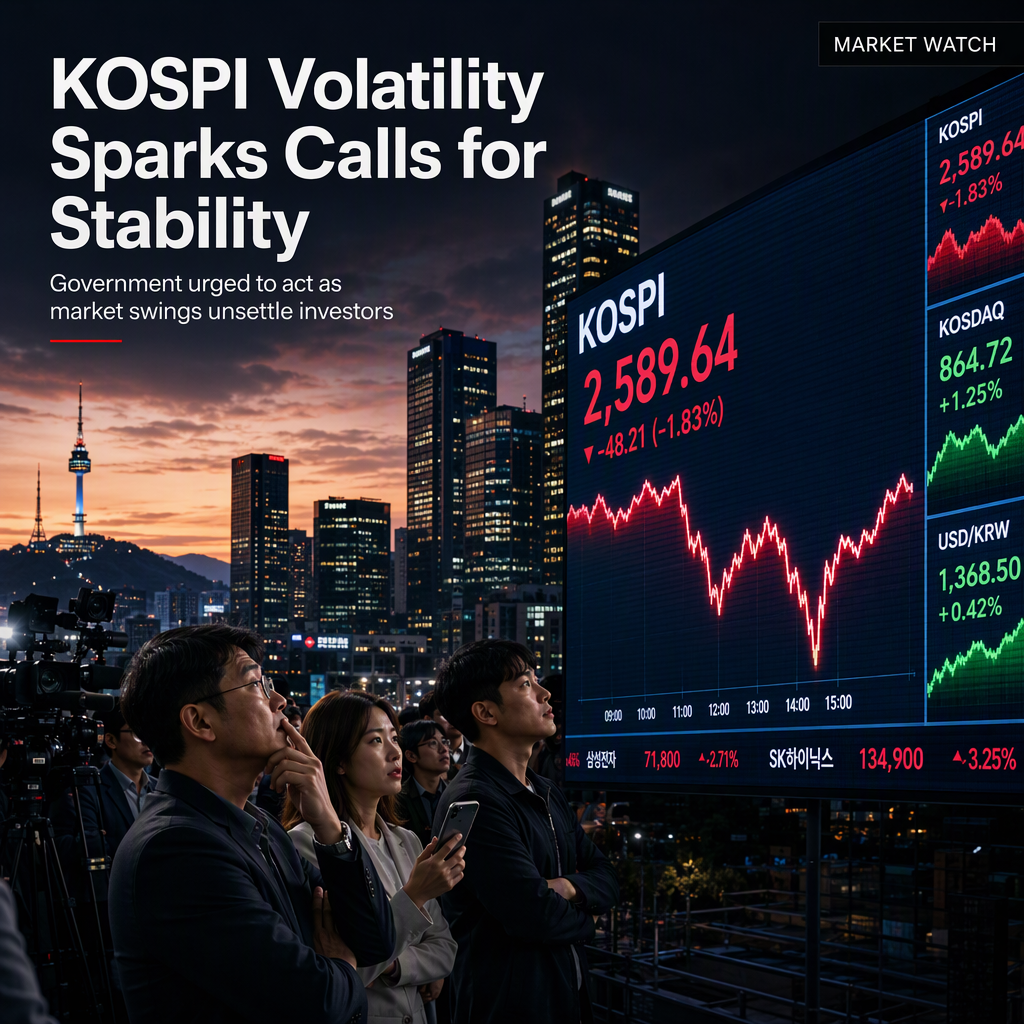
South Korea's financial markets have recently experienced significant volatility, with the benchmark KOSPI stock index undergoing sharp fluctuations that have raised concerns among investors and policymakers [1]. The KOSPI surged past the key 2,600-point level but then slumped below 2,400 within a few weeks, highlighting the unpredictable nature of the market's recent movements [1]. These swings have been attributed to a mix of domestic and international factors, including changes in global risk appetite, U.S. Federal Reserve policy shifts, and ongoing geopolitical tensions in Northeast Asia [1].
The volatility in the KOSPI has made it challenging for both retail and institutional investors to make informed decisions, potentially leading to excessive speculation or panic selling [1]. The article notes that the influence of social media and online financial influencers, such as Jeon Suk-jae, has amplified market swings, as retail traders seek fast profits based on viral commentary and trading tips [1].
The opinion piece calls for President Lee's government to prioritize financial market stability, warning that sustained instability could deter long-term investment and harm the prospects of South Korea's major corporations, which depend on steady capital flows for growth and innovation [1]. Recommendations include enhancing market transparency, strengthening regulatory oversight, improving investor education, introducing circuit breakers, discouraging excessive leverage, and providing clear communication during periods of uncertainty [1].
The article emphasizes that proactive measures by the government and regulators are essential to foster a more stable and predictable market environment, which is crucial for South Korea's future economic health [1].
CONCLUSION
Recent volatility in South Korea's KOSPI index has prompted calls for stronger market stability measures. The article stresses that government action is needed to restore investor confidence and ensure the resilience of the nation's financial system.