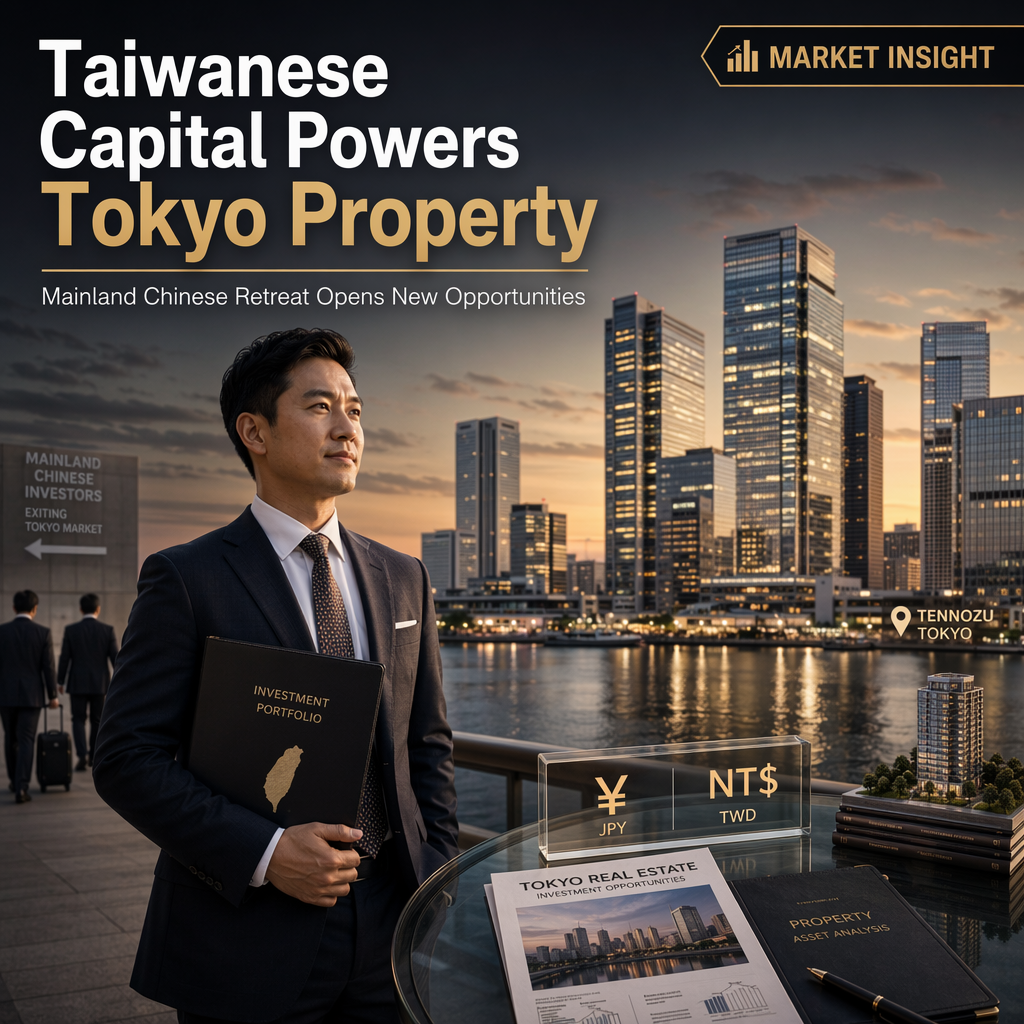
Taiwanese investors are increasingly pouring capital into Japan's real estate market, particularly in Tokyo's waterfront district of Tennozu, as mainland Chinese buyers withdraw due to tighter capital controls and regulatory scrutiny [1]. This shift is driven by Taiwanese investors seeking to diversify assets, hedge against geopolitical risks, and capitalize on the weak yen, which makes Japanese property prices relatively affordable compared to other global cities [1]. Local realtors report a sharp increase in transactions involving Taiwanese buyers over the past year, with many viewing Japanese real estate as a safe haven amid rising tensions in the Taiwan Strait and broader regional security concerns [1].
Industry sources indicate that the inflow of Taiwanese capital has helped support property values in key Tokyo districts, offsetting the decline in overall foreign demand [1]. Market analysts highlight that the weak yen is particularly attractive to overseas investors holding stronger currencies, such as the New Taiwan dollar [1]. Financial advisors note that the current environment, characterized by low interest rates and favorable exchange rates, presents a unique opportunity for foreign buyers [1].
However, some caution that rising borrowing costs and potential shifts in Japanese monetary policy could dampen demand in the medium term [1]. Investors are advised to monitor currency movements and interest rate trends closely, as these factors will significantly impact returns on Japanese property holdings [1]. Additionally, any tightening of Japan's property market regulations may influence investor sentiment and future buying interest [1].
Overall, the influx of Taiwanese funds is sustaining momentum in the Tokyo property market and reinforcing Japan's status as a preferred destination for safe-haven capital in Asia, despite the retreat of mainland Chinese investors [1].
CONCLUSION
The surge in Taiwanese investment is helping to maintain Tokyo property values and market momentum as mainland Chinese buyers pull back. While current conditions favor foreign investors, future demand may be affected by shifts in interest rates, currency movements, and regulatory changes. Investors should remain vigilant to these evolving factors.