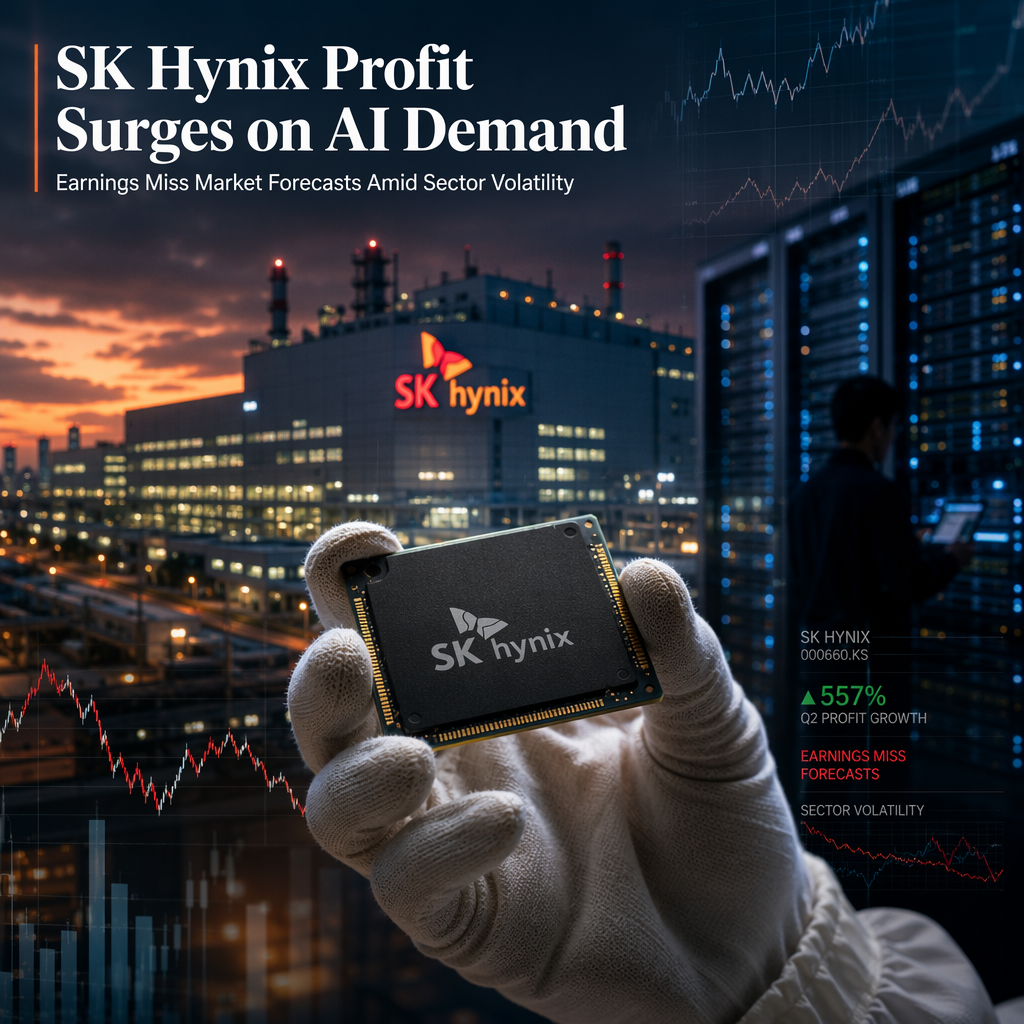
South Korean chipmaker SK Hynix reported a dramatic surge in its second-quarter operating profit, which rose 557% year-on-year to 60.54 trillion won ($41.6 billion), driven by robust demand for memory chips amid the global expansion of artificial intelligence infrastructure [1]. The company attributed this performance to 'the strong momentum in AI infrastructure investments and persistent demand for high-performance memory chips' [1]. Despite the impressive profit growth, SK Hynix's earnings fell short of market forecasts, reflecting ongoing volatility in the semiconductor sector as chipmakers increase production to meet global demand [1].
The article highlights that the memory chip sector continues to attract significant investor attention due to the AI-driven expansion, but also notes that missing market expectations may point to supply chain constraints or heightened competition within the industry [1]. Analysts cited in the article suggest that while SK Hynix's profit surge is notable, the earnings miss underscores the challenges and uncertainties facing the sector [1].
Market participants remain generally bullish on the semiconductor industry, buoyed by the AI boom, but the article advises caution due to price volatility and the potential for supply bottlenecks [1]. No specific trading levels or technical analysis were provided [1].
CONCLUSION
SK Hynix's substantial profit increase underscores the strong impact of AI-driven demand on the memory chip market, even as the company missed market expectations. The results highlight both the opportunities and risks in the semiconductor sector, with ongoing volatility and supply concerns tempering otherwise bullish sentiment.