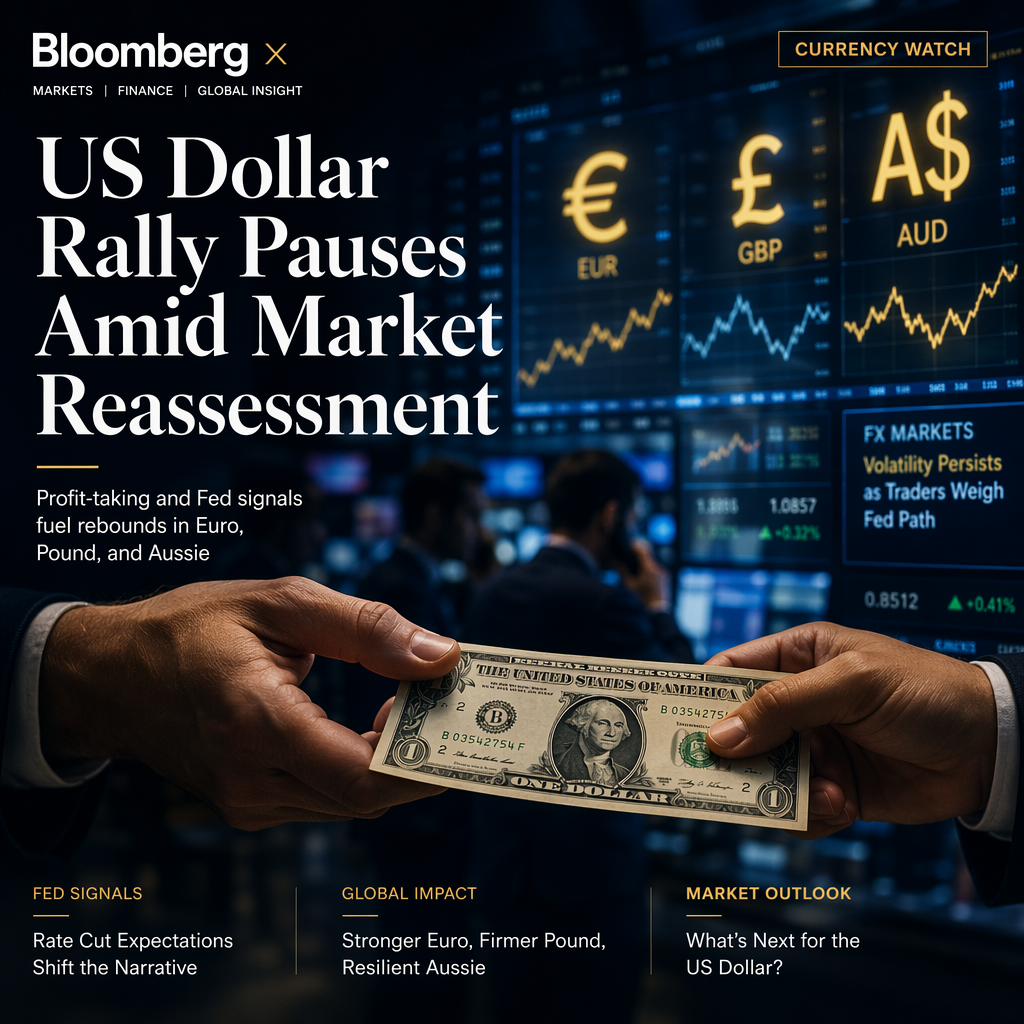
The US Dollar (USD) experienced a pullback on Friday after reaching multi-month highs earlier in the week, as traders engaged in profit-taking and reassessed the Federal Reserve's (Fed) policy outlook in light of recent economic data and geopolitical developments [1][2][3]. The US Dollar Index (DXY), which measures the Greenback against a basket of six major currencies, traded around 101.25–101.26, down 0.18% on the day after hitting a more than one-year high near 101.80 earlier in the week [1][2].
EUR/USD traded around 1.1400 after climbing to 1.1434 earlier in the American session, but remained on track for a second consecutive weekly loss. The pair's movement was influenced by ongoing Middle East tensions, specifically an incident involving Iran launching 'at least four one-way attack drones' at ships in the Strait of Hormuz, as well as the Fed's hawkish outlook. Despite a contained US Personal Consumption Expenditures (PCE) inflation report, traders expect the Fed to maintain a restrictive stance, with Minneapolis Fed President Neel Kashkari stating, 'I have one rate hike penciled in for 2026,' and expressing concern about inflation, especially in services [1]. On the Eurozone side, Commerzbank expects the European Central Bank (ECB) to deliver one more rate hike in September, forecasting inflation to remain around 3% through year-end [1].
The British Pound (GBP) rebounded 0.20% against the USD, with GBP/USD trading at 1.3217 after a daily low of 1.3180 [2]. The recovery was supported by a fading US Dollar rally and stabilization in UK politics following Prime Minister Keir Starmer's resignation and an orderly transition process led by Andy Burnham [2]. Market expectations for a Bank of England (BoE) rate hike in 2026 have diminished, with pricing for tightening dropping from 33 basis points a week ago to 21 basis points [2]. US consumer sentiment improved in June, with the University of Michigan index rising to 49.5 from a preliminary 48.9 and May's 44.8, while inflation expectations for one year remained at 4.6% and for five years edged down to 3.3% [2].
The Australian Dollar (AUD) also recovered, with AUD/USD trading near 0.6900 as the USD weakened due to profit-taking ahead of month- and quarter-end portfolio adjustments [3]. Despite the intraday recovery, the broader trend for AUD/USD remains negative, with technical resistance at 0.6906 and 0.6917, and support at 0.6887 and 0.6876 [3]. Chinese economic data, important for AUD sentiment, has been mixed, with weak May Retail Sales but steady Industrial Production [3].
Across the board, the USD was strongest against the Australian Dollar (+0.11%) and weakest against the Euro (-0.26%) on the day [1]. Looking ahead, key economic events include UK GDP figures, BoE speeches, US Nonfarm Payrolls, a speech by Fed Chair Kevin Warsh, and the ISM Manufacturing PMI [2].
CONCLUSION
The US Dollar's recent rally has paused as traders take profits and reassess the Fed's policy trajectory, leading to rebounds in the Euro, Pound, and Australian Dollar. Market participants remain cautious amid geopolitical tensions and mixed economic signals, with upcoming data releases and central bank commentary likely to shape currency movements in the near term.