
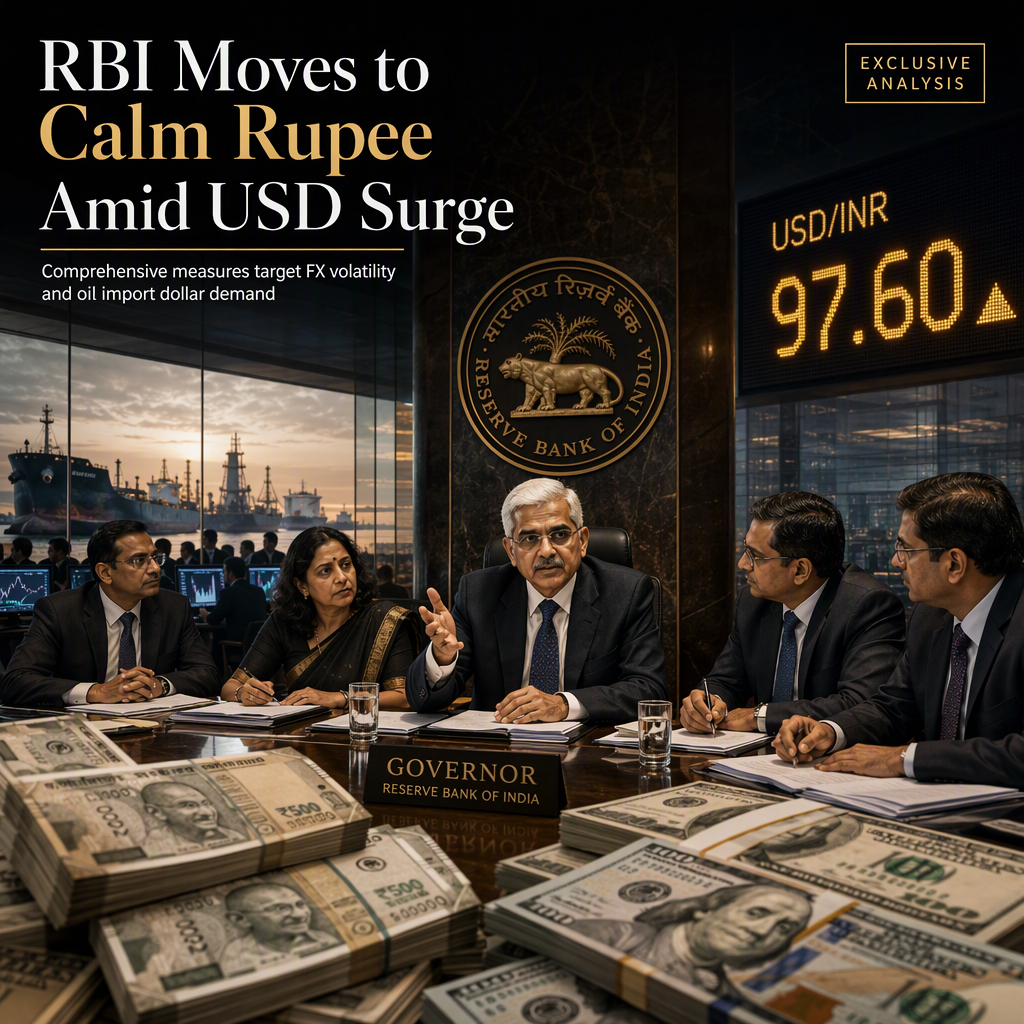
The Reserve Bank of India (RBI) has announced a comprehensive package of measures aimed at stabilizing the Indian Rupee (INR) following recent gains in the USD/INR exchange rate, which climbed to the 97.60 area in the past few weeks [1]. According to Commerzbank’s Dr. Henry Hao and Charlie Lay, the RBI's actions include opening a special US Dollar facility for state-run oil marketing companies (OMCs) to moderate dollar demand from oil imports in the open market [1].
In addition, the RBI has tightened rules on FX derivatives by reducing the threshold for transactions without a documented underlying asset from USD100mn to USD5mn and prohibiting dealers from re-booking cancelled INR derivative transactions [1]. The central bank also introduced the Foreign Exchange Risk Reserve (FERR), requiring 20% of the notional value of each FX derivative transaction above USD2mn to be held with the RBI [1].
These measures are expected to raise the cost of FX hedging, curb dollar demand, and drain INR liquidity, thereby providing near-term support to the INR and putting downward pressure on forward premiums [1]. Commerzbank analysts believe that the latest steps should help prevent a disorderly sell-off in the INR and could lead to a pullback in USD/INR in the near term [1].
CONCLUSION
The RBI's intervention is seen as a proactive move to stabilize the Indian Rupee and manage dollar demand, particularly from oil importers. Analysts expect these measures to support the INR and potentially reverse recent USD/INR gains. The market impact is medium, with a cautiously positive sentiment toward the Rupee's near-term outlook.