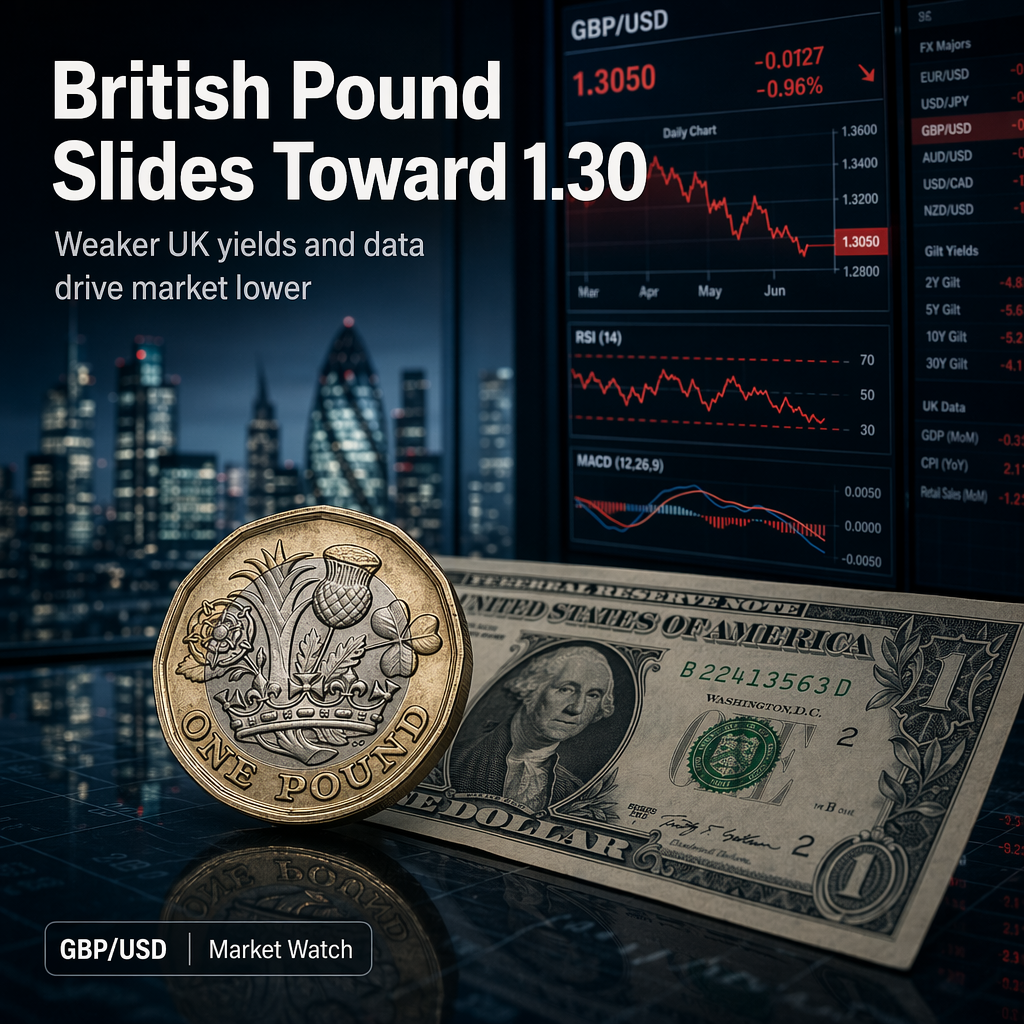
The British Pound (GBP) has experienced a decline against the US Dollar (USD), falling by 0.3%, according to Scotiabank strategists Shaun Osborne and Eric Theoret [1]. Despite this softness versus the USD, the GBP remains relatively resilient compared to most other G10 currencies [1]. The recent slide in the pound is attributed to a combination of shifting expectations regarding the US Federal Reserve, softening UK yields, and weaker domestic economic data, including a contractionary print in the UK services PMI released on Tuesday and moderating inflation figures [1].
From a technical perspective, short-term GBP/USD signals are bearish, with the Relative Strength Index (RSI) at the oversold threshold of 30 [1]. The spot price has dropped below the prior 2026 low, leaving little near-term support before the 1.30 level [1]. Scotiabank projects a near-term trading range for GBP/USD between 1.3100 and 1.3200, with minor resistance seen above 1.3250 [1].
The market implications of these developments suggest continued pressure on the pound, driven by both domestic and international factors. The adverse shift in yield spreads, largely influenced by changing Fed expectations, has played a significant role in the GBP's latest decline, while softer UK yields reflect the impact of recent economic data [1].
No forward-looking statements or analyst opinions beyond the technical projections and current market drivers are provided in the source article.
CONCLUSION
The British Pound is under pressure against the US Dollar, with technicals pointing to further downside risk toward the 1.30 level. Market sentiment remains bearish due to weaker UK yields and disappointing economic data, while the pound shows relative strength against other G10 currencies.