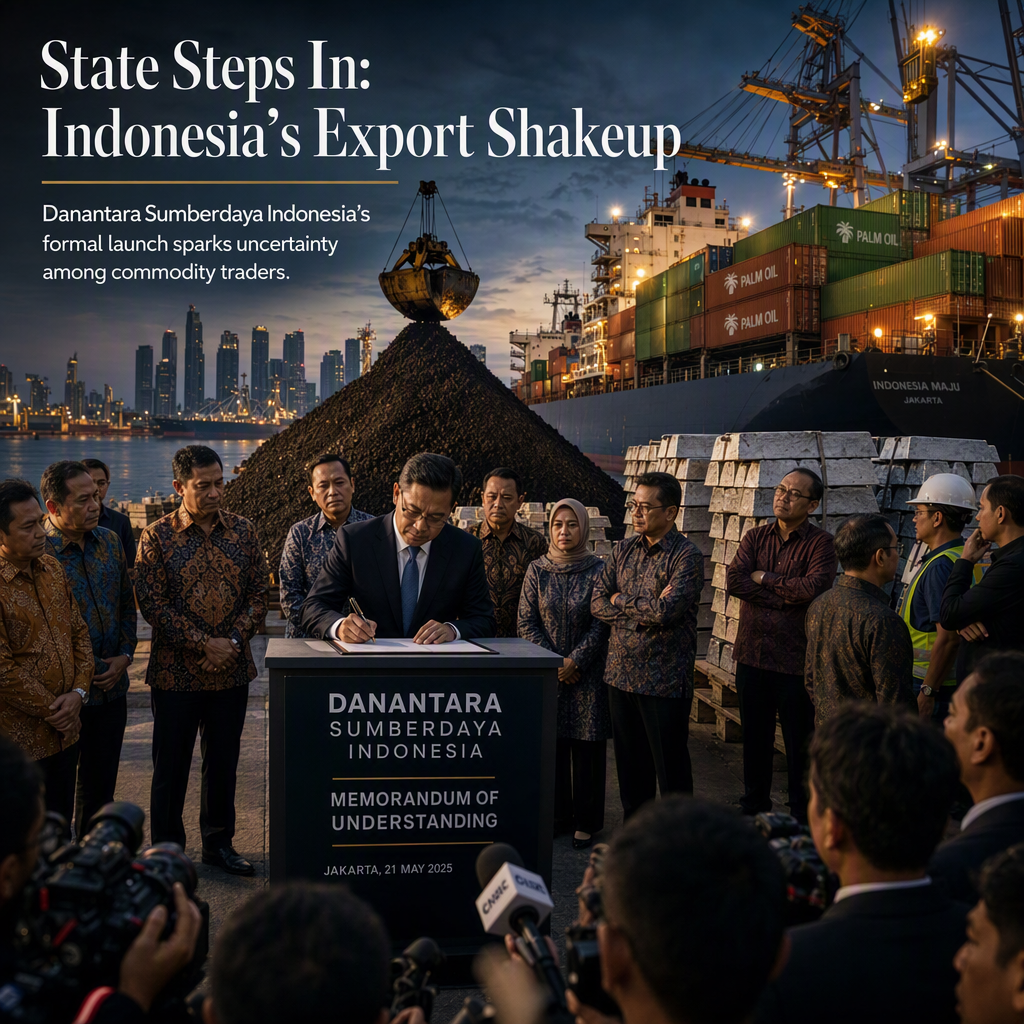
Indonesia has officially launched Danantara Sumberdaya Indonesia, a state entity tasked with overseeing and managing the country's exports of coal, palm oil, and ferroalloy, nearly three months after it began operations. On August 24, Danantara Sumberdaya Indonesia CEO Luke Mahony signed a memorandum of understanding with local industry associations in Jakarta, formalizing the company's intermediary role in the export of these key commodities, which collectively represent $70 billion in annual exports for Indonesia [1].
Despite the formalization, significant confusion persists among exporters and industry participants regarding the implications of the new export controls. Many stakeholders are questioning how the increased state involvement will affect the efficiency and competitiveness of Indonesia's commodity trade, particularly given the nation's prominent position in the global supply chains for coal, palm oil, and nickel [1].
The article notes that the move has generated notable uncertainty among market participants, with exporters seeking clarity on the new regulations and their potential impact on pricing and international competitiveness. However, no official market analysis, technical indicators, or forward-looking statements from analysts were provided in the article [1].
CONCLUSION
Indonesia's formal launch of Danantara Sumberdaya Indonesia as a state intermediary for major commodity exports has introduced uncertainty and confusion among industry players. Market participants are closely watching for further clarity on how the new controls will affect trade efficiency and competitiveness.