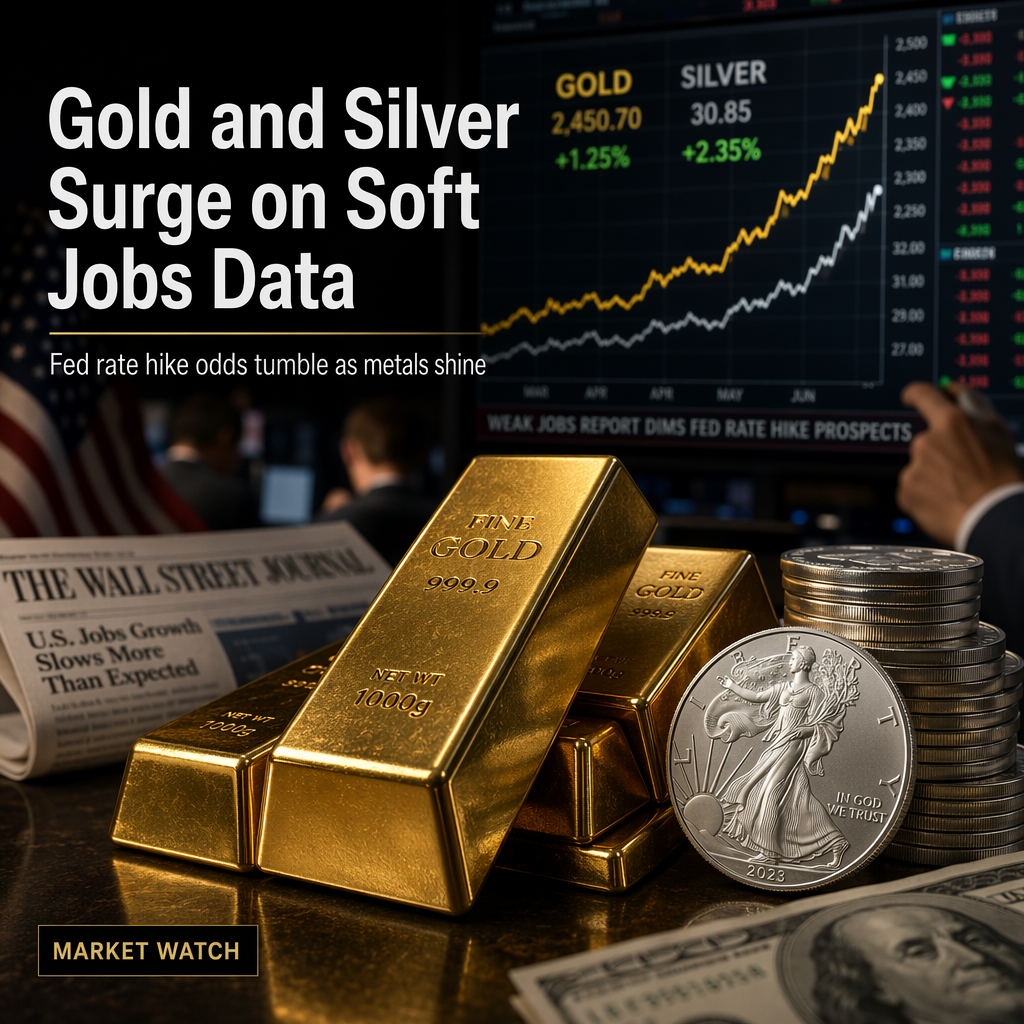
Gold (XAU/USD) and Silver (XAG/USD) both extended gains on Friday following the release of weaker-than-expected US Nonfarm Payrolls (NFP) data for June, which significantly reduced expectations for imminent Federal Reserve (Fed) interest rate hikes. Gold traded around $4,185, up approximately 1.50% on the day, while Silver climbed to $62.35, marking a 2.32% daily increase [1][2].
The US economy added only 57,000 jobs in June, falling well short of the market expectation of 110,000. Additionally, the previous month's jobs figure was revised lower [1][2]. This disappointing labor market data led to a sharp decline in the US Dollar Index (DXY), which hovered near two-week lows at 100.76 [1]. According to the CME FedWatch Tool, the probability of a Fed rate hike in September dropped to 53% from 63% before the data release (as per [1]), while another source cited a decrease to 52% from 66% [2], highlighting a minor discrepancy in market expectations. The odds for a December hike remain elevated at 76.8% [1].
The shift in rate hike expectations has eased near-term pressure on non-yielding assets like Gold and Silver, fueling a rebound in both metals. Gold rebounded from a seven-month low of $3,949 touched earlier in the week and is on track for its first weekly gain in five weeks [1]. Technical analysis indicates that Gold has reclaimed its 20-day Simple Moving Average at roughly $4,156, suggesting renewed bullish momentum [1].
Geopolitical tensions, particularly between the US and Iran, are also supporting safe-haven demand for precious metals. Iran's military command warned of a 'decisive and swift response' to any US interference in the Strait of Hormuz, while US President Donald Trump stated that Iran had accepted 'nearly everything we require,' underscoring ongoing uncertainty in the region [2].
Looking ahead, both articles note that the outlook for Gold and Silver will depend on further macroeconomic developments and Fed policy signals. While central bank demand for Gold remains robust, with 41 tonnes added to reserves in May and 89% of central bankers expecting global Gold reserves to increase over the next year [1], the metals' upside may be capped unless the Fed adopts a more dovish stance. With US markets closed for the Independence Day holiday, trading activity is expected to be subdued, but investors will continue to monitor Fed policy and geopolitical developments for further direction [2].
CONCLUSION
Weaker-than-expected US jobs data has significantly reduced expectations for near-term Fed rate hikes, boosting both Gold and Silver prices as the US Dollar weakens. While technical and fundamental factors support further gains, the metals' outlook remains closely tied to future Fed policy decisions and ongoing geopolitical risks. Investors are likely to remain focused on these drivers in the coming weeks.