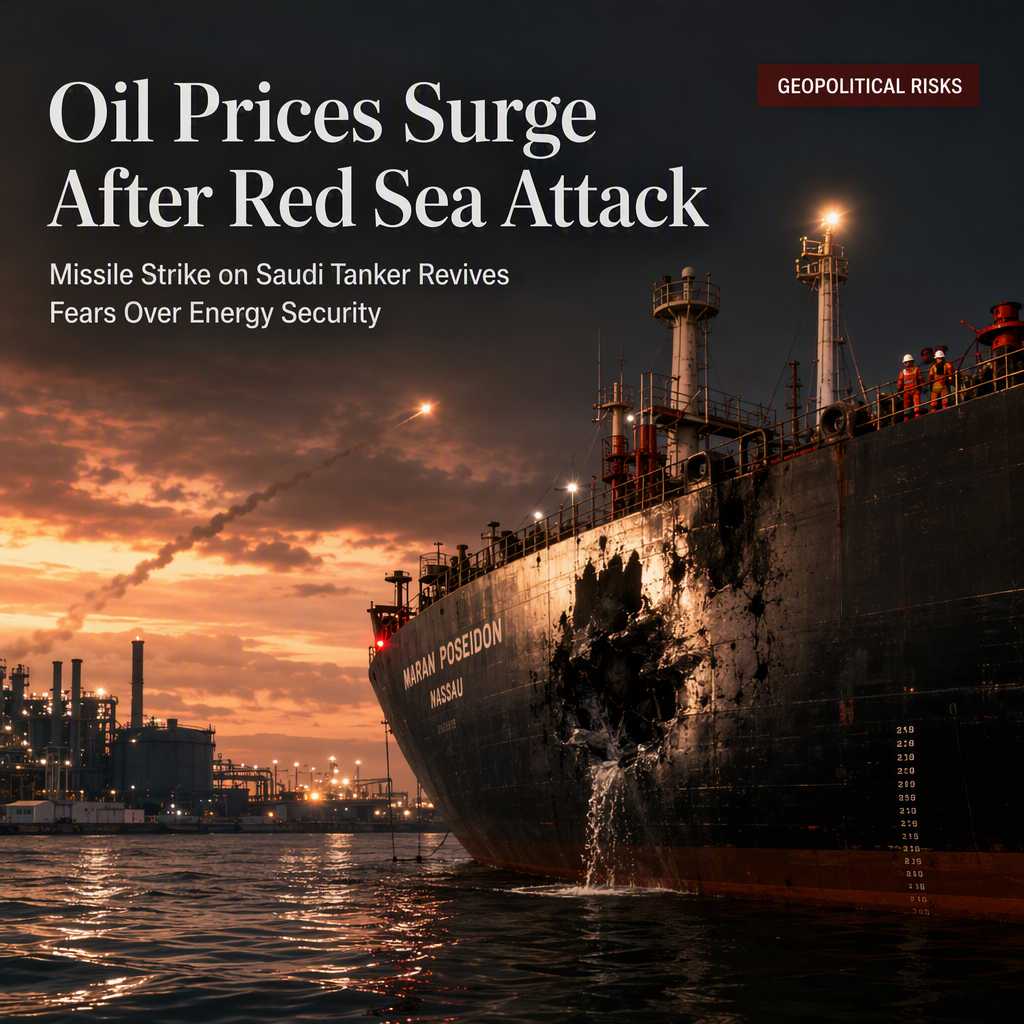
Oil prices increased following claims by Yemen’s Houthi movement that they launched a missile attack on a Saudi oil tanker near the Red Sea port of Yanbu, a critical hub for Saudi crude exports [1]. This incident underscores the vulnerability of alternative export routes while disruptions in the Strait of Hormuz persist [1]. According to BNY’s Geoff Yu, the attack serves as a reminder that even as Washington reports progress on an Iran deal aimed at reopening the Strait of Hormuz, non-state actors like the Houthis can still threaten regional energy security and undermine hopes for a clean de-escalation in energy markets [1].
The physical impact of the attack appears to be contained, with no immediate confirmation from Saudi authorities, the vessel operator, or maritime security agencies regarding the extent of the damage [1]. However, the event has revived concerns about the security of shipping chokepoints, particularly as the Houthis have previously claimed attacks on other Saudi tankers and oil infrastructure, prompting retaliatory airstrikes by Saudi Arabia on Houthi facilities at Hodeidah [1].
The incident has heightened market anxiety over the reliability of Saudi Arabia’s alternative export route through Yanbu, especially given ongoing disruptions in the Strait of Hormuz [1]. Oil prices initially reacted with gains, reflecting the market’s sensitivity to geopolitical risks affecting supply routes [1].
While Washington remains optimistic about reaching an agreement with Iran, the attack demonstrates that diplomatic progress may not be sufficient to ensure stability, as non-state actors continue to pose significant risks to energy markets [1].
CONCLUSION
The Houthi missile attack on a Saudi tanker near Yanbu has reignited concerns about the security of key oil export routes, leading to an initial rise in oil prices. Despite diplomatic efforts to stabilize the region, the event highlights the ongoing threat posed by non-state actors to global energy markets.