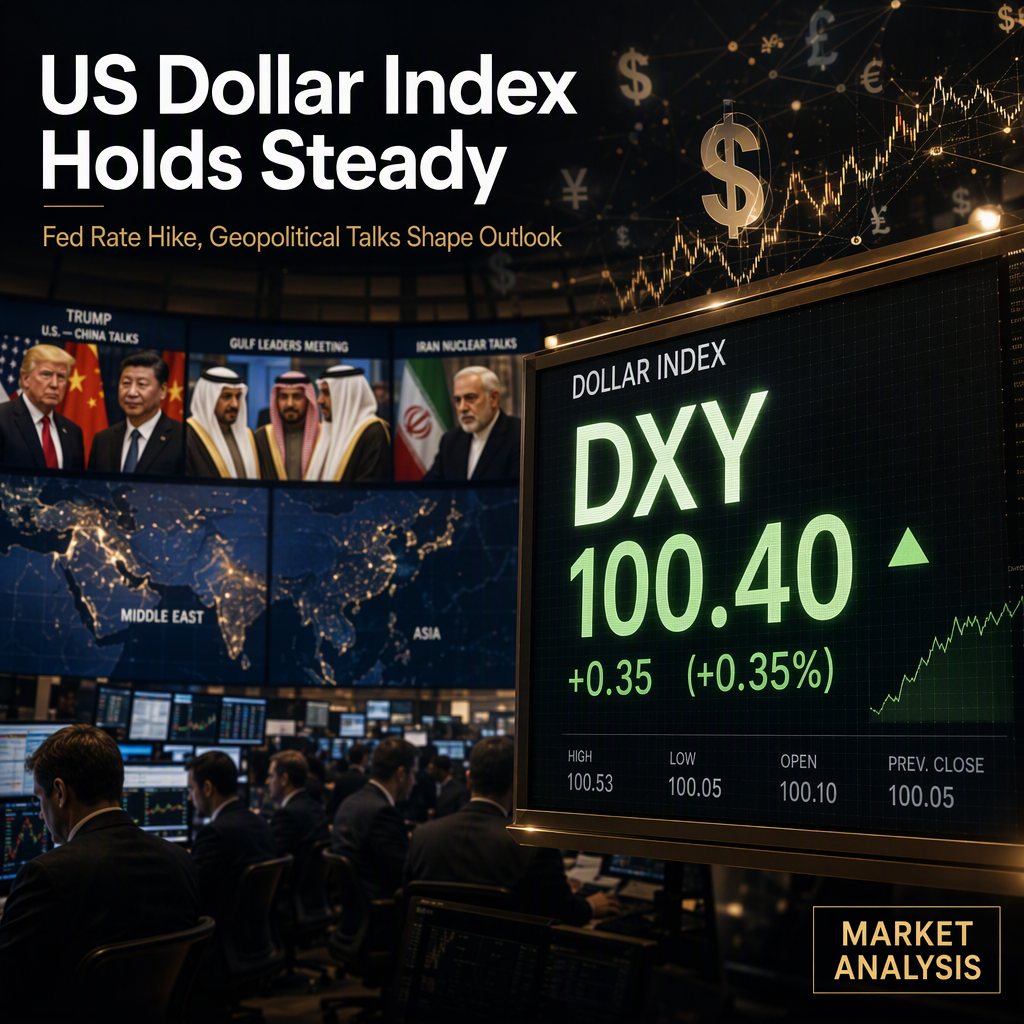
The US Dollar Index (DXY) remained firm around 100.40 on Tuesday, maintaining gains from the previous day as investors await significant geopolitical and monetary policy developments [1]. The market is closely watching the outcome of a meeting between President Donald Trump and Gulf nation leaders, particularly Iran, which centers on the normalization of energy supply through the Middle East [1]. Additionally, a meeting between Chinese leader Xi Jinping and US President Trump is expected to take place between September 23-25, with discussions anticipated on Artificial Intelligence (AI) and critical minerals [1].
On the monetary policy front, the Federal Reserve is almost certain to deliver one more interest rate hike this year, aiming to address persistent high inflation [1]. Recent comments from Fed officials, including Chicago Fed President Austan Goolsbee, indicate that inflation is being driven by factors beyond elevated oil prices, such as strong demand, tariffs, and other supply shocks [1].
From a technical perspective, the DXY trades above the 20-day exponential moving average (EMA) at 99.71, reinforcing a bullish short-term trend after reclaiming the 100.00 handle [1]. The Relative Strength Index (RSI) stands at 63.49, signaling firm upside momentum without reaching overbought levels [1]. The index faces resistance at 100.56, and a decisive move above this level could extend the rally toward 101.00, while initial support is provided by the 20-day EMA at 99.71 [1].
Market participants are expected to remain cautious as they await the outcomes of the aforementioned geopolitical meetings and the Federal Reserve's next policy move, both of which could significantly influence the US Dollar's trajectory [1].
CONCLUSION
The US Dollar Index is trading with a bullish bias, supported by expectations of a Fed rate hike and anticipation of key geopolitical meetings. Technical indicators suggest further upside potential if resistance at 100.56 is breached. Investors are likely to stay on the sidelines until more clarity emerges from upcoming events and policy decisions.