
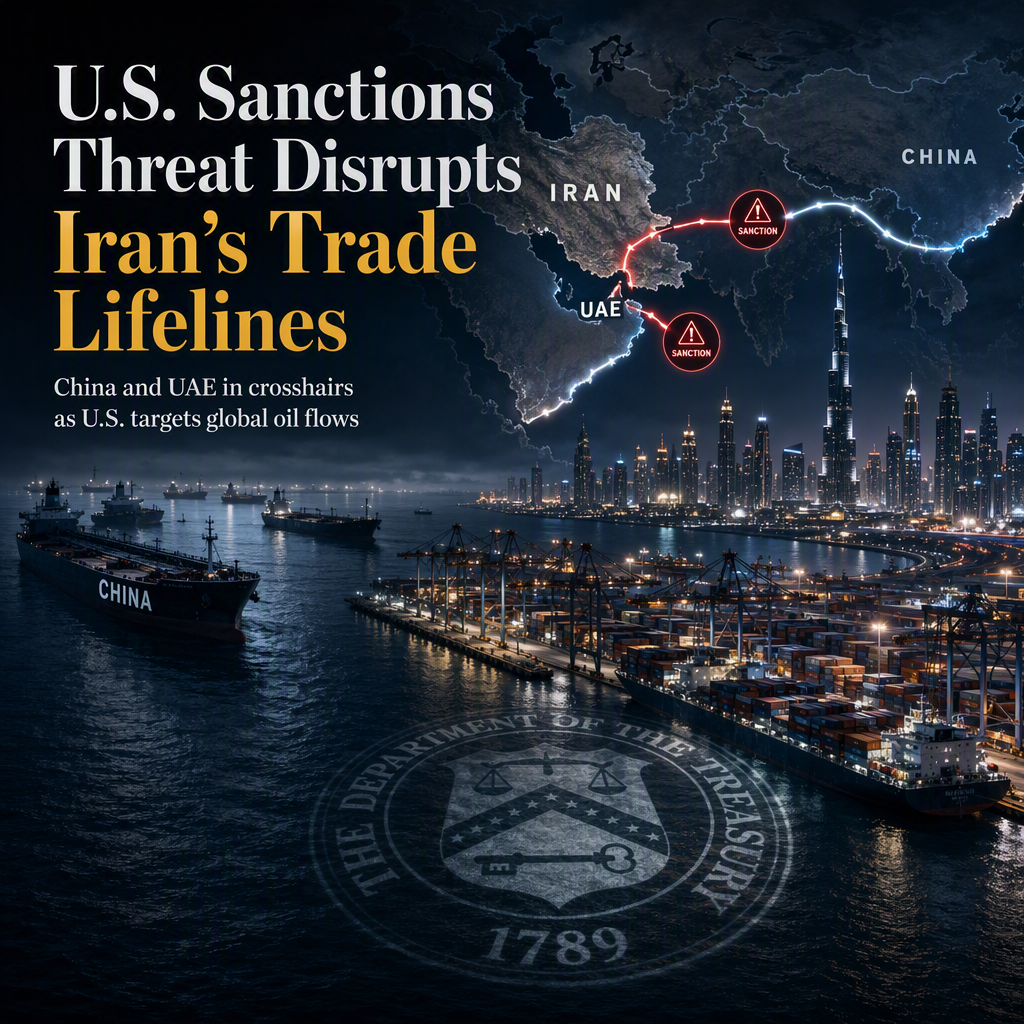
The Trump administration has announced an 'economic D-Day' campaign aimed at isolating Iran from the global economy by threatening secondary sanctions against any entity that launders money for Iran, effectively cutting them off from the U.S. dollar system [1]. This move is designed to sever the economic lifeline that has supported Tehran's economy during nearly six months of war, and it specifically targets Iran's major trading partners, including China, the UAE, Turkey, Iraq, and India [1].
China is highlighted as Iran's largest oil customer, accounting for about 90% of Iranian oil exports according to the U.S. government [1]. In 2025, China reported $9.96 billion in bilateral trade with Iran, excluding an estimated $31.2 billion in unreported Iranian crude oil exports to China, as noted by the U.S.-China Economic and Security Review Commission [1]. Most of these oil transactions are handled by independent Chinese refiners, often rebranded and settled outside the dollar system. The U.S. Treasury has already sanctioned several of these refineries in 2026, though Chinese financial institutions have not been targeted [1].
The United Arab Emirates (UAE) is also a significant trading partner, with bilateral trade reaching around $28 billion in 2024. The UAE was Iran's largest source of imports, accounting for over 30% of total imports, and was Iran's third-largest export destination, making up 12% of its shipments, totaling more than $7 billion [1]. However, the UAE recently suspended all trade and financial transactions with Iran, signaling a shift in response to U.S. pressure [1].
Market implications are substantial, as the threatened sanctions could disrupt established trade flows and put the U.S. on a collision course with governments that account for most of Iran's remaining foreign trade [1]. While skepticism remains about the Trump administration's willingness to fully implement these measures, the threat alone is causing trading partners to reconsider their positions. China, for example, has publicly opposed U.S. sanctions but is expected to quietly increase compliance among state banks and oil companies to maintain access to U.S. dollar financing and markets, according to Dan Wang of Eurasia Group [1].
CONCLUSION
The U.S. threat of secondary sanctions against Iran's key trading partners marks a significant escalation in efforts to isolate Tehran economically. With major players like China and the UAE already adjusting their trade practices, the market impact is expected to be high, potentially reshaping regional and global trade dynamics.