
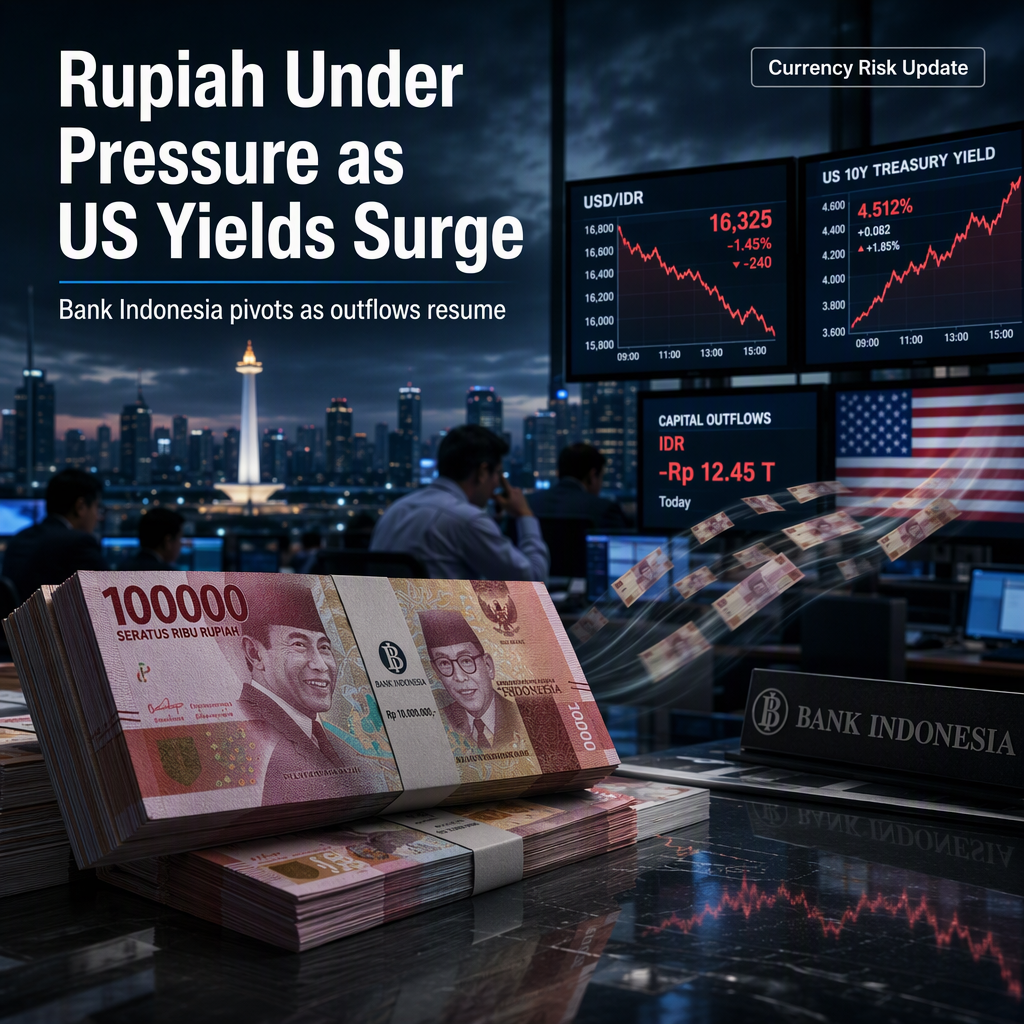
According to MUFG’s Lloyd Chan, the Indonesian Rupiah (IDR) is experiencing renewed vulnerability as rising US yields have eroded Indonesia’s rate support, leading to resumed foreign portfolio outflows [1]. Bank Indonesia has responded by shifting its policy focus away from further interest rate hikes and towards non-rate stabilization measures, such as offering cheaper FX hedging options for portfolio investors [1]. Despite these efforts, Chan notes that the underlying pressure on the Rupiah persists, particularly due to the combination of renewed outflows in September and the prospect of weaker trade balances in August and September [1].
The report highlights that both the Indonesian Rupiah and the Thai Baht (THB) remain particularly exposed in the current environment [1]. The shift in Bank Indonesia’s policy tools underscores the challenges faced in maintaining currency stability amid external pressures, especially as traditional rate support becomes less effective [1].
No specific market reactions, analyst forecasts, or forward-looking statements beyond the continued pressure on the Rupiah were provided in the source [1].
CONCLUSION
The Indonesian Rupiah remains under pressure as US yield increases diminish the effectiveness of rate support and foreign portfolio outflows resume. Bank Indonesia’s pivot to non-rate stabilization tools has yet to alleviate these pressures, suggesting continued vulnerability for the currency in the near term.