
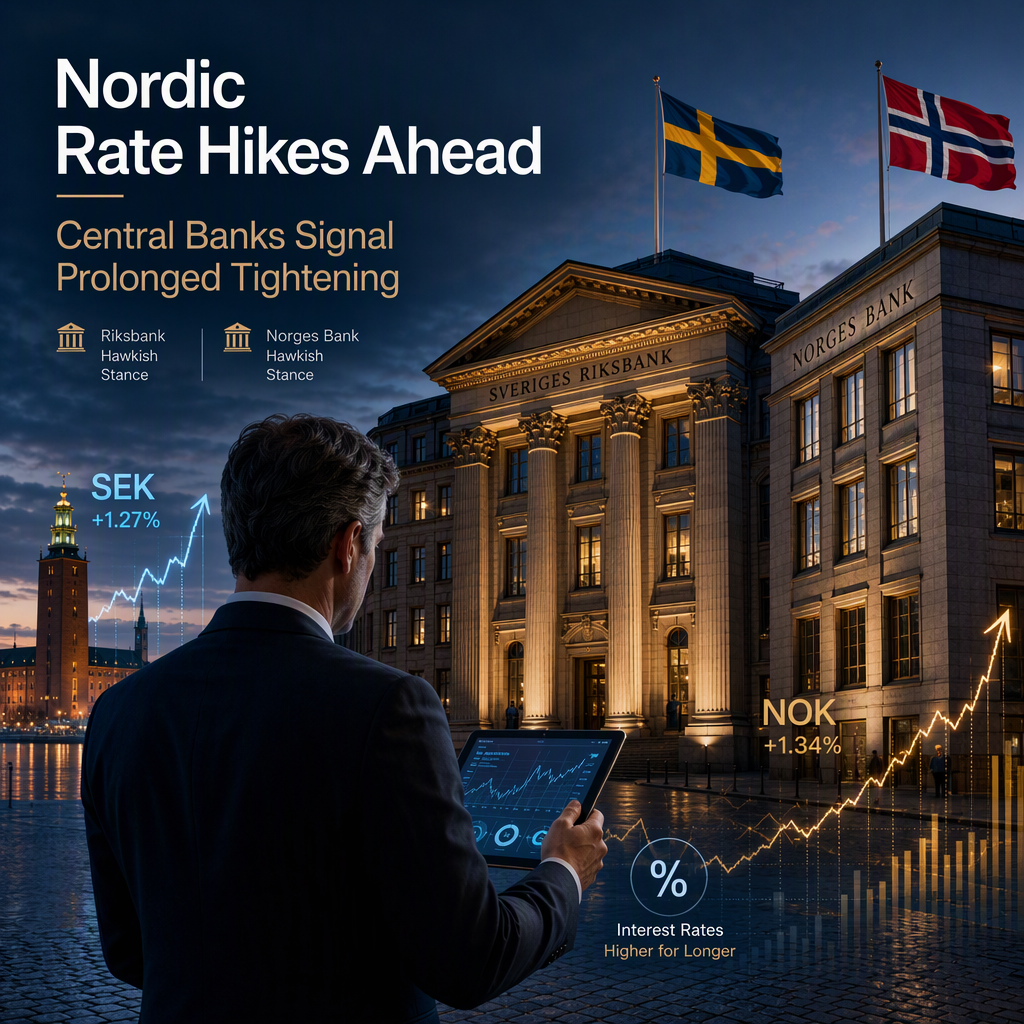
The Swedish Riksbank and Norway's Norges Bank both delivered hawkish signals in their latest monetary policy decisions, indicating a prolonged period of elevated interest rates. According to Brown Brothers Harriman’s Elias Haddad, the Swedish Krona (SEK) rallied after the Riksbank kept its policy rate unchanged at 1.75% for the eighth consecutive meeting, but firmed up its hawkish bias by signaling more tightening ahead. The Riksbank's new policy rate forecast implies nearly 75 basis points of hikes over the next twelve months, raising the rate to 2.50%. This is a significant shift from the 25 basis points projected in June and aligns more closely with the 125 basis points priced by markets, supporting SEK against major peers [1]. The Riksbank stated that 'the policy rate should be raised more going forward than projected in the June forecast' and expects 'the increases to the policy rate will begin this year' [1].
Meanwhile, Nordea’s Kjetil Olsen reports that Norges Bank raised its policy rate by 25 basis points to 4.5%, as expected, and lifted its policy rate path, implying a 40% chance of another hike over the next six months. Norges Bank does not forecast rate cuts before 2028, signaling a prolonged period of tight monetary policy. The central bank expects mainland growth to remain around 1%, slightly below potential, and unemployment to edge higher. Despite lower inflation during the summer and a somewhat stronger NOK, Norges Bank believes the inflation outlook has not changed much since June, citing stronger external impulses such as energy and commodity prices. Olsen anticipates rates will stay near current levels for an extended period and will only decline gradually thereafter [2].
Both central banks' hawkish stances reflect a commitment to combating inflation and maintaining currency strength. The Riksbank's firmer policy outlook is seen as supportive for SEK, while Norges Bank's elevated rate path and reluctance to cut rates before 2028 suggest continued support for NOK [1][2].
Market reactions include a rally in SEK against major currencies following the Riksbank's announcement, while Norges Bank's decision is expected to keep rates elevated and support NOK, although no immediate market reaction was detailed in the sources [1][2].
CONCLUSION
Both the Riksbank and Norges Bank have signaled a prolonged period of tight monetary policy, with further rate hikes expected in Sweden and no rate cuts forecast in Norway before 2028. These hawkish stances are supportive for their respective currencies and reflect ongoing concerns about inflation and external price pressures. Market participants should anticipate elevated rates and gradual policy adjustments in the Nordic region.