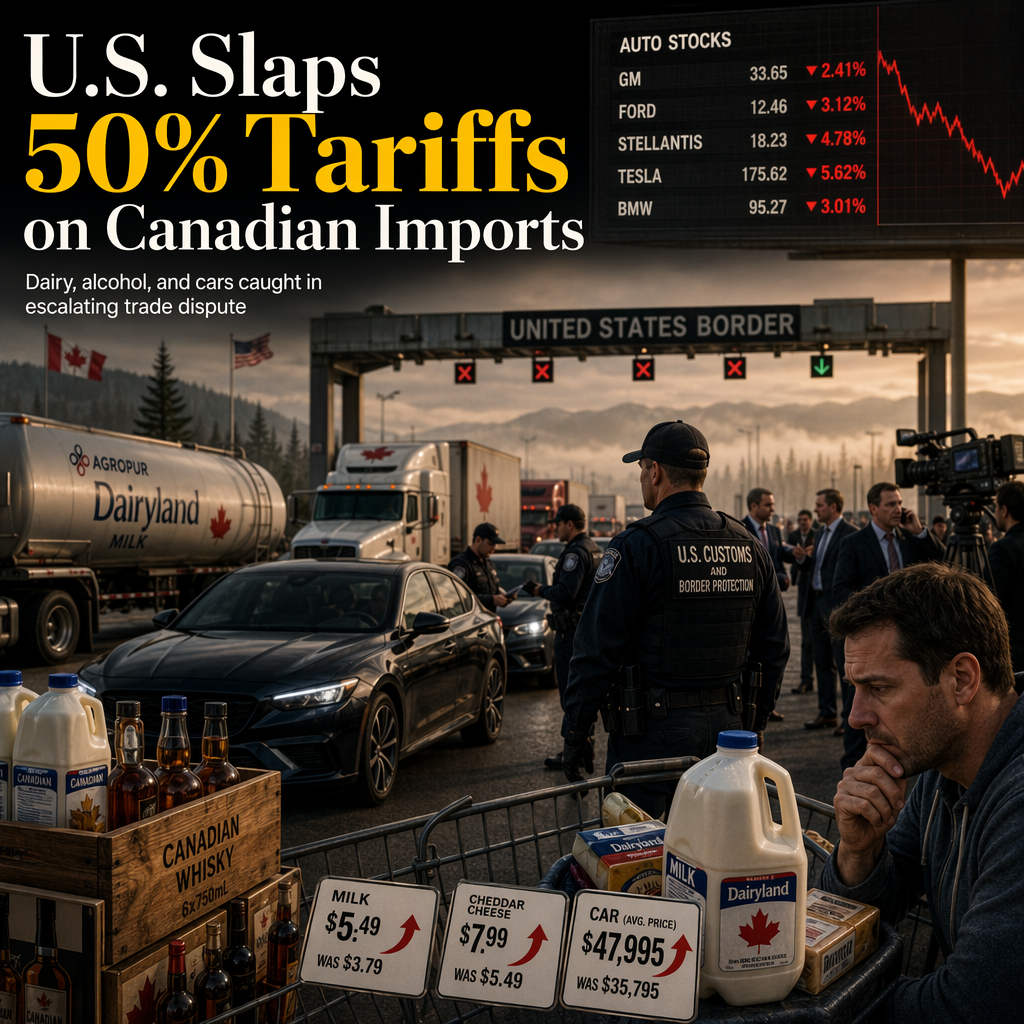
On July 20, the Trump administration announced the imposition of a 50% tariff on certain Canadian imports, citing what officials described as trade 'discrimination' against American businesses [1][2]. The tariffs specifically target dairy, alcohol, and cars imported from Canada, and are set to take effect on August 19 under the Tariff Act of 1930 [1][2]. U.S. officials stated that Canada's current tax policies unfairly target U.S. automakers, contributing to a significant decline in American vehicle exports while giving foreign competitors an advantage [1].
According to NBC News, the affected industries are valued in the tens of billions of dollars, and both U.S. importers and Canadian exporters are closely monitoring the situation for further details on which products and brands will be impacted, as well as potential retaliatory measures from Canada [2]. President Trump is also considering additional tariffs, referencing the ongoing Canadian wildfires as a possible reason for further trade actions [2].
Market analysts warn that the tariffs could lead to higher prices for U.S. consumers, particularly for dairy products, alcoholic beverages, and automobiles [2]. The auto sector is expected to be hit especially hard, as Canadian-made vehicles and parts constitute a substantial portion of U.S. car sales [2]. Analysts are monitoring key price levels for major auto manufacturers, with some expecting increased volatility and potential declines in share prices if the tariffs remain in place [2]. Technical analysts note that auto stocks are approaching key support levels, and a break below these could signal further downside [2].
Industry experts caution that if Canada responds with its own tariffs, the situation could escalate further, affecting not only prices but also supply chains and employment on both sides of the border [2]. Overall market sentiment remains cautious, with investors awaiting additional guidance from both governments regarding the scope and duration of the tariffs [2].
CONCLUSION
The Trump administration's decision to impose 50% tariffs on Canadian dairy, alcohol, and cars marks a significant escalation in U.S.-Canada trade tensions. Market analysts anticipate higher consumer prices and potential volatility in the auto sector, while investors remain cautious and await further developments from both governments.