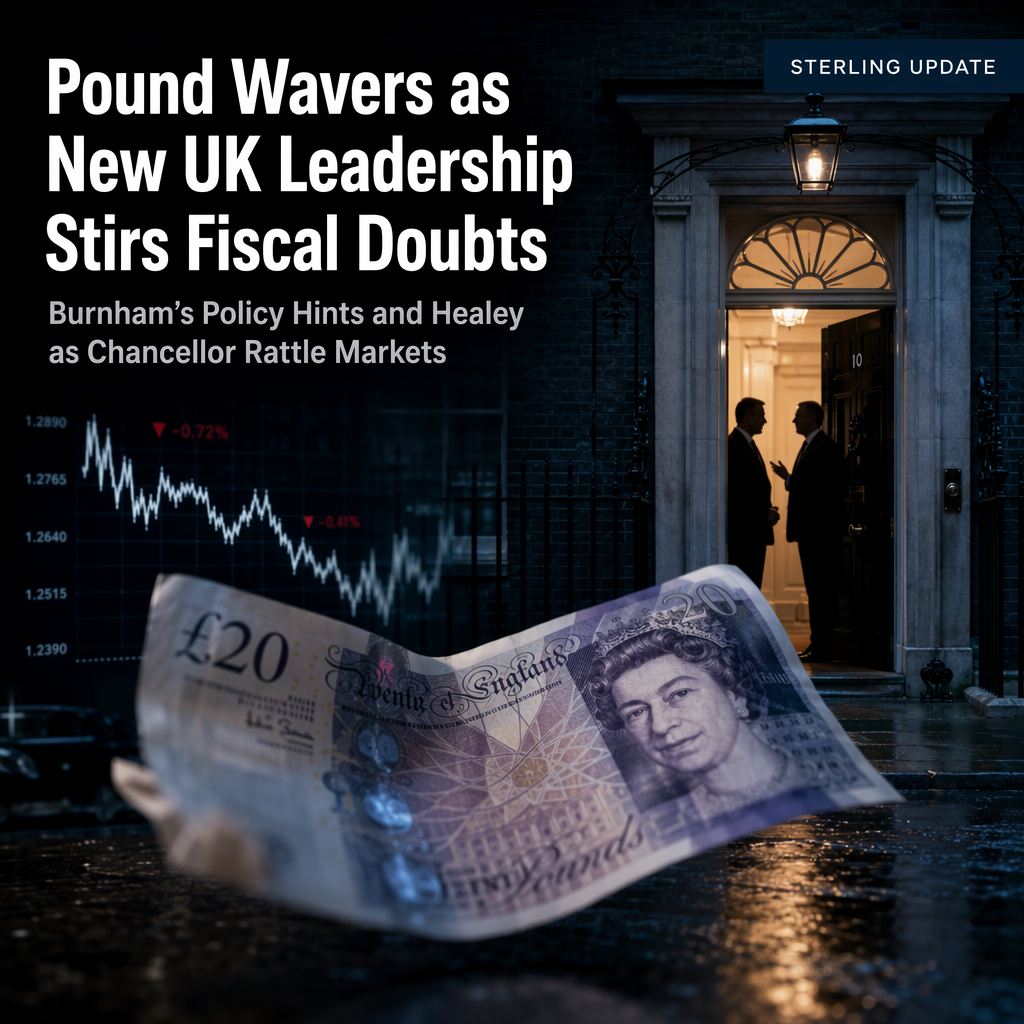
The British Pound (GBP) has experienced notable volatility following the appointment of Andy Burnham as the new UK Prime Minister. According to MUFG, the Pound modestly recovered overnight after initial losses triggered by Burnham's formal appointment, but long-dated gilts remain under pressure, with the 30-year yield approximately 7 basis points higher. The market reaction was driven by Burnham's comments that the government would 'stick to the existing fiscal rules and use obviously any flexibility with them,' which increased uncertainty over the UK's fiscal trajectory [1].
One of Burnham's first policy announcements is an GBP850 million plan to cut domestic energy bills by removing VAT on household electricity bills, reducing the rate from 5% to 0%. This measure is expected to lower inflation by 0.1 percentage points, according to the government, and will be funded by axing the digital ID scheme. Burnham emphasized that all cost-of-living measures would be fully funded, with further policies under consideration [1].
The appointment of John Healey, former Defence Minister, as Chancellor has added to fiscal policy uncertainty. Healey is known for advocating increased defence spending and previously resigned from Keir Starmer’s government over concerns about inadequate defence budgets. He has pushed for a commitment to raise defence spending to 3% of GDP by 2030. Healey is viewed as being on the moderate or centre-left wing of the Labour party, which may ease concerns about a much looser fiscal policy [1].
In the currency markets, the British Pound has extended its losses, nearing the 1.3400 level against the US Dollar, marking its fourth consecutive week of decline. Investors are closely watching Burnham’s policy direction and the profiles of his cabinet members. Burnham reiterated his commitment to the fiscal rules set by former Chancellor Rachel Reeves but indicated some flexibility to address the cost of living, which unsettled Pound crosses [2].
On the macroeconomic front, UK ILO Unemployment data showed the jobless rate remained steady at 4.9% in the three months before May, outperforming expectations of a rise to 5%. However, wage growth has moderated more than anticipated, suggesting softer inflationary pressures and offsetting the positive impact of the steady unemployment rate [2].
CONCLUSION
The British Pound remains under pressure amid heightened fiscal policy uncertainty following Andy Burnham's appointment as Prime Minister and the surprise selection of John Healey as Chancellor. While a modest recovery was seen after initial losses, ongoing concerns about fiscal flexibility and future spending plans continue to weigh on Sterling and UK government bonds. Investors are likely to remain cautious until greater clarity emerges on the new government's fiscal direction.