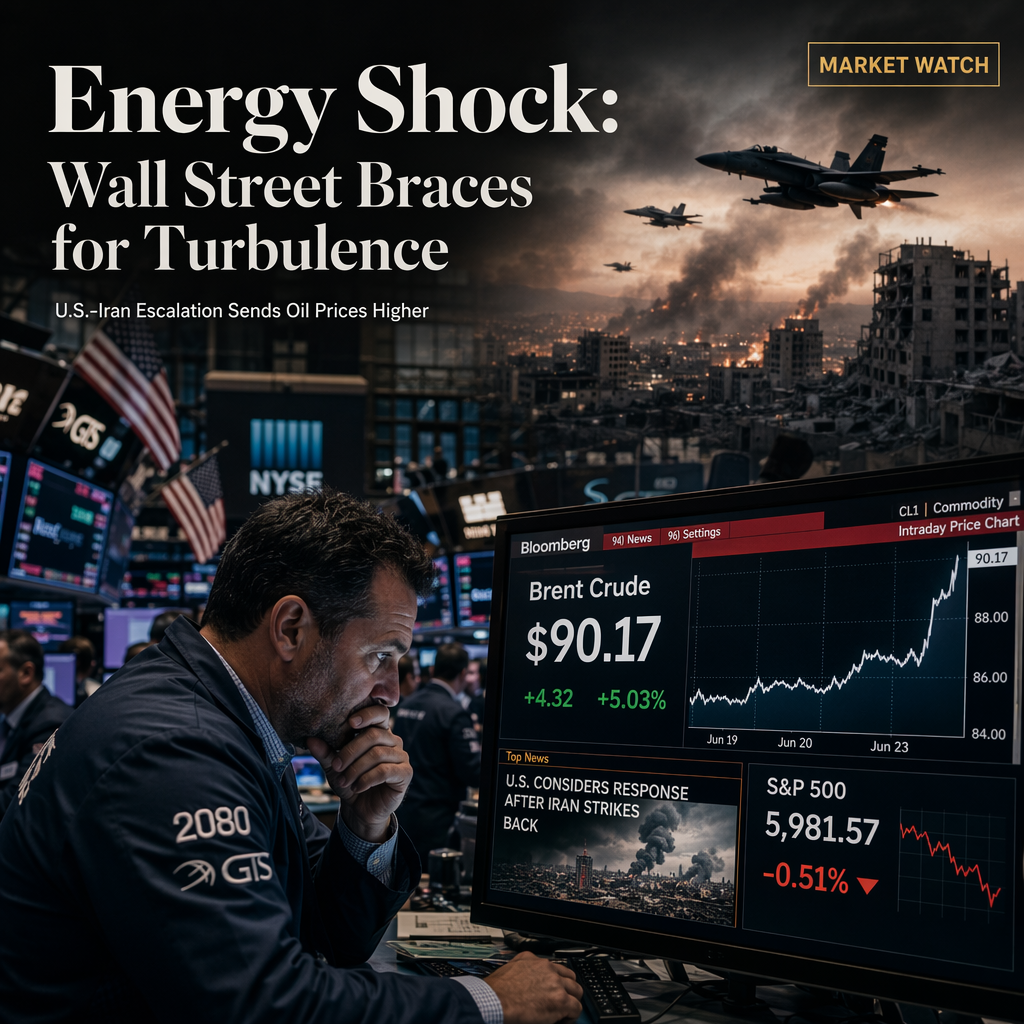
A significant escalation in the ongoing conflict between the U.S. and Iran has prompted Wall Street to reassess the potential economic fallout. Over the weekend, the U.S. completed its 10th consecutive night of strikes against Iran, following the Houthis in Yemen declaring a maritime embargo against Saudi Arabia. This escalation comes after the death of a third U.S. service member, with President Donald Trump vowing retaliation and stating, 'they will pay' on Truth Social [1].
Despite the intensifying conflict, the stock market has shown resilience. The S&P 500 fell only marginally in Monday's session after a losing week and remains just 2% below its all-time high set in June. Since its closing low of 6,343.72 in late March, the S&P 500 has rebounded to record levels, driven by strong corporate earnings and optimism following softer-than-expected inflation data last week. Investors appear to believe that neither the U.S. nor Iran desires a full-scale war that could trigger a global recession, shifting their focus to market fundamentals [1].
However, economists are increasingly concerned about the impact of rising energy prices. Brent crude briefly surpassed $90 a barrel on Monday and hovered just below that level on Tuesday. The U.S. 10-year Treasury yield also traded above 4.6% on Monday and remained near that mark on Tuesday. Prolonged elevation in both crude prices and Treasury yields could force Wall Street to adjust inflation expectations and monetary policy outlooks, potentially affecting corporate earnings [1].
Art Hogan, chief market strategist at B. Riley Wealth, emphasized the importance of the duration of high oil prices, stating, 'If we're above $85 or $90 into the end of the year, I suspect that the earnings estimates for this year would have to be trimmed.' He warned that the S&P 500 could enter a correction in a worst-case scenario but noted that the tech sector, which comprises 38% of the index, is relatively insulated from higher energy prices. In contrast, the energy sector accounts for just 3% of the S&P 500. Financials and healthcare may benefit from secular tailwinds, while energy and logistics companies reliant on fuel are likely to lag. Ryanair, for example, reported weak first-quarter profits on Monday, citing delays [1].
CONCLUSION
The escalation in U.S.-Iran tensions has so far had a limited impact on the broader stock market, with the S&P 500 remaining near record highs. However, sustained increases in oil prices and bond yields could eventually weigh on corporate earnings and shift market sentiment. Investors and analysts are closely monitoring the situation for any signs of prolonged disruption.