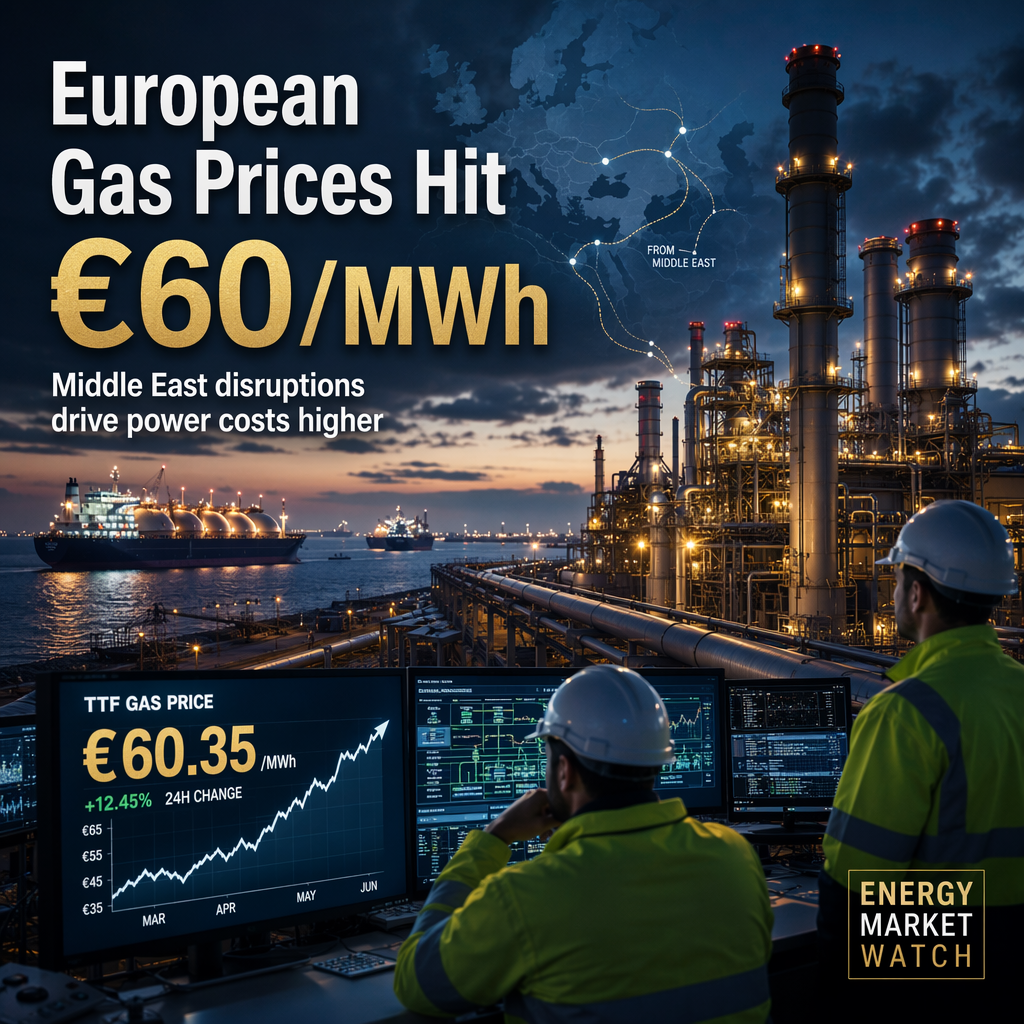
European natural gas prices, as measured by the TTF benchmark, have surged above €60 per megawatt-hour (MWh) following intensified supply disruptions in the Middle East, according to Rabobank’s Florence Schmit [1]. Over the course of eight consecutive sessions ending July 23, TTF gas futures rose by more than 15%, a move attributed to the escalating U.S.-Iran conflict and its impact on key energy supply routes [1].
In early July, Qatar paused efforts to rapidly revive its LNG production, which initially pushed TTF gas prices back above €50/MWh. The subsequent escalation of geopolitical uncertainties further propelled prices beyond €60/MWh [1]. Rabobank forecasts that gas prices will remain elevated into the second half of 2026, which is expected to limit the downside for power prices in major European markets such as Germany, the Netherlands, and the UK, where gas-fired generation is becoming increasingly important [1].
The report highlights that as winter approaches and demand shifts from summer to winter loads, reliance on gas-fired generation will increase, particularly in Germany, the Netherlands, and the UK. This dynamic is likely to keep power prices elevated and leave markets exposed to further upside in TTF gas prices [1].
No specific analyst opinions or forward-looking statements beyond Rabobank’s forecast for sustained high prices and limited downside for power prices were mentioned in the article [1].
CONCLUSION
European natural gas prices have experienced a sharp increase due to Middle Eastern supply disruptions and geopolitical tensions, with Rabobank forecasting sustained high prices into late 2026. This environment is expected to keep power prices elevated in key European markets, particularly as gas-fired generation becomes more critical during the winter months.