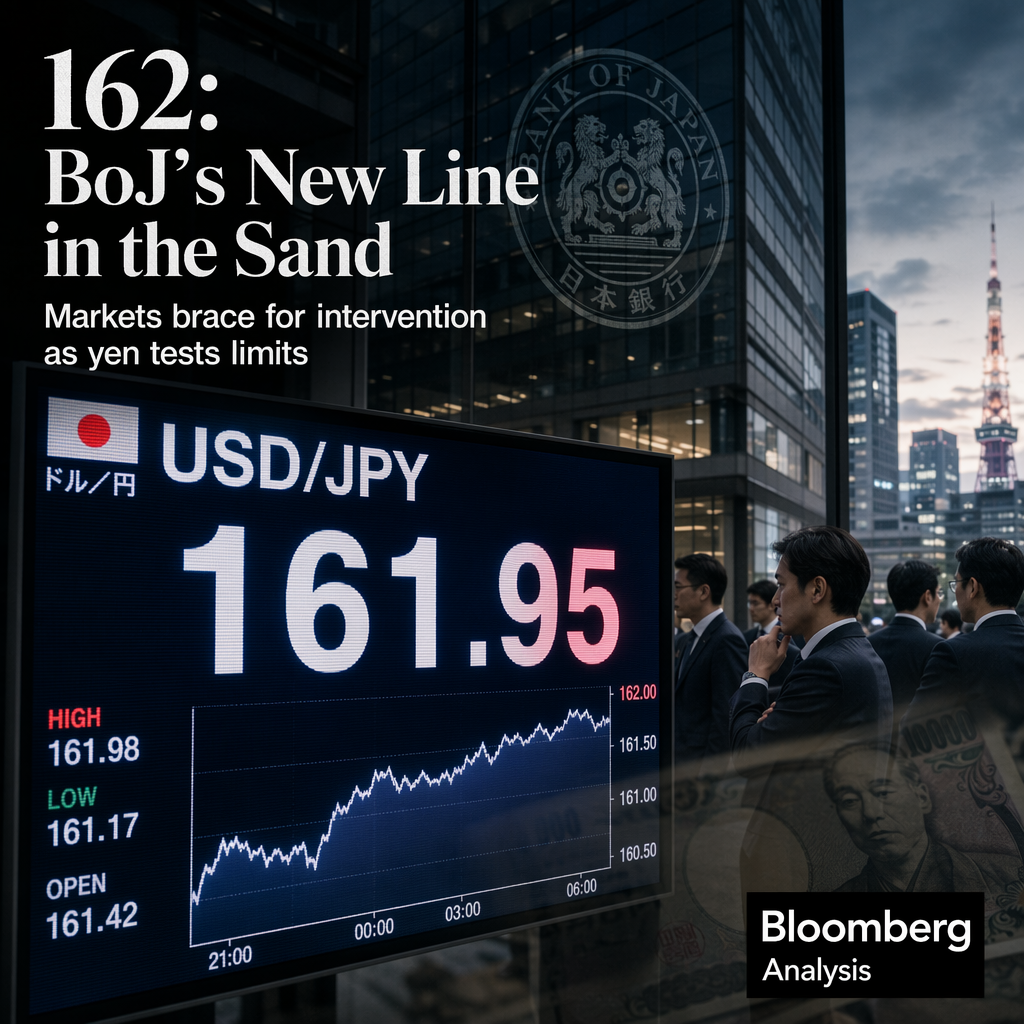
According to ING’s Francesco Pesole, market participants are increasingly viewing the 162.0 level in USD/JPY as the new threshold for potential Bank of Japan (BoJ) foreign exchange intervention, which may explain the sharp intraday drop after the currency pair reached a peak of 161.95 recently [1]. Pesole notes that the 162–163 area is now seen as the likely zone for BoJ action, especially given the context of lower market liquidity around the early July US holiday and the possibility of strong US payroll data on July 3, which could prompt the BoJ to intervene again [1].
Pesole highlights that the market's conviction around the 162.0 level as a 'line in the sand' for intervention is growing, particularly as the US dollar environment has softened [1]. He adds that the urgency and scale of any intervention will depend on the pace and drivers of further USD/JPY appreciation [1]. ING’s current expectation is that the BoJ may act if the pair approaches the 162–163 range, but the timing remains uncertain [1].
Looking ahead, Pesole suggests that a dovish Federal Reserve outlook could make any new FX intervention by the BoJ more effective in weakening USD/JPY, though he cautions that the market may continue to expect a hawkish Fed stance for several more weeks, potentially forcing Japan to intervene more than once [1].
CONCLUSION
Markets are increasingly focused on the 162–163 range in USD/JPY as the new intervention zone for the Bank of Japan, with upcoming US economic data and liquidity conditions likely to influence timing. While a dovish Fed could support more sustainable yen strength, uncertainty remains over the market’s expectations and the potential need for repeated BoJ action.