
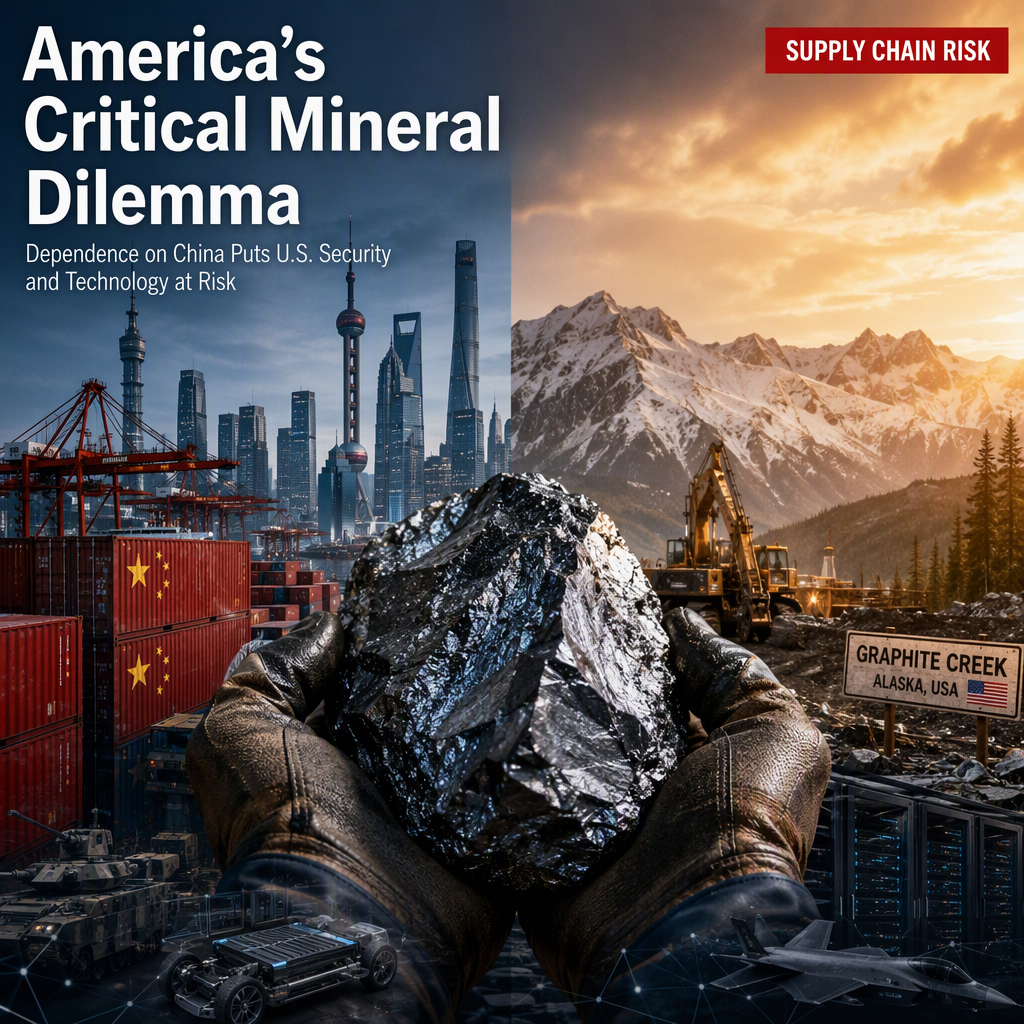
The United States is currently facing a significant strategic vulnerability due to its dependence on foreign nations, particularly China, for critical minerals essential to national security and economic stability [1]. These minerals are vital for manufacturing military systems, powering data centers, supporting advanced technologies, and underpinning key industries in the American economy [1]. The COVID-19 pandemic highlighted the risks of such dependence, as disruptions in overseas supply chains left American hospitals struggling to obtain basic medical equipment produced in China, which controlled their distribution [1].
Graphite is cited as a prime example of this vulnerability. It is a crucial material used in rechargeable batteries for electric vehicles, energy storage systems, electronic devices, defense technologies, drones, advanced manufacturing, and the infrastructure required for artificial intelligence and data centers [1]. China has established dominant positions across the critical mineral supply chain, from mining and processing to advanced materials manufacturing, and has demonstrated a willingness to restrict exports of strategically important materials for geopolitical and economic leverage [1].
Despite the importance of graphite, the United States remains dependent on foreign sources, including China, for its supply [1]. However, the U.S. possesses significant natural resources, particularly in Alaska, which contains 57 of the 60 minerals identified as critical to America's economic and national security [1]. The Graphite Creek deposit on Alaska's Seward Peninsula is recognized by the U.S. Geological Survey as the largest known graphite deposit in the United States and could serve as the foundation for a fully integrated domestic graphite supply chain [1].
The article argues that leveraging domestic resources like Graphite Creek could fundamentally change the conversation about U.S. dependence on foreign sources for critical minerals and enhance national security [1].
CONCLUSION
The article underscores the strategic risks posed by U.S. reliance on China for critical minerals such as graphite, which are essential for both economic and national security. It highlights the potential for domestic resources, particularly in Alaska, to reduce this dependence and strengthen supply chain resilience.