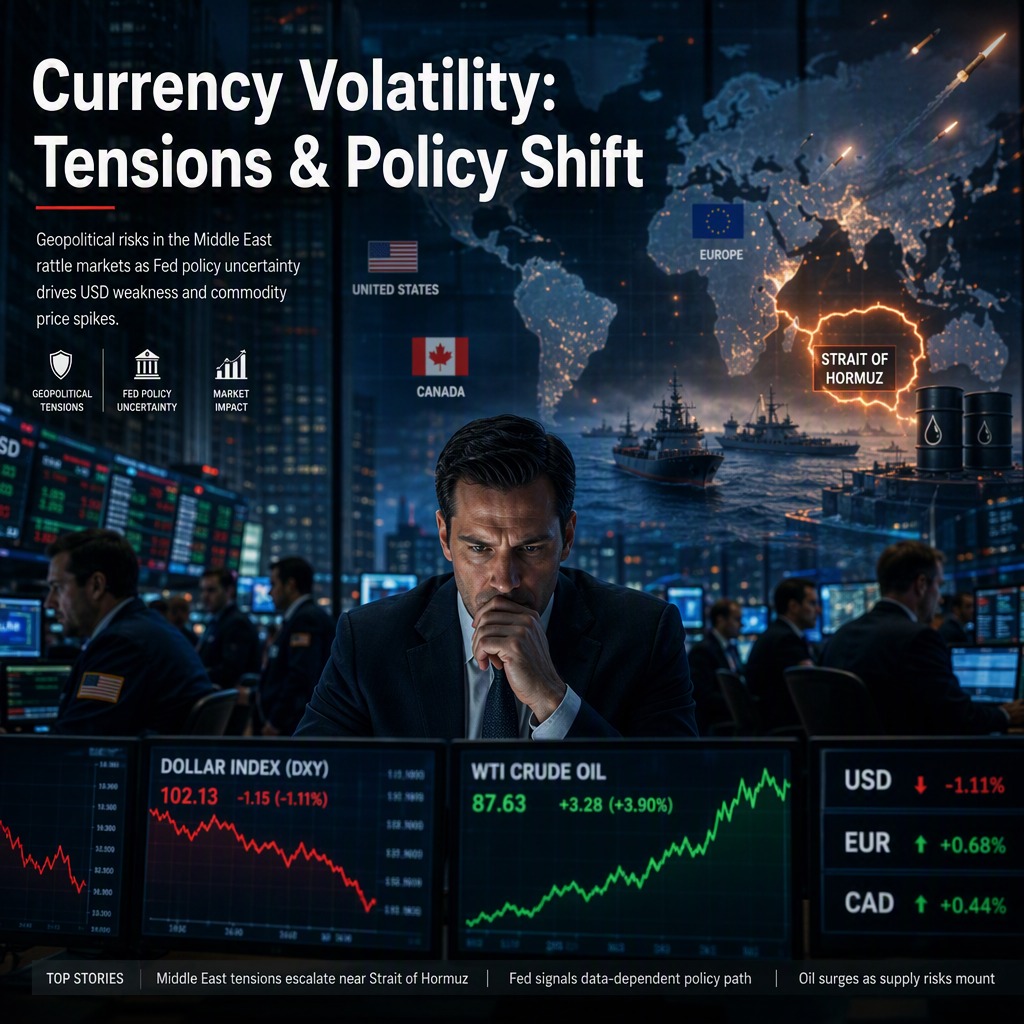
The US Dollar (USD) experienced notable volatility as geopolitical tensions between the United States and Iran escalated, particularly around the critical Strait of Hormuz, and as traders repriced Federal Reserve (Fed) policy expectations. The USD Index (DXY) dropped to 98.80, its lowest level since late May, reflecting reduced market expectations for a Fed rate hike at the September policy meeting. The probability of a rate hike fell to 32.7%, down from 47% a month earlier, according to the CME FedWatch Tool [2][3]. This decline was attributed to unexpected job losses in July and subdued US inflation data, alongside the Fed's July meeting minutes, which indicated officials favored raising rates soon if inflation failed to cool, but kept the benchmark rate steady at 3.5%–3.75% [1][3].
The US Treasury Department announced it would double purchases of longer-dated government debt from September, increasing the maximum size per operation from $2 billion to at least $4 billion, in an effort to curb rising borrowing costs and provide relief to bond markets [1][2]. Mounting concerns over US national debt surpassing $40 trillion also contributed to downward pressure on the USD [2]. Despite these factors, geopolitical risks stemming from the US-Iran conflict and threats by President Donald Trump to impose severe financial penalties on nations aiding Iran have lent support to the safe-haven USD and kept crude oil prices elevated [1][2][3]. The United Arab Emirates suspended all trade with Tehran after two ballistic missiles targeted the UAE, though Iran denied firing the missiles [2].
The EUR/USD pair entered a bullish consolidation phase after reaching its highest level since late May, with bulls awaiting a move beyond the 1.1700 mark for further upside. The overnight breakout above the 200-day Simple Moving Average (SMA) and the 61.8% Fibonacci retracement level were seen as key triggers for EUR/USD bulls, with further resistance at 1.1733 and 1.1845, and immediate support at 1.1646 [1]. The Euro was the strongest major currency against the US Dollar this month [1]. Expectations for continued European Central Bank (ECB) tightening at the September policy meeting are acting as a tailwind for the shared currency [1].
Meanwhile, the Canadian Dollar (CAD) gained ground as improved oil prices, driven by Middle East tensions and the risk premium on Brent crude, supported the commodity-linked currency. The USD/CAD pair traded around 1.3800, extending losses for the second day. TD Securities warned that the "Iran conflict teeters on further escalation," suggesting Brent’s risk premium will remain elevated [3]. The cooling US inflation and reduced Fed rate hike expectations also contributed to the USD's weakness against the CAD [3].
Analyst opinions highlighted that the USD remains range-bound as markets grapple with renewed uncertainties over the Strait of Hormuz, with DBS Group Research economist Chang Wei Liang noting that currency markets are reluctant to push the Dollar decisively higher despite the unsettled backdrop [2]. Technical analysis showed the DXY in bearish territory, with the Relative Strength Index (RSI) at 29.60 indicating oversold conditions, suggesting the pace of decline may moderate [2].
CONCLUSION
Geopolitical tensions and shifting Fed policy expectations have led to significant volatility in the USD, strengthening the Euro and Canadian Dollar. The market is closely watching developments in the Middle East and upcoming central bank meetings for further direction. Elevated oil prices and persistent uncertainty are likely to keep risk premiums high and currency markets volatile in the near term.