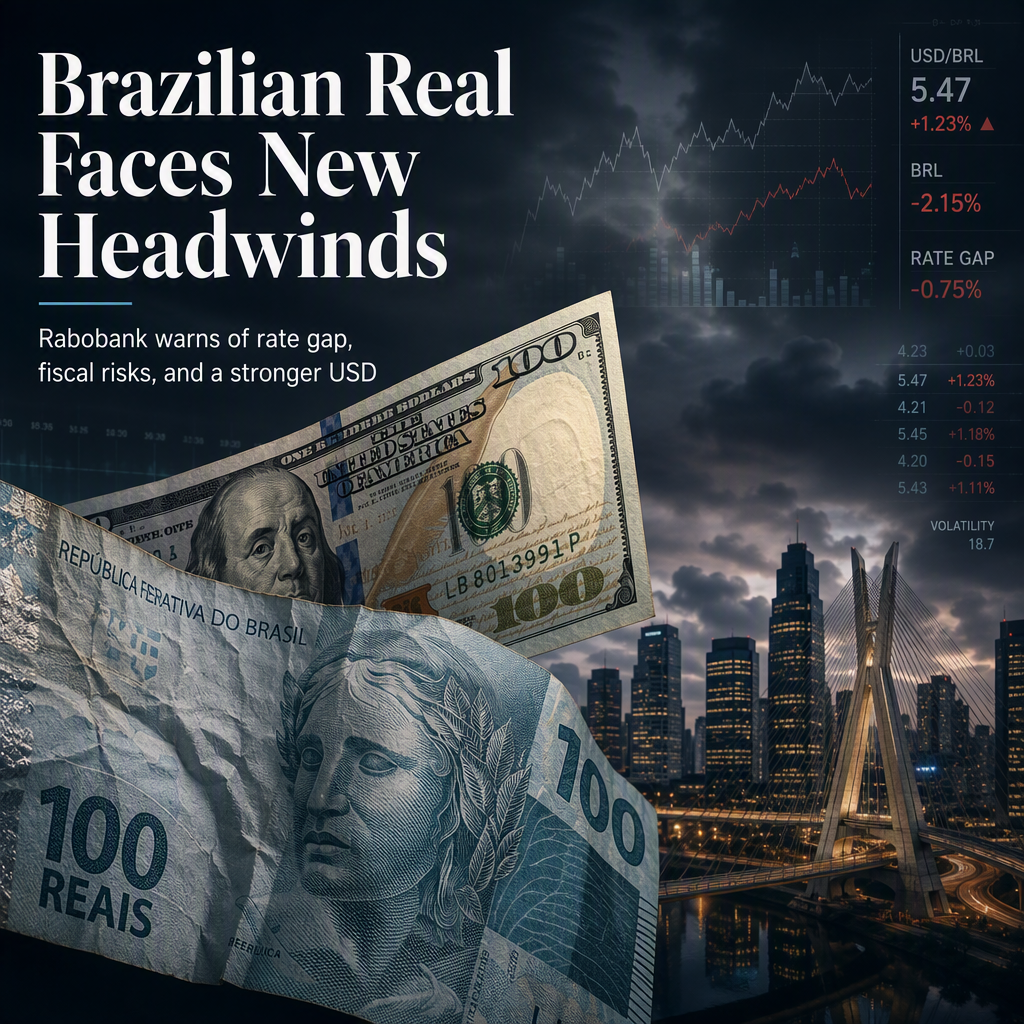
Rabobank analysts Mauricio Une and Renan Alves report that the Brazilian Real (BRL) appreciated 1.26% against the US Dollar over the past week, with the USD/BRL exchange rate closing at 5.1290 on Friday. This performance ranked as the 11th-best among 24 emerging-market currencies, while the MSCI EMFX Index rose to 1,937 points (+0.6%) and the DXY Index showed the US dollar depreciated 0.5% against G10 peers over the same period [1].
Despite this recent appreciation, Rabobank highlights several risks that could weigh on the BRL going forward. Externally, the US labor market showed strength in August, with robust job creation and a stable unemployment rate, reinforcing the perception of a resilient US economy. This, combined with the possibility of reduced scope for US rate cuts and potential monetary tightening in Japan, could limit the BRL's upside. Domestically, Brazil's GDP grew by 0.5% quarter-on-quarter in Q2 2026, surpassing expectations and driven mainly by agriculture and the extractive industry. However, other sectors such as household consumption, manufacturing, construction, and exports showed signs of slowing or contraction [1].
Rabobank warns that a potential reduction in carry trade inflows throughout 2026 is a significant risk for the BRL. The currency remains sensitive to global uncertainties, including the pace of economic slowdown in the US and China, geopolitical risks, and persistent doubts about the sustainability of Brazil's fiscal framework, especially in an election year. The analysts forecast the USD/BRL exchange rate to reach 5.35 by year-end 2026, which is above market consensus [1].
On the monetary policy front, Fed Governor Christopher Waller indicated that the US Federal Reserve's September interest rate decision will depend on August inflation data. An upside inflation surprise could prompt a rate hike, while continued disinflation would support keeping rates unchanged in the 3.50%-3.75% range [1]. Rabobank expects a narrower interest-rate differential between Brazil and advanced economies in 2026, which, along with a potentially stronger US dollar and Brazil's fiscal vulnerabilities, could further pressure the BRL [1].
CONCLUSION
Rabobank anticipates that the Brazilian Real will weaken against the US Dollar, projecting a USD/BRL rate of 5.35 by the end of 2026 due to narrowing interest-rate differentials and ongoing fiscal concerns. While recent data showed short-term BRL strength, the outlook remains cautious amid global and domestic risks.