The British Pound (GBP) is consolidating near 1.3300 against the US Dollar as recent UK economic data indicate a more favorable growth-inflation mix, according to Brown Brothers Harriman’s (BBH) Elias Haddad [1]. The July composite Purchasing Managers' Index (PMI) surprised to the upside, rising to a three-month high of 52.1, compared to a consensus estimate of 49.8 and a prior reading of 48.8. This improvement reflects both a recovery in services business activity and a faster expansion in manufacturing production [1].
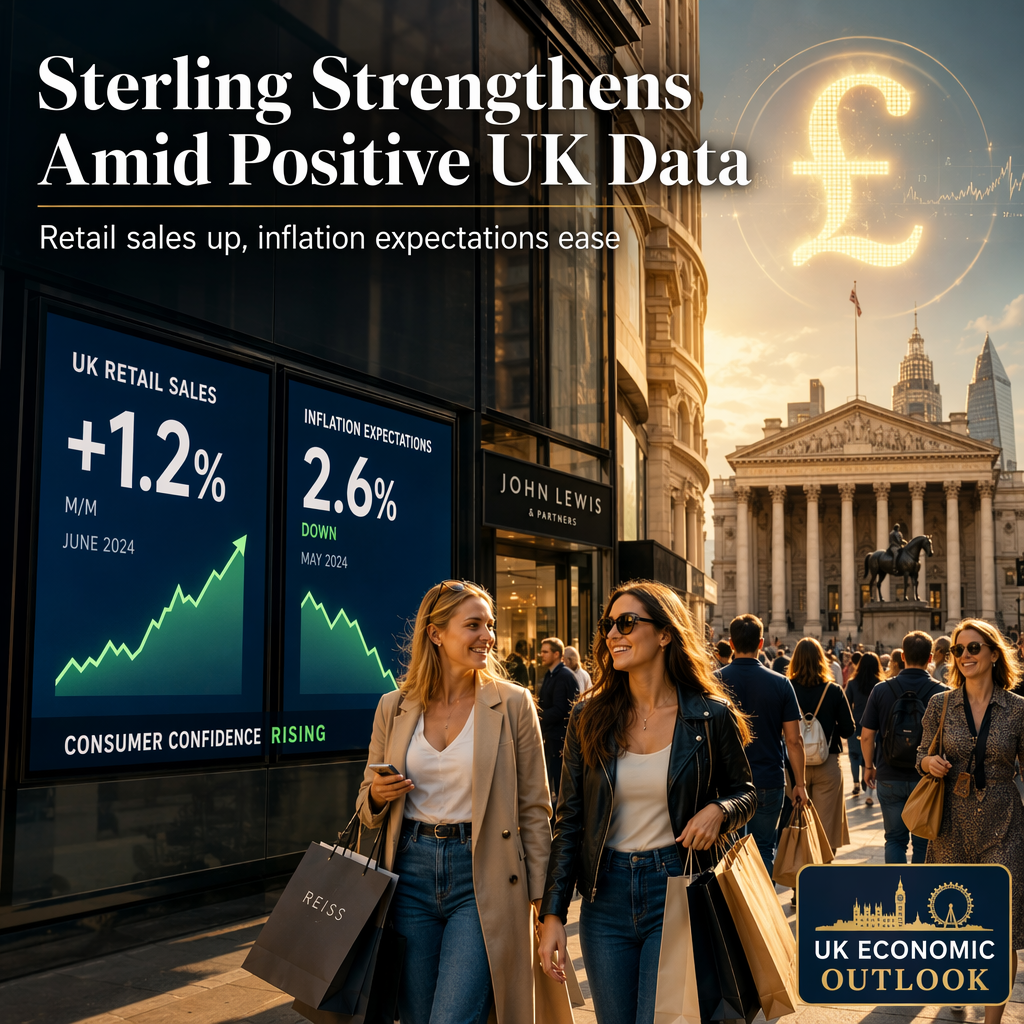
UK retail sales also exceeded expectations, with total retail sales volumes increasing by 1.0% month-on-month (m/m) versus a consensus forecast of -0.3% and a previous increase of 1.2% in May. Excluding automotive fuel, retail sales rose 1.1% (consensus: -0.5%) compared to 1.2% in May [1]. However, the report notes that the strength in retail sales is largely attributed to temporary factors such as promotions, hot weather, and World Cup spending, rather than a sustained consumer boom [1].
On the inflation front, the Bank of England’s Decision Maker Panel (DMP) business survey showed that both 1-year and 3-year inflation expectations eased in July, falling by 0.3 percentage points to 3.0% (matching the February low) and 2.6% (the lowest since October 2024), respectively [1]. This moderation in inflation expectations provides the Bank of England with room to remain patient regarding monetary policy adjustments [1].
Overall, while the headline data are supportive for the GBP, the underlying details suggest that the recent strength in consumer activity may not be sustainable in the longer term [1].
CONCLUSION
Recent UK data have improved the growth-inflation outlook, supporting the British Pound. However, the boost in retail sales appears to be driven by temporary factors, and easing inflation expectations may allow the Bank of England to maintain a cautious stance. Market participants should remain attentive to the sustainability of these trends.