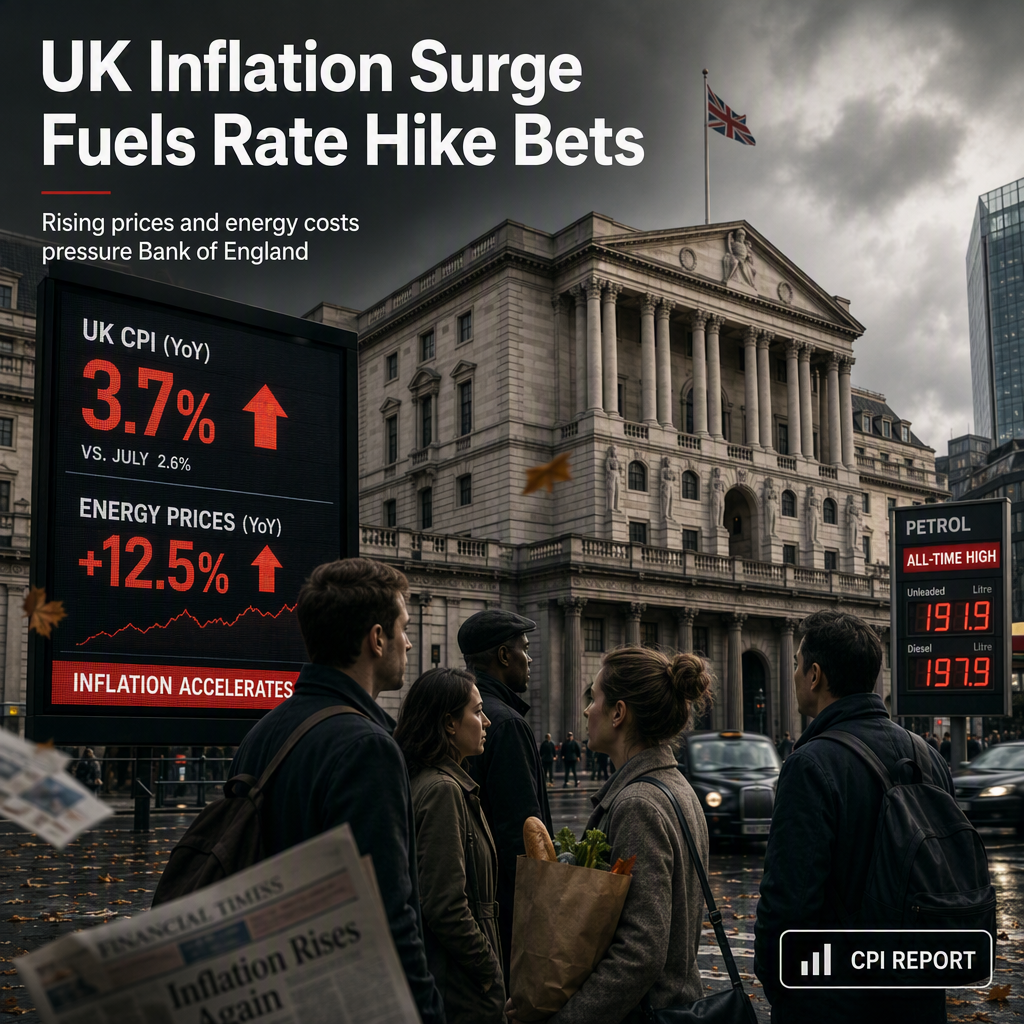
The United Kingdom's Office for National Statistics (ONS) is set to release the August Consumer Price Index (CPI) data, with expectations pointing to a rise of 3.1% year-on-year, up from 2.9% in July, further distancing from the Bank of England's (BoE) 2% target [1]. On a monthly basis, CPI is forecast to increase by 0.5% in August, compared to a 0.3% rise in July [1]. Core inflation, which excludes volatile components such as energy, food, alcohol, and tobacco, is also expected to accelerate to 2.7% YoY from 2.6% previously [1].
The anticipated uptick in inflation is attributed to ongoing effects from the conflict in the Middle East, which have impacted UK energy costs. Transport prices rose 9.1% YoY in July, and pump prices increased again in August, with unleaded petrol reaching its highest price since November 2022 [1]. Further inflationary pressure is expected, as UK energy regulator Ofgem has confirmed a 4% increase in the energy price cap from October, following a previous increase in July [1].
Food price risks are also mounting. Grocery price inflation accelerated to 2.3% YoY in the four weeks to September 6, up from 2.1% previously, according to Worldpanel by Numerator data [1]. The Food and Drink Federation (FDF) projects food and non-alcoholic drink inflation to reach 3.9% in December and exceed 6% in 2027, driven by higher energy costs, logistical disruptions, and adverse weather conditions [1].
The BoE projected in July that headline inflation would peak at around 3.2% in the fourth quarter of 2026, with risks to its inflation outlook tilted to the upside [1]. Bloomberg Economics now estimates that higher energy costs could push UK inflation above 4% in 2027 [1]. The upcoming CPI report is expected to trigger volatility in the British Pound (GBP), especially as it precedes the BoE's monetary policy decision. All 65 economists surveyed in a Reuters poll between September 4 and 8 expect the BoE to keep its policy rate unchanged at 3.75% on Thursday, but another acceleration in price pressure could strengthen expectations of an interest rate hike in the coming months [1].
CONCLUSION
The August UK inflation report is expected to show rising price pressures, with both headline and core inflation accelerating. This could fuel market volatility and increase expectations for future rate hikes, even as the BoE is widely anticipated to keep its policy rate unchanged at 3.75% this week. Persistent inflation risks, especially from energy and food prices, may complicate the central bank's disinflation efforts.