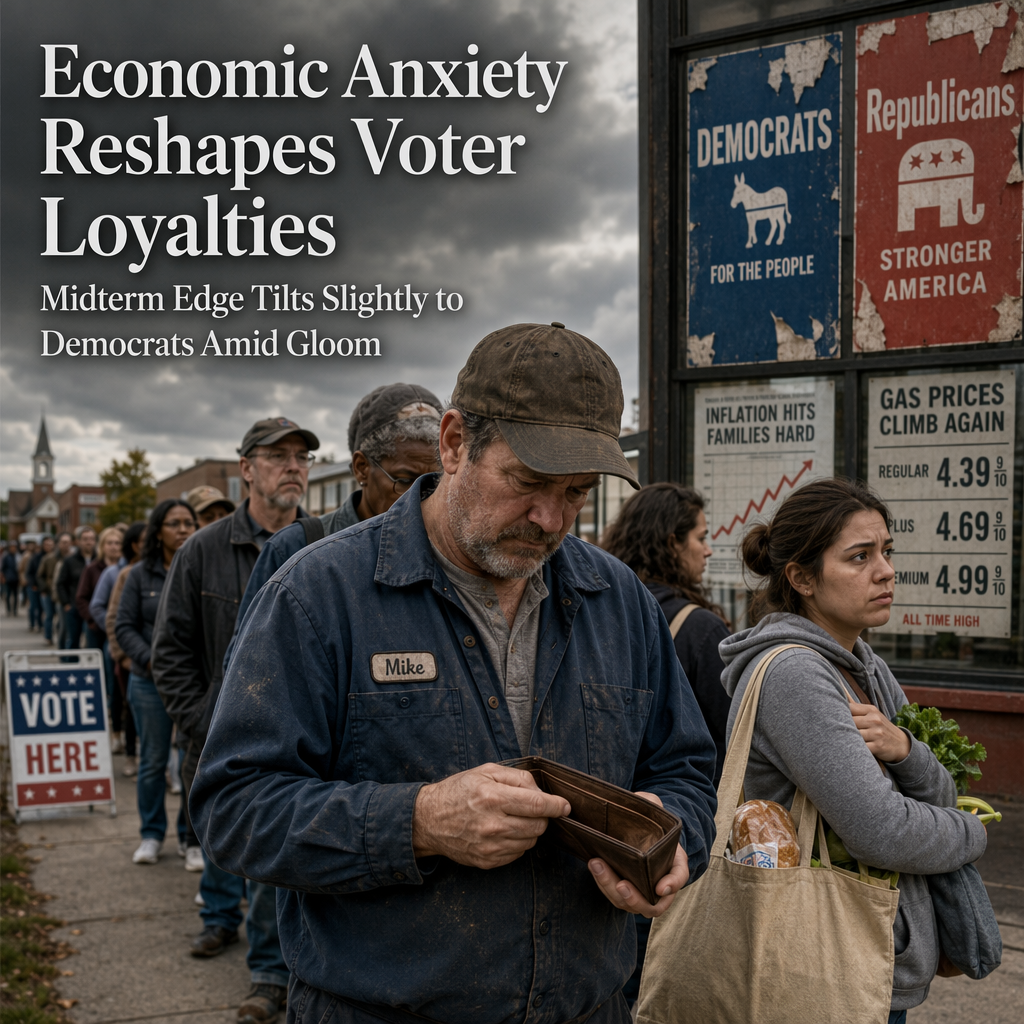
Recent polling data indicates that a majority of Americans rate the economy negatively, with economic dissatisfaction cutting across party lines, including half of Republicans expressing a negative view [1]. President Trump's net approval on the economy has seen a significant decline, dropping 13 points to -37 between March of the previous year and June, according to Fox News surveys. Similarly, Washington Post/Ipsos polls show a 24-point drop to -32 over a comparable period, with the latest poll released last week [1].
The primary drivers of voter frustration are the cost of living, which is the most important issue for 46% of voters, followed by healthcare (28%), housing (19%), food (18%), and gas (15%), as reported by a Reuters/Ipsos survey conducted in June [1]. Goods impacted by tariffs and the Iran war, such as food and gas, are among the top five cost concerns, but healthcare and housing top the list [1]. Large majorities believe the political and economic systems are stacked against them, including 72% of middle-class and 86% of working-class adults, with both figures rising by more than 30 points over the past decade [1].
Democrats appear poised to benefit from this economic discontent, holding a four-point advantage on the generic ballot and regaining a narrow lead in party affiliation (47%-43%) [1]. The party has also opened leads in statewide races in Georgia and North Carolina [1]. However, these margins are not substantial, and there is uncertainty about whether voters believe Democrats can address their concerns. The GOP's redistricting successes and a favorable Senate map contribute to a competitive midterm landscape, with the Senate currently considered a coin flip if each party wins all seats leaning their way, resulting in 48 seats each and four toss-ups [1].
While the electorate is experiencing economic gloom, it remains unclear which party will ultimately benefit, as voters are dissatisfied with the status quo but not fully convinced by Democratic solutions [1].
CONCLUSION
Widespread economic dissatisfaction is eroding support for the GOP and giving Democrats a modest advantage heading into the midterms. However, the competitive political environment and voter skepticism toward both parties' solutions suggest that the ultimate outcome remains uncertain.