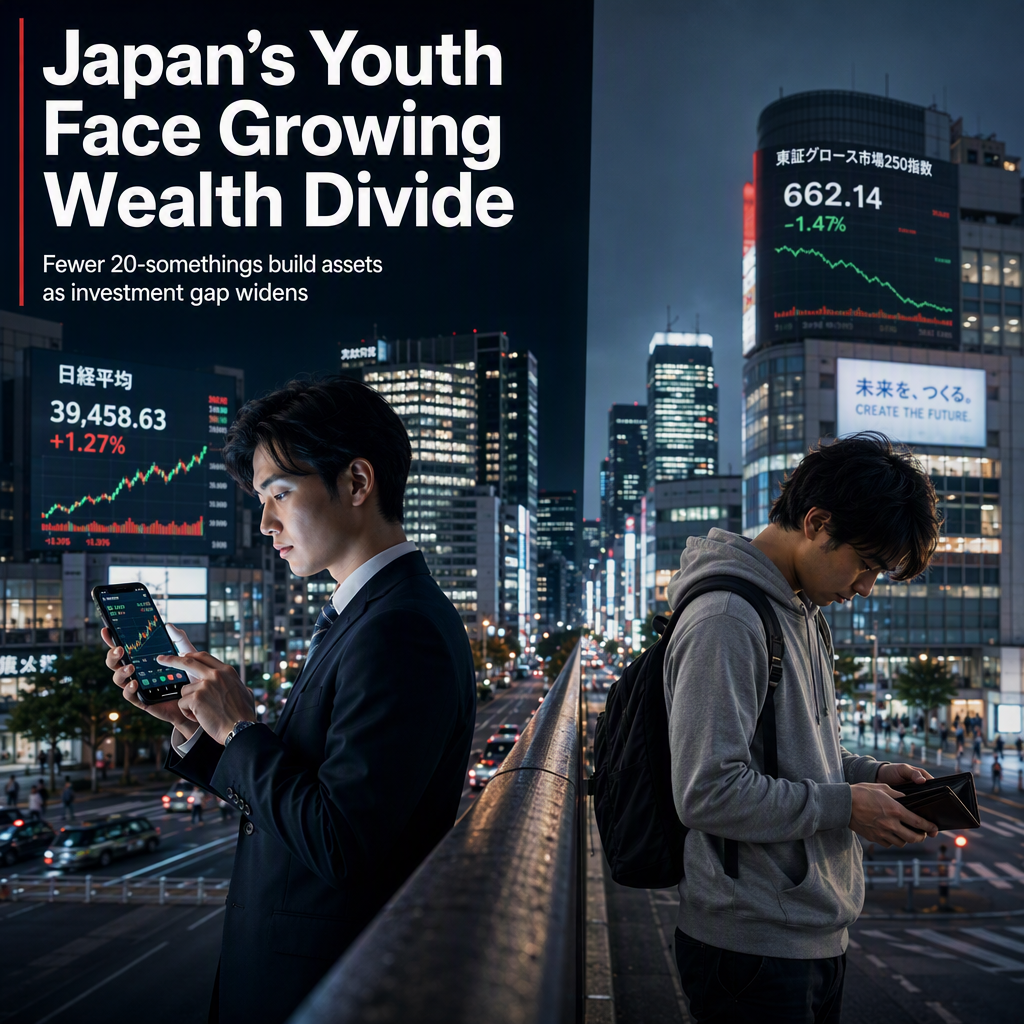
Japan is experiencing a widening gap in financial asset holdings among its younger generations, particularly those in their 20s, according to recent analysis. While the average amount of money invested in securities by Japanese people under 30 is increasing, the inequality coefficient for this age group is higher than for any other, indicating that wealth accumulation is becoming more uneven within this demographic [1].
A significant factor contributing to this disparity is the declining participation of young people in the government's tax-free NISA (Nippon Individual Savings Account) investment program. A smaller share of new workforce entrants are opening NISA accounts compared to previous generations, despite the program's tax benefits designed to encourage asset building through investments in securities [1].
Financial analysts cited in the article express concern that, although some young Japanese are increasing their investments, a substantial portion are not accumulating assets at all. This is supported by a referenced chart showing that, even as average securities holdings rise for those under 30, the proportion of this age group with no holdings is also increasing [1].
Market sentiment, as reflected in the article, points to worries about the long-term effects of this growing wealth gap. There are concerns that lower participation in asset-building activities among young people could have broader implications for future market stability and household financial security as Japan's population continues to age [1].
CONCLUSION
The widening wealth gap among Japan's youth, driven by uneven participation in asset-building programs like NISA, raises concerns about long-term market stability and financial security. While some young people are investing more, many are being left behind, highlighting a critical issue for policymakers and market observers.