
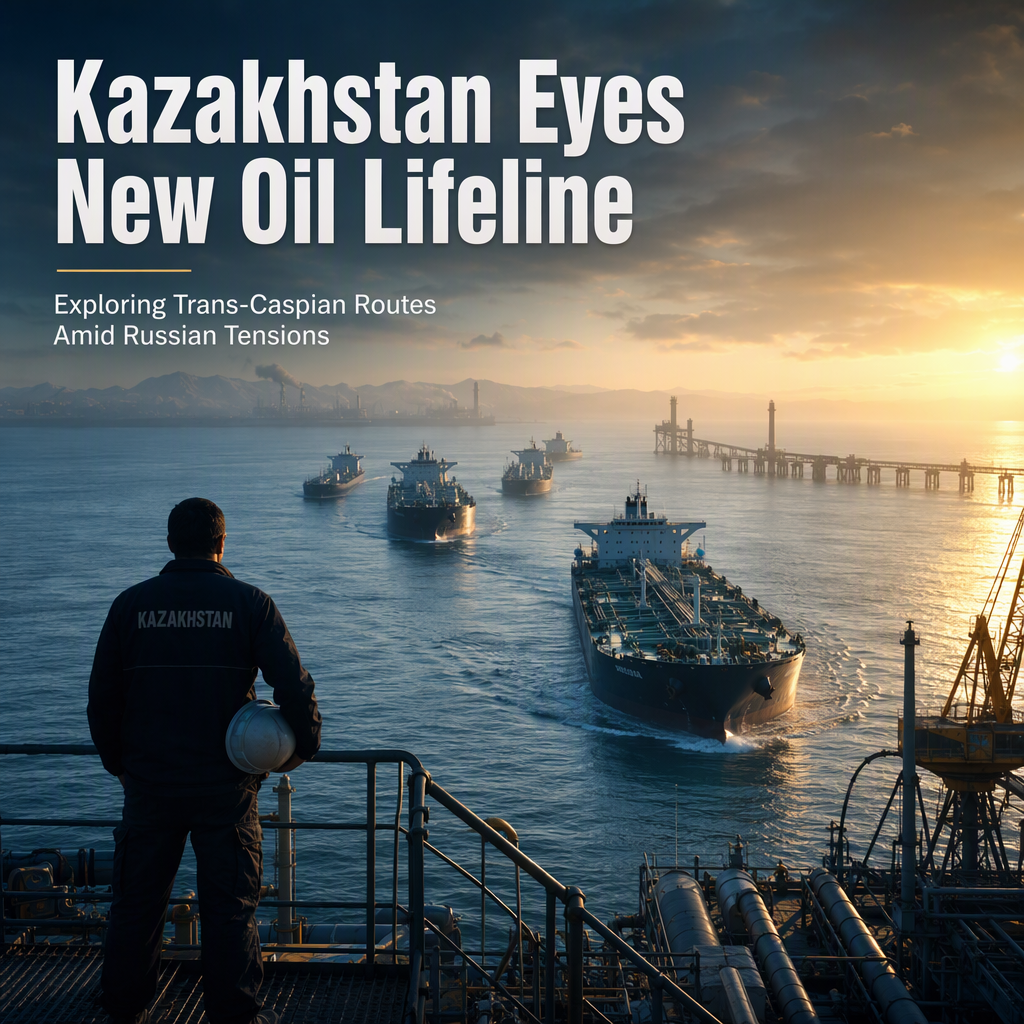
Kazakh oil majors are conducting a feasibility study for a trans-Caspian export route to bypass Russia, following repeated Ukrainian drone attacks on a Black Sea terminal and tankers this year [1]. The options being considered include constructing a subsea pipeline across the Caspian Sea or expanding the fleet of oil tankers to transport crude [1]. This initiative is driven by growing concerns over the security of current export routes through Russian territory, which have become increasingly vulnerable to drone strikes and other disruptions [1]. Kazakhstan, which relies heavily on Russia for its oil exports, is assessing alternative routes to maintain stable flows and protect its energy revenues [1]. Financial analysts note that any new infrastructure investment, whether in a subsea pipeline or tanker fleet, would require significant capital expenditure and carry operational risks [1]. However, the potential for transit diversification is seen as positive for Kazakhstan's long-term market access and pricing power [1]. An industry insider familiar with the study stated, 'The repeated attacks on Black Sea infrastructure have forced Kazakh producers to review their export strategies. A trans-Caspian route would reduce dependence on Russia and offer more flexibility in accessing global markets' [1]. Market observers are closely monitoring signals from Kazakh oil majors regarding the timeline and scope of the feasibility study, but no specific financial figures or project costs have been disclosed yet [1]. The prospect of a new export route is viewed as a hedge against geopolitical risk and supply chain disruptions in the region [1].
CONCLUSION
Kazakh oil producers are actively exploring alternative export routes to mitigate geopolitical risks and supply chain disruptions stemming from reliance on Russia. While the feasibility study is still in progress and no concrete financial details have been released, the initiative is seen as a positive step for Kazakhstan's long-term energy market stability and pricing power.