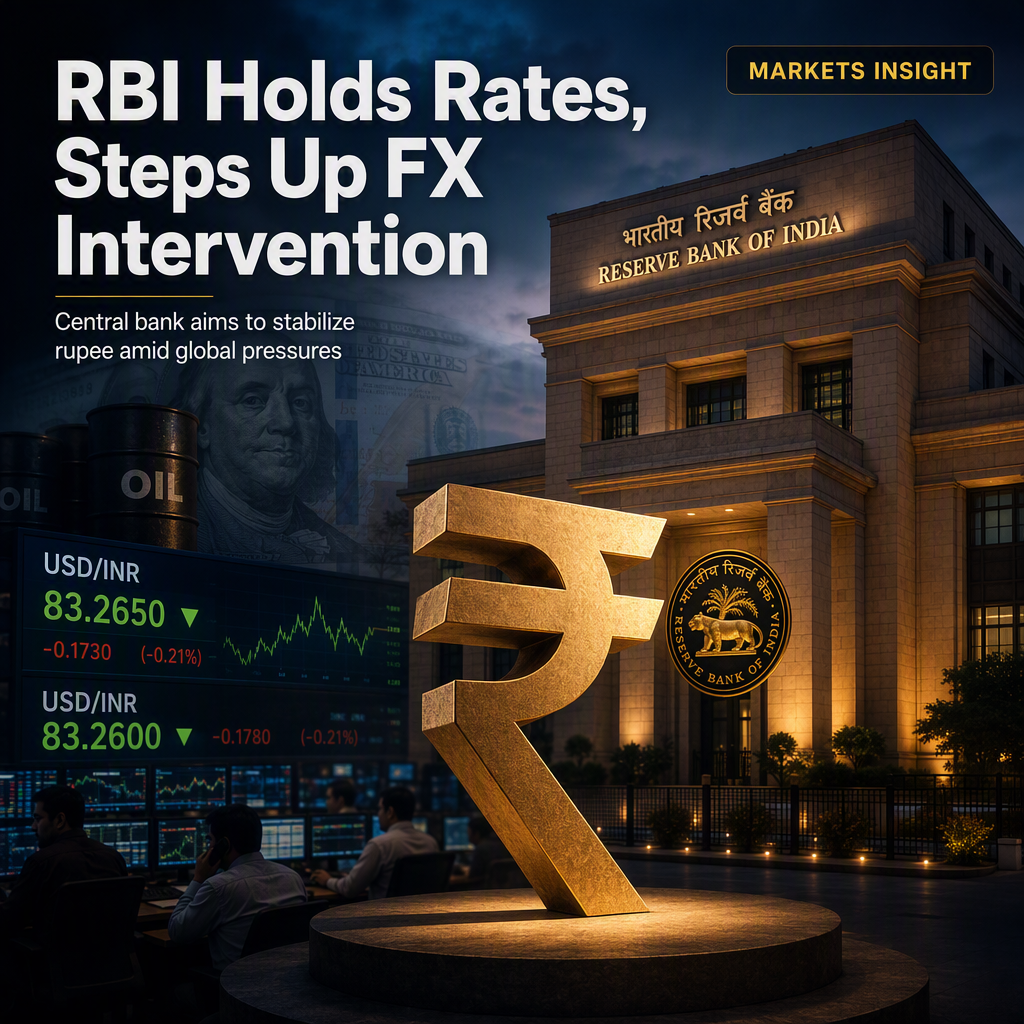
According to BNY’s Geoff Yu, the Reserve Bank of India (RBI) is anticipated to maintain its repo rate at 5.25%, opting instead to utilize macroprudential tools to manage financial stability as the Indian Rupee (INR) faces ongoing pressure from elevated oil prices and a stronger US dollar [1]. The report highlights that the RBI’s policy stance remains cautious and data-dependent, driven by the dual challenges of persistent inflation and slowing economic growth [1].
The RBI is expected to focus on managing inflation expectations, addressing supply-side risks, and employing macroprudential measures to preserve both financial and currency market stability, rather than adjusting interest rates [1]. Despite these efforts, the INR is likely to remain under pressure due to the unfavorable external environment [1].
BNY notes that both the Indian and Philippine central banks are actively intervening in foreign exchange markets to limit volatility, effectively capping the upside in USD/INR and USD/PHP even as domestic fundamentals soften and energy prices remain high [1]. This underscores the commitment of policymakers to maintain orderly FX markets [1].
From an investment perspective, BNY continues to see value in carry interest, though they suggest that duration strategies may outperform outright currency exposures in the current environment [1].
CONCLUSION
The Reserve Bank of India is expected to keep its repo rate unchanged at 5.25%, focusing on FX intervention and macroprudential measures to stabilize the rupee amid external pressures. While the INR remains vulnerable to higher oil prices and a strong dollar, active central bank intervention is helping to contain volatility. Investors may find better opportunities in duration strategies over direct currency exposure.