
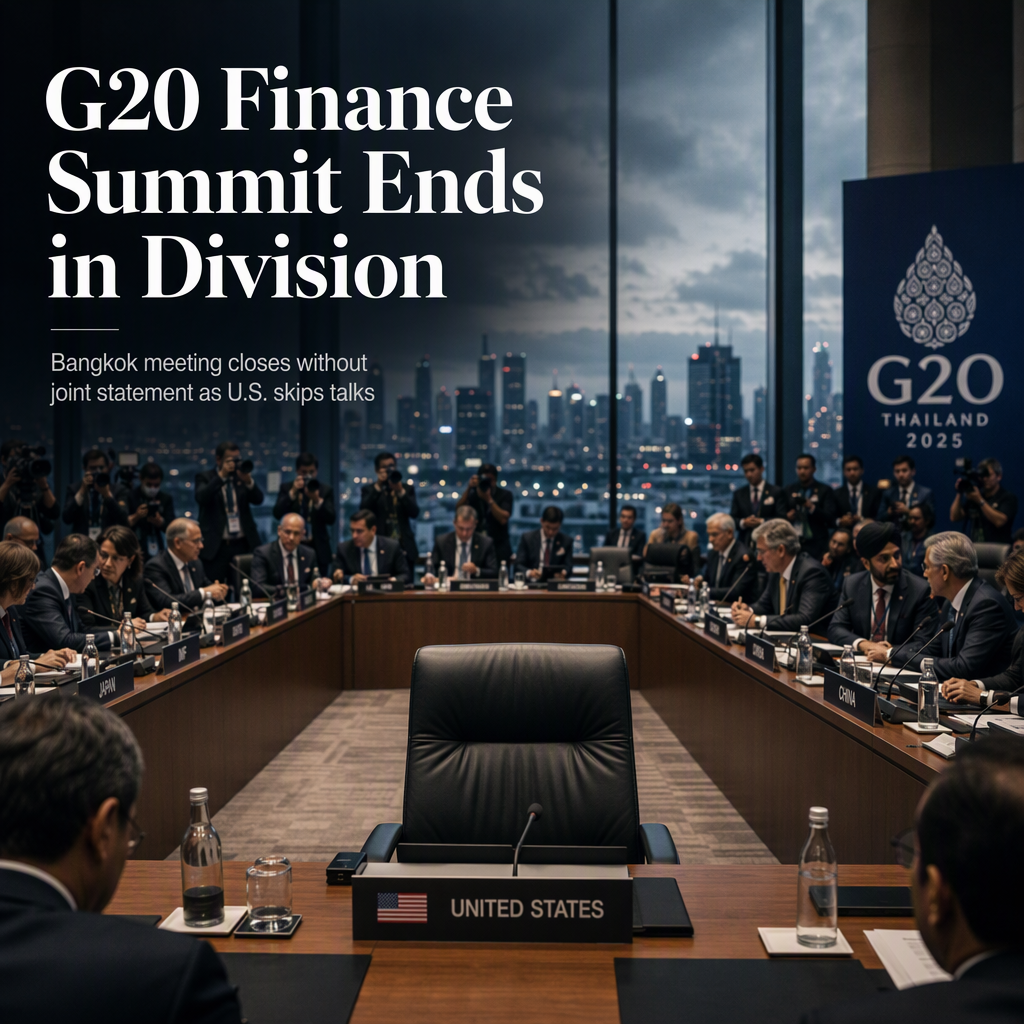
Finance ministers and central bank governors from the Group of 20 major economies are set to convene in Bangkok on Thursday, but the meeting is expected to conclude without a joint communique or a chair's summary, marking a departure from previous gatherings [1]. U.S. Treasury Secretary Scott Bessent will not attend the meeting due to domestic engagements, as confirmed by Washington [1]. This absence, along with the lack of a unified statement, underscores persistent divisions among G20 members, particularly on critical issues such as energy market stability and strategies for managing capital outflows [1].
The meeting comes at a time when progress on emerging market issues remains unclear, with ongoing risks related to oil prices and capital flight exacerbated by recent volatility in global commodity markets and mounting pressure on emerging economies' currencies [1]. Some finance chiefs have voiced concerns that without coordinated action, emerging markets could face renewed turbulence, especially if oil prices continue to rise or investor sentiment deteriorates further [1].
Discussions are expected to center on the challenges facing developing economies, including inflationary pressures from supply shocks and the need for fiscal repairs in advanced economies [1]. However, analysts warn that the absence of key participants and a planned communique may result in the meeting failing to deliver actionable outcomes for global markets [1].
Market observers are closely monitoring for any guidance from individual finance ministers or central banks regarding policy intentions, particularly on interest rates, currency interventions, and support mechanisms for vulnerable economies. The lack of a unified statement increases uncertainty for traders and investors seeking clarity on global financial stability and future policy directions [1].
CONCLUSION
The G20 finance chiefs' meeting in Bangkok is expected to end without a joint statement, reflecting ongoing divisions and heightened uncertainty in global markets. The absence of the U.S. Treasury Secretary and lack of coordinated action may leave emerging economies vulnerable to further turbulence. Investors and market participants will be watching for any signals from individual policymakers, but the overall lack of clarity could weigh on sentiment.