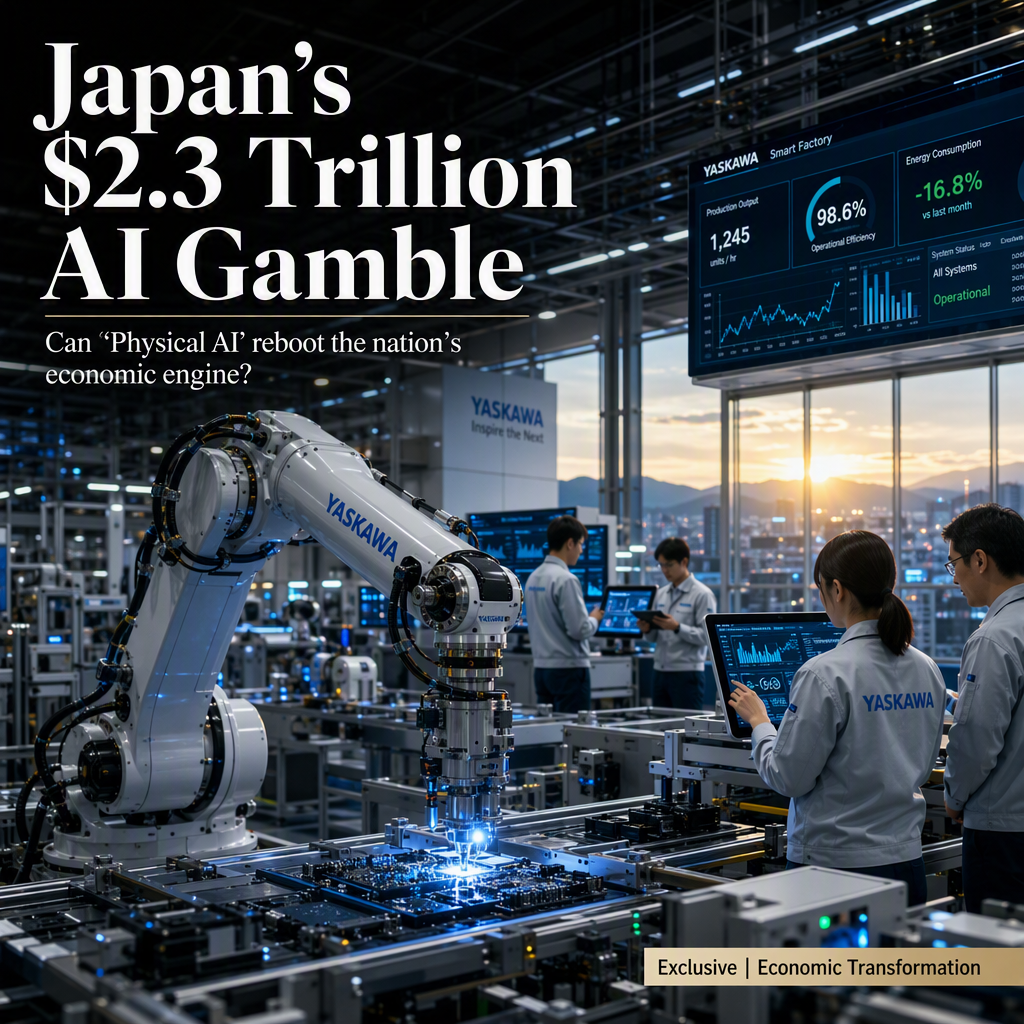
Prime Minister Sanae Takaichi has unveiled a $2.3 trillion industrial policy aimed at reviving Japan's economic growth by integrating artificial intelligence with the country's manufacturing sector, a strategy referred to as 'Physical AI' [1]. This approach is exemplified by Yaskawa Electric's new 20 billion yen ($126 million) factory in Kitakyushu, where advanced AI-powered robotics are being used to automate production lines, boost output, and reduce errors [1].
The policy blueprint focuses on leveraging AI and targeted investments to lift productivity and address Japan's mounting public debt. Policymakers highlight the Yaskawa Electric facility as a model for the broader manufacturing sector, expecting such investments to catalyze a new wave of productivity reminiscent of Japan's postwar economic boom [1].
Takaichi's plan also aims to create high-tech jobs, reduce reliance on an aging workforce, and maintain Japan's competitive edge in global industries. However, financial analysts are divided on the effectiveness of such large-scale state intervention, with some expressing concerns about execution risks and the uneven distribution of benefits unless accompanied by broader reforms in labor and capital markets [1].
The government asserts that focused investments in 'Physical AI' and advanced manufacturing will generate wider economic benefits, but the actual impact will depend on the ability of companies like Yaskawa Electric to scale up and diffuse innovations across the industrial base. Key metrics such as productivity growth and wage trends will be closely monitored by stakeholders to assess the policy's success [1].
CONCLUSION
Japan's $2.3 trillion bet on AI-driven industrial policy under Prime Minister Takaichi represents a bold attempt to revive economic growth and address structural challenges. While the initiative has the potential to boost productivity and create new jobs, its success will hinge on effective execution and broader economic reforms.