
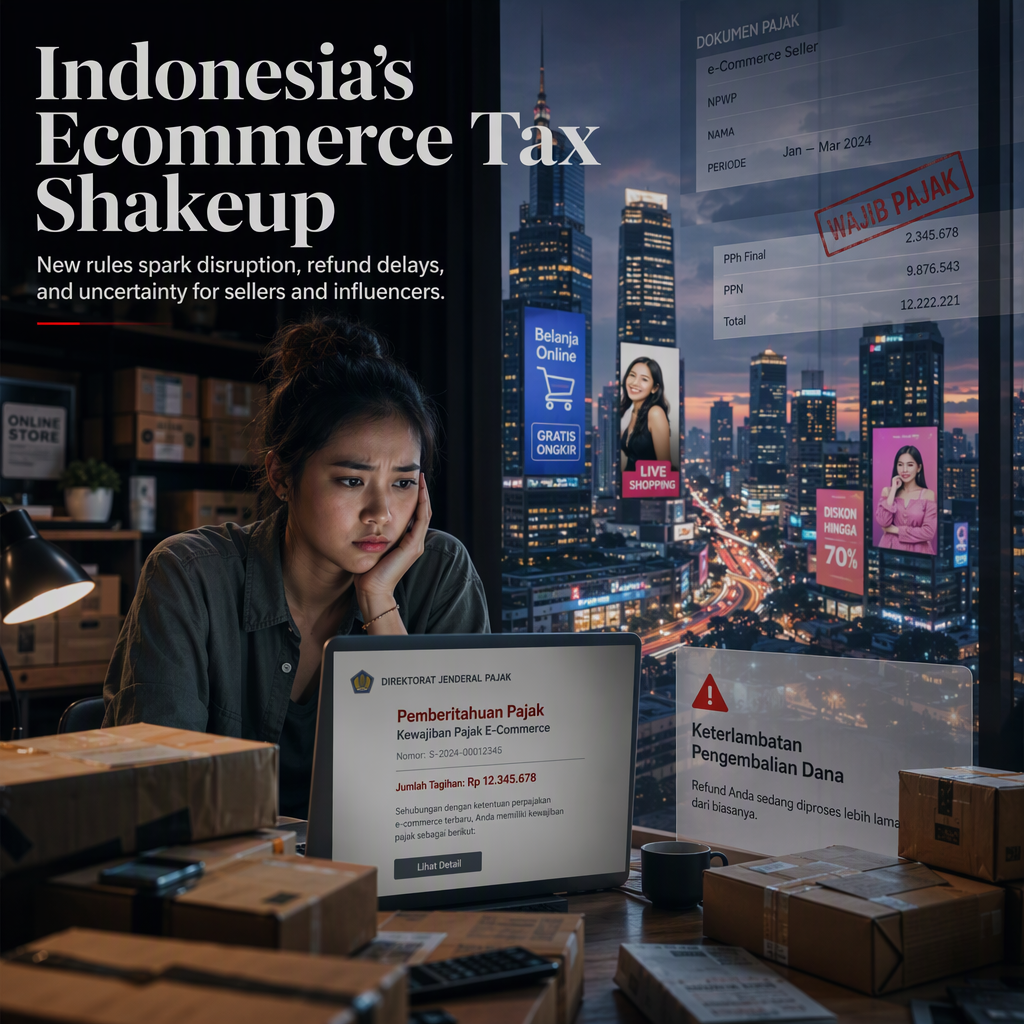
On October 1, 2026, Indonesia began enforcing a new ecommerce tax targeting online sellers and digital influencers, as part of a broader initiative to increase state revenue and support President Prabowo Subianto's ambitious economic growth targets [1]. The government is also planning to introduce an excise duty on sugary drinks, further expanding its tax base [1]. These measures are intended to fund programs such as infrastructure development and other growth-oriented projects [1].
Industry observers report significant disruption among ecommerce sellers and larger businesses due to the new tax rules, with particular concern over delays in tax refunds. Analysts note that while these refund delays temporarily boost government coffers, they create cash flow challenges for affected companies, especially small and medium-sized businesses that rely on fast turnover and access to working capital [1]. An analyst from a Jakarta-based consultancy described the situation as a "double-edged sword," highlighting the short-term benefits for the government but warning of increased liquidity risk for businesses, which could dampen overall economic activity if not addressed [1].
Digital influencers are also impacted, with some reconsidering their business models or seeking alternative platforms in response to the added tax obligations [1]. Market sentiment among affected businesses remains cautious; larger corporations have managed to adapt, but many smaller sellers report confusion and concern, particularly regarding compliance requirements and payment timelines [1].
While financial data on the immediate impact of the tax drive is not fully available, preliminary industry estimates suggest a measurable increase in state revenue for Q4 2026 [1]. However, business groups warn that prolonged refund delays and additional tax burdens could lead to reduced investment and slower growth in Indonesia's ecommerce sector [1]. Both analysts and business leaders are urging authorities to streamline refund processes and clarify tax regulations to mitigate negative effects [1].
CONCLUSION
Indonesia's new tax measures are boosting state revenue but causing disruption and concern among ecommerce sellers and digital influencers. The market impact is medium, with cautious sentiment prevailing as businesses call for clearer regulations and faster refund processes. The long-term effects on investment and sector growth remain uncertain pending further financial data.