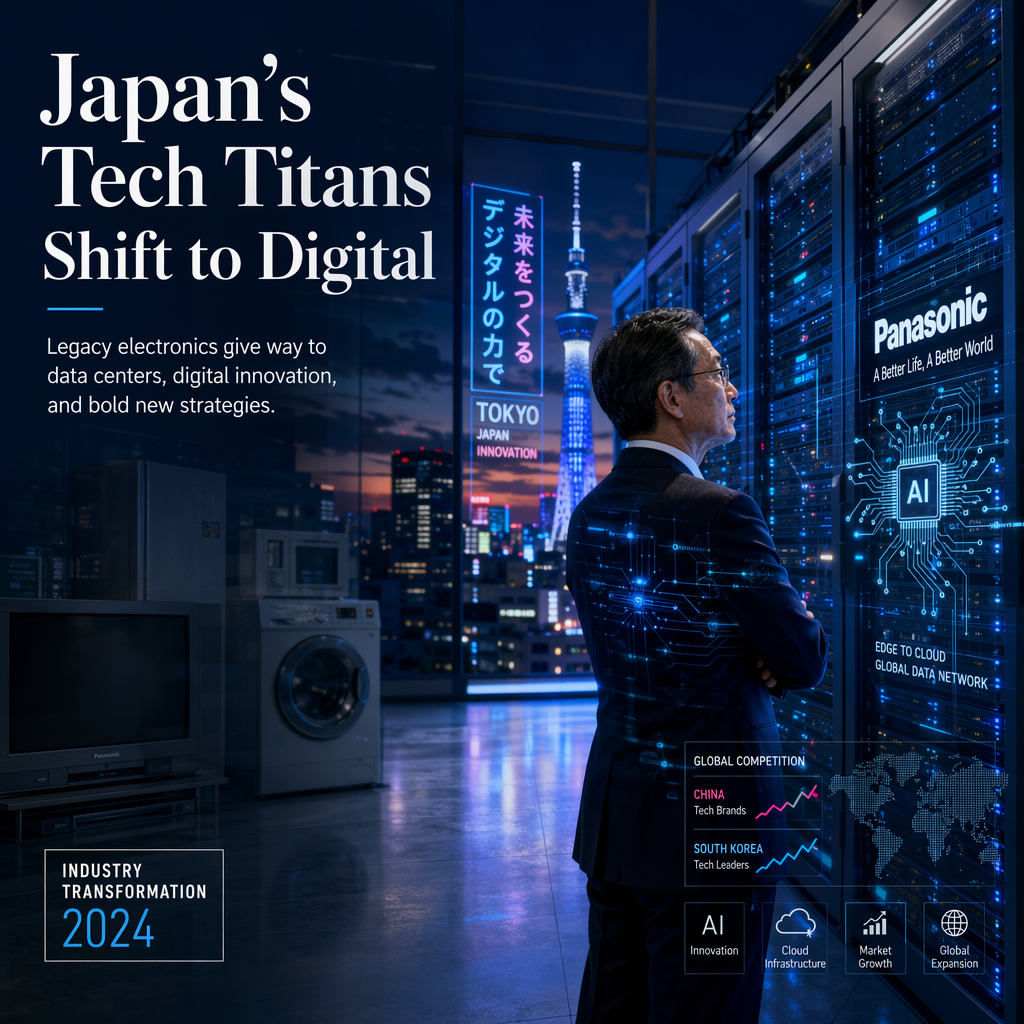
Japanese consumer electronics companies, once leaders in the global home appliance market, are undergoing significant transformations in response to increased competition from Chinese and South Korean manufacturers [1]. Panasonic, formerly known as Matsushita Electric, is highlighted as a prime example of this shift, moving its focus from traditional home products to data centers and digital technologies [1]. The article references a historical moment when Deng Xiaoping visited Matsushita Electric's color television factory in 1978, underscoring the long-standing influence and legacy of Japanese electronics firms [1].
The article notes that Chinese appliance brands are gaining market share in Southeast Asia, further pressuring Japanese companies to adapt their business models [1]. Additionally, the rise of artificial intelligence and the phenomenon of 'chipflation' are impacting electronics purchases, suggesting that technological advancements and supply chain challenges are influencing market dynamics [1].
While the article does not provide specific financial figures or detailed market reactions, it does mention that Japanese electronics sellers Yamada and Edion are planning a merger to create an industry giant, indicating ongoing consolidation within the sector [1]. There are also references to Japan's broader $2.3 trillion tech strategy, which places startup ambitions at its center, signaling a forward-looking approach to innovation and competitiveness [1].
CONCLUSION
Japanese electronics giants are shifting their focus from traditional consumer products to digital technologies and data centers in response to intensifying competition from Chinese and South Korean brands. Ongoing industry consolidation and government-backed tech strategies suggest that Japan is positioning itself for a more digital and innovation-driven future.