
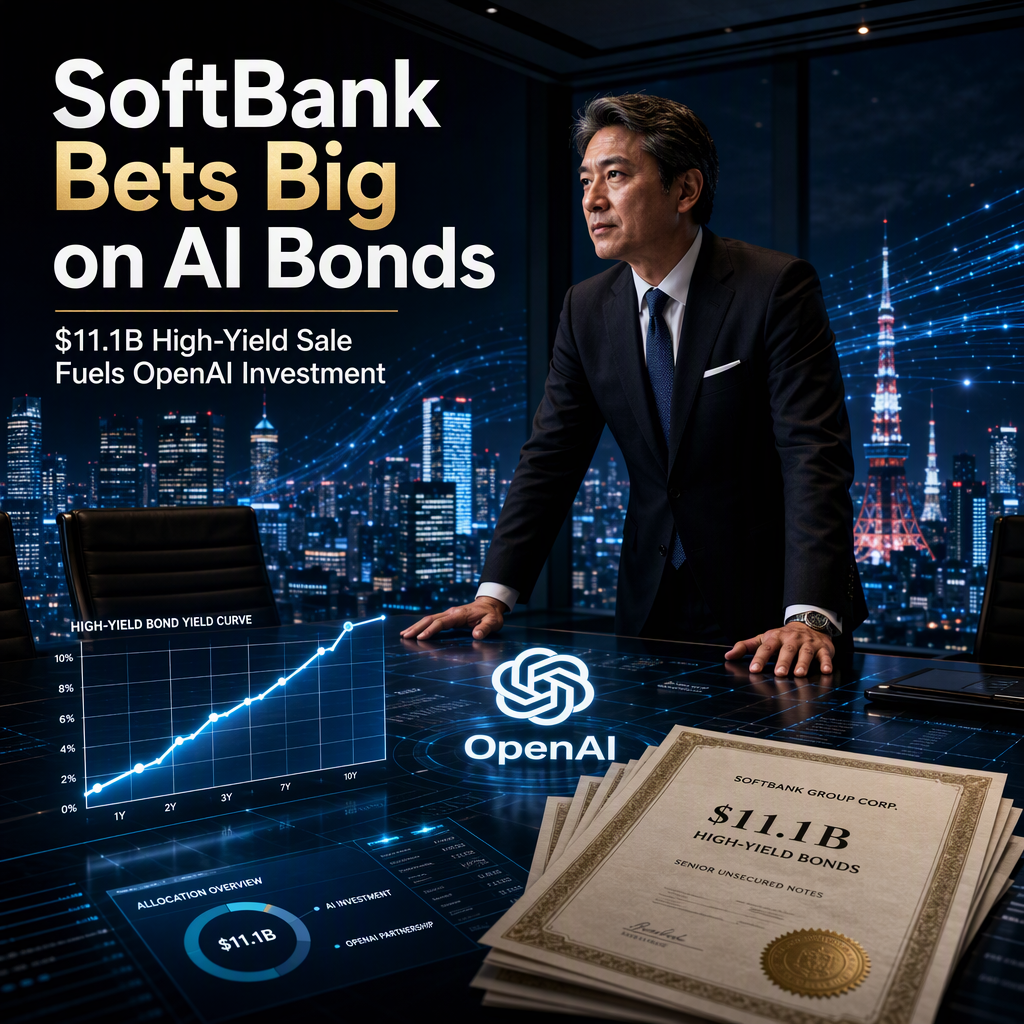
SoftBank Group announced plans to raise a record $11.1 billion through the sale of dollar- and euro-denominated corporate bonds, offering yields of up to 9.75% despite low credit ratings, in order to invest in OpenAI, the artificial intelligence company behind ChatGPT [1]. This bond sale represents a significant move within the broader trend of AI-linked junk bonds, as companies increasingly turn to high-yield debt markets to fund AI development amid rising borrowing costs and intensified investor scrutiny [1].
The offering is expected to attract strong interest from yield-seeking investors, although some market participants have expressed concerns about the sustainability of debt-backed AI investments and the risks associated with speculative ventures in the sector [1]. Analysts highlight that the elevated yields reflect both the attractiveness of the bonds and the heightened risk, with market sentiment described as mixed—some see the opportunity in high returns, while others warn of potential volatility if AI investments do not meet expectations [1].
SoftBank's move comes as global corporate bond sales reached $3.7 trillion in the first half of the year, driven in part by the race to fund AI initiatives. The sale is anticipated to test investor appetite for AI-focused junk bonds and could establish a new benchmark for similar offerings in the technology sector [1]. Technical indicators suggest robust demand for high-yield paper, but caution persists regarding possible overheating in the AI funding landscape [1].
CONCLUSION
SoftBank Group's record-setting bond sale underscores the intense competition for capital in the AI sector and the growing reliance on high-yield debt to fund innovation. While the attractive yields are likely to draw investors, concerns about risk and sustainability highlight the mixed sentiment and potential volatility in the market. The outcome of this offering may influence future AI-related financing strategies.