
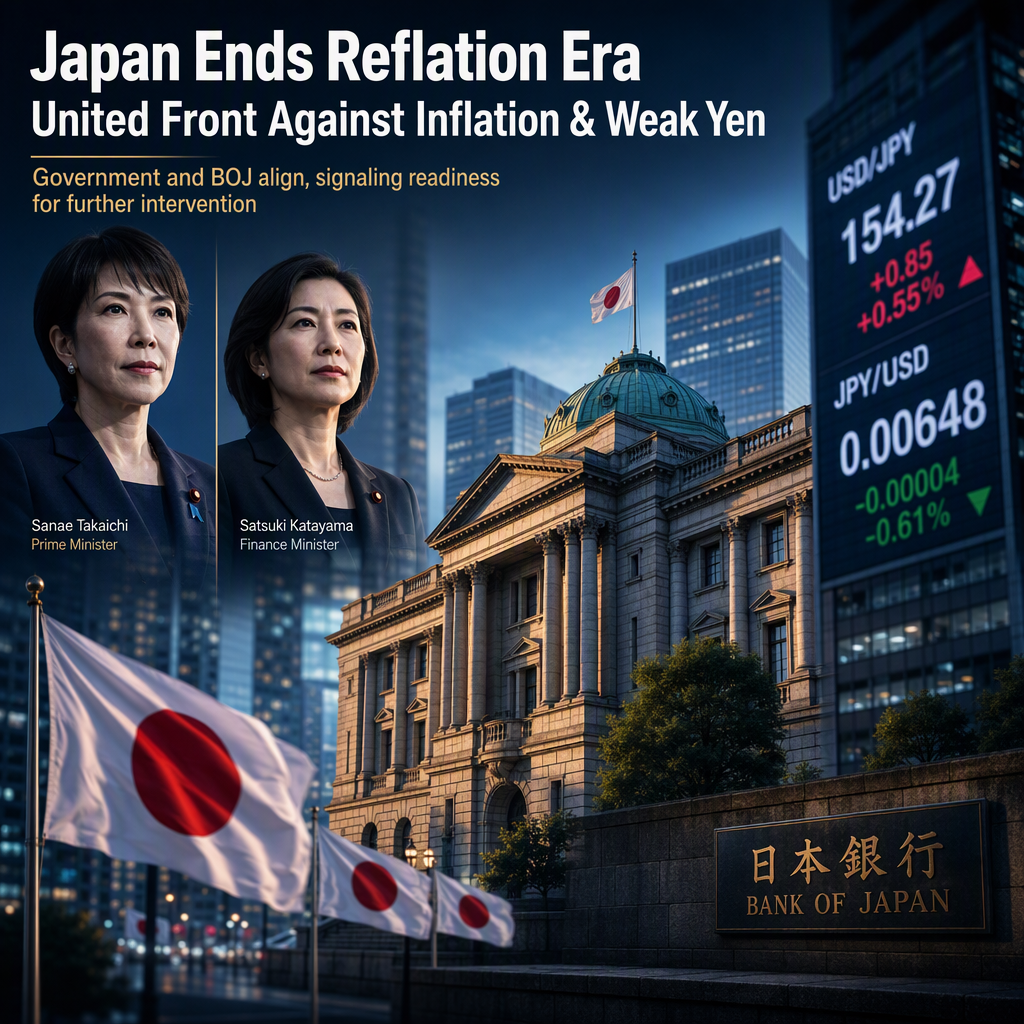
Japan's government, under Prime Minister Sanae Takaichi, has declared a unified stance that the country's reflationary policy period is over, according to Finance Minister Satsuki Katayama. Katayama stated, "There is no difference in our view with the Bank of Japan that the period of reflation is over," emphasizing the government's alignment with the central bank as both entities focus on fighting inflation and addressing yen weakness [1].
This announcement follows recent actions by the Bank of Japan, including a rate hike to 1.25%, with BOJ chief Ueda citing a shift in the policy phase. The central bank also conducted a rate check, which temporarily strengthened the yen to the upper-156 range against the dollar, after the currency had recently touched 158 to the dollar amid market speculation about the pace of further BOJ tightening [1].
Katayama expressed support for additional measures to combat inflation and stabilize the currency, stating that the government remains vigilant in monitoring currency movements and is prepared to take action if necessary. Recent financial data showed that Japan executed a $96 billion yen-buying intervention between July and August to support the currency, highlighting the authorities' concern over rapid yen depreciation [1].
Market analysts interpret the government's unified stance with the BOJ as a signal that further rate hikes or interventions are possible if inflationary pressures persist or the yen continues to weaken. Market participants are closely watching for any further interventions or policy shifts as the government and BOJ navigate the post-reflation environment [1].
CONCLUSION
Japan's government and central bank have presented a united front in declaring the end of the reflation era and signaling readiness to act against inflation and yen weakness. The market is on alert for potential further rate hikes or interventions, reflecting the high stakes and significant impact of these policy shifts.