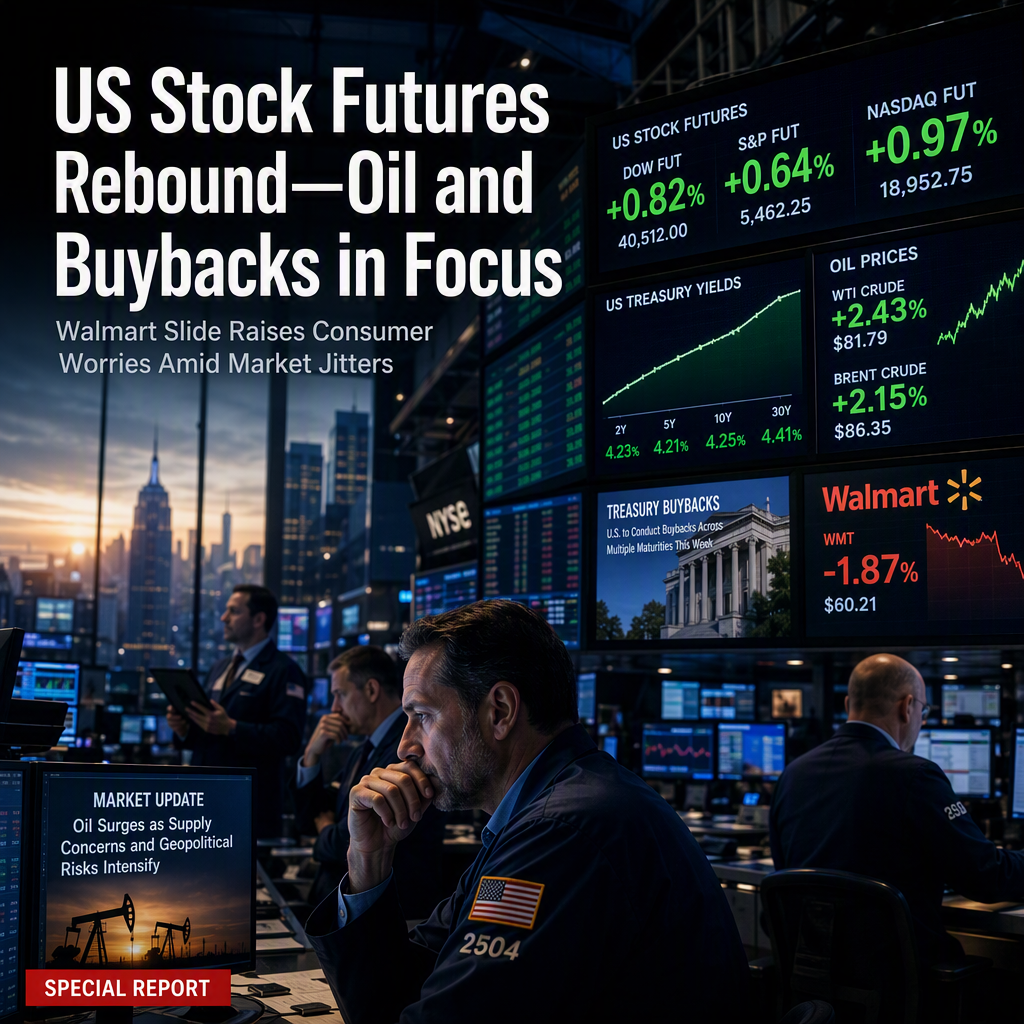
US stock futures advanced during European hours on Friday, with Dow Jones futures gaining 0.13% to trade above 52,900, S&P 500 futures up 0.18% near 7,680, and Nasdaq 100 futures rising 0.38% above 29,400. This uptick followed Washington's announcement of a long-end US Treasury bond buyback program, aimed at curbing elevated yields. US Treasury Secretary Scott Bessent indicated that the accelerated buybacks could exceed the planned $4 billion per issue, and mentioned that a new fiscal plan is in development, with the US budget deficit expected to have peaked under President Trump [1].
Despite the futures gains, Wall Street experienced losses in regular trading on Thursday, with the Dow falling 1.32%, the S&P 500 declining 0.87%, and the Nasdaq Composite dropping 1%. Nine of the 11 S&P sectors ended lower, led by consumer staples, health care, and consumer discretionary stocks. The market's negative sentiment was exacerbated by a sharp decline in Walmart shares, which fell 9.15% after the company reported its slowest US sales growth since 2020 at +2.6% year-over-year. Deutsche Bank strategists noted that this performance renewed concerns about the resilience of the US consumer, especially amid high energy prices, rising interest rates, and a low saving rate [1].
Analysts at Rabobank cautioned that the recent reprieve in US Treasury yields may be short-lived, as macroeconomic fundamentals such as elevated inflation, rising budget deficits, and AI-related investment demand remain unchanged. They argued that these factors leave little room for a sustained decline in yields, even with policy interventions like the buyback program [1].
Additionally, traders are expected to remain cautious as oil prices surge due to diplomatic deadlocks in the Gulf, which reinforce ongoing inflation concerns and expectations for further Federal Reserve rate hikes. Washington is preparing an 'economic D-day' initiative targeting Iran, with measures set to be announced on Monday that aim to restrict Iran's access to global markets and force negotiations. This geopolitical tension is contributing to an oil-linked inflation premium, despite softer headline US data [1].
CONCLUSION
US stock futures showed resilience amid policy efforts to address rising Treasury yields, but underlying concerns about inflation, consumer strength, and geopolitical risks persist. The sharp drop in Walmart shares and ongoing oil price pressures highlight the market's cautious outlook. Analysts suggest that entrenched macroeconomic drivers may limit the effectiveness of policy measures in sustaining lower yields.