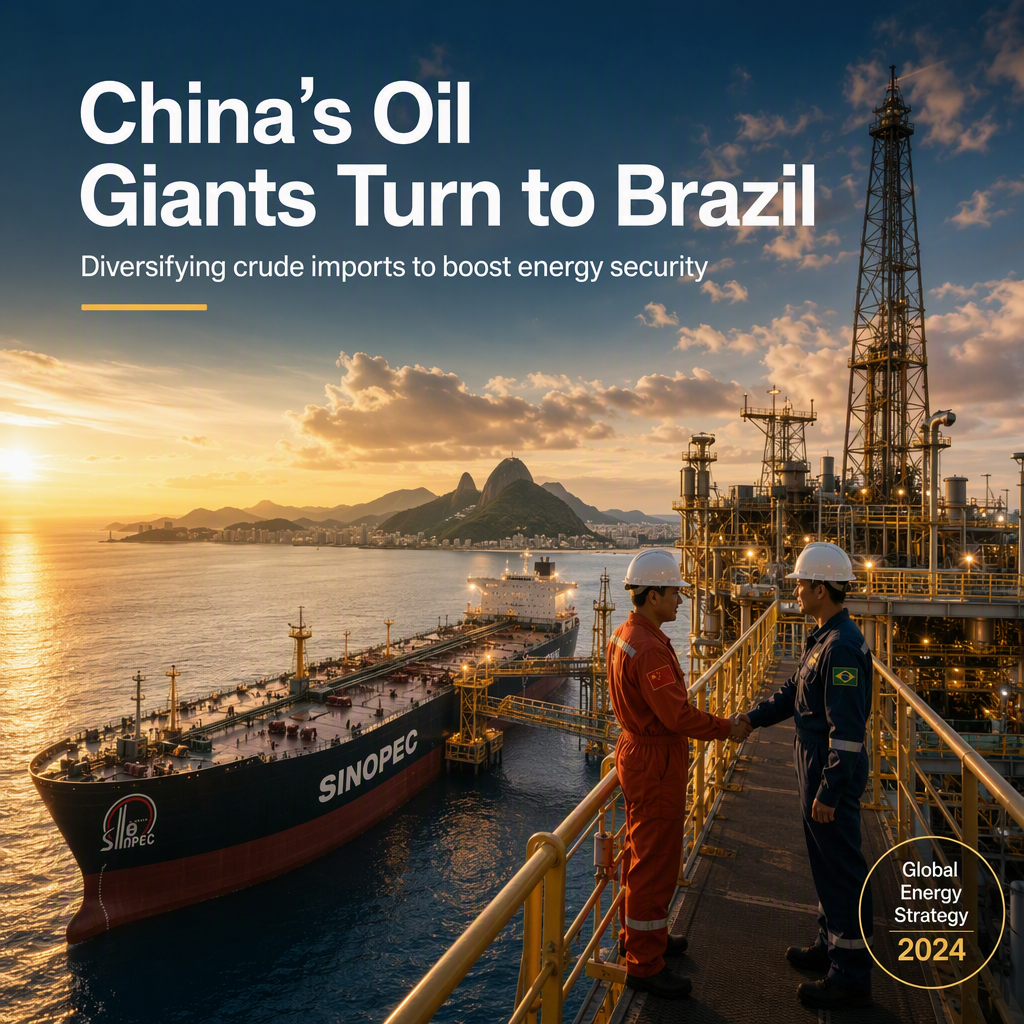
China's three major state-owned petroleum companies, including Sinopec, are actively seeking to diversify their crude oil sourcing by ramping up both domestic and overseas production, with a particular focus on Brazil. This strategic move is aimed at reducing China's reliance on Middle Eastern crude, especially in light of ongoing geopolitical tensions and uncertainties affecting traditional suppliers such as Iran [1].
Sinopec executives, during a recent earnings announcement in Hong Kong, emphasized the importance of diversifying supply sources. Alongside PetroChina and CNOOC, Sinopec is prioritizing overseas investments in South America to ensure stable and secure energy supplies for China's expanding economy [1]. PetroChina has announced a $32 billion development drive, which is intended to mitigate the impact of Iranian tensions and cushion global oil price shocks [1].
Market analysts highlight that the shift towards Brazilian imports and exploration is part of a broader trend in the commodities sector. Chinese refiners anticipate that headwinds will ease, despite ongoing uncertainties related to Iran. Technical analysis suggests that as China increases its stake in Brazilian oil fields, it could potentially act as a stabilizing force in global oil prices during periods of volatility [1].
A Sinopec spokesperson stated, "Our strategy is to ensure energy security through diversification and robust investment in overseas production. Brazil represents a key market for our future growth and stability" [1]. While OPEC+ has maintained its oil output policy unchanged for October, China's initiatives in Brazil are viewed as a hedge against supply disruptions and price spikes. Analysts recommend monitoring global crude price levels, as increased Chinese activity in Brazil could shift supply dynamics in the coming quarters [1].
CONCLUSION
China's state-owned oil companies are intensifying their efforts to secure energy supplies by investing in Brazilian oil imports and exploration. This diversification strategy is expected to enhance China's energy security and may influence global oil market dynamics, particularly as geopolitical risks persist in the Middle East.