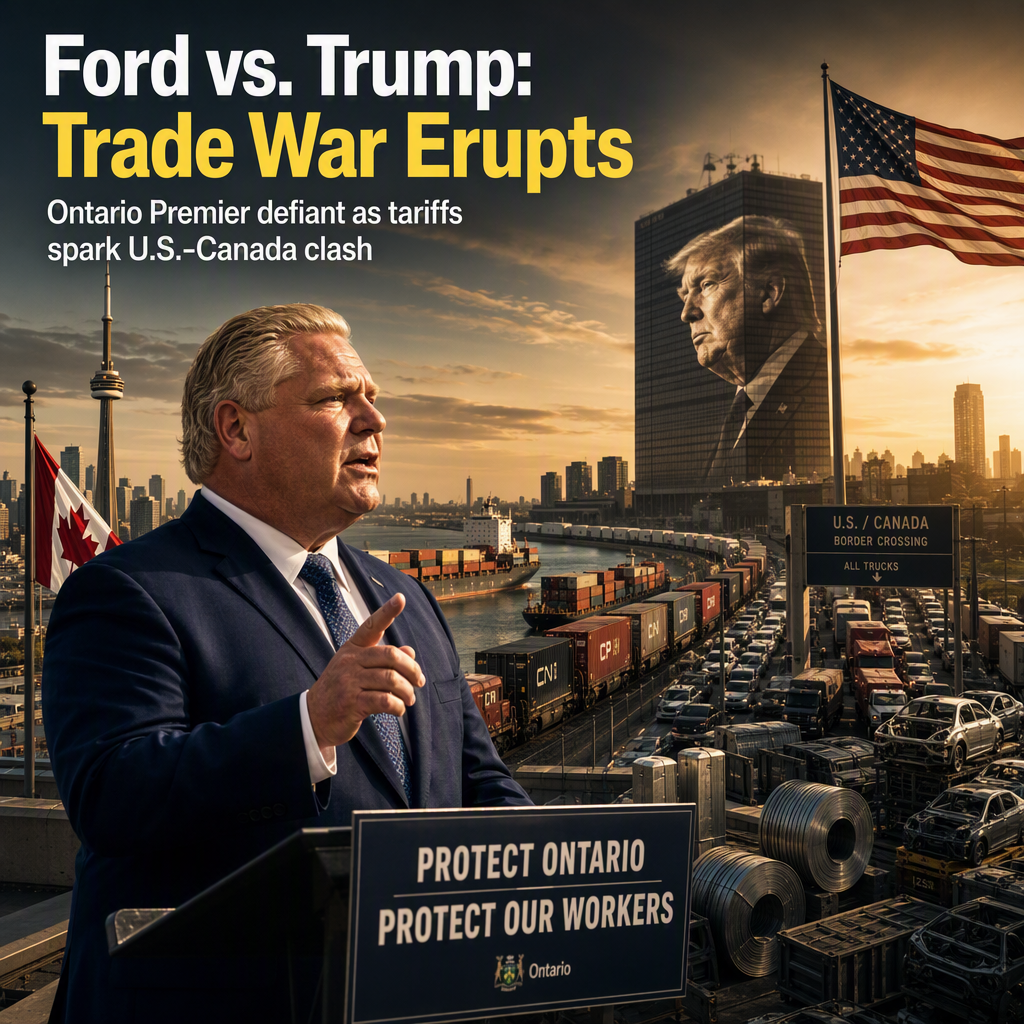
A heated trade dispute between the United States and Canada escalated on Monday, with Ontario premier Doug Ford launching a profane attack against President Donald Trump amid a widening tariff battle between the two countries [1]. Ford, referred to as 'Captain Canada,' criticized Trump in a radio interview, stating, 'He can kiss my a– as far as I’m concerned. We’re going to go at him full steam, and we buy 400% more cars than anyone in the world,' in response to Trump’s threat of new tariffs on Canadian autos, auto parts, and steel [1].
The tariff conflict is unfolding on two fronts: new 50% U.S. tariffs on certain Canadian goods took effect on August 22, with Canada planning to retaliate on September 8. Additionally, Trump has threatened to raise tariffs on Canadian autos and auto parts to 50% beginning January 1, 2027 [1]. Trump mocked Ford personally, comparing him unfavorably to his late brother Rob Ford, and used social media to further criticize Canadian leadership, specifically targeting Governor Carney and Ford [1].
Trump claimed Canada imposes tariffs of 400% or more on U.S. farmers and vowed to end what he described as unfair trade treatment of American companies and producers. He also threatened additional economic pressure, noting that much of Canada’s electricity, oil, and gas is transported through the U.S., and called for Canada to 'fall in line' [1]. Beyond tariffs, Trump escalated rhetoric by proposing to rename Lake Ontario 'Lake America' [1].
The origins of the current tariff fight trace back to late 2024, when Trump threatened 25% tariffs on Canadian goods and joked about Canada potentially becoming the 51st state during a meeting with then-Prime Minister Justin Trudeau [1].
CONCLUSION
The escalating tariff battle between the U.S. and Canada, marked by sharp rhetoric and significant tariff increases, signals heightened tensions and potential disruption for cross-border trade. With both sides preparing retaliatory measures and threats of further economic pressure, the market impact is likely to be high, especially for industries affected by the new tariffs. The situation remains volatile, with no clear resolution in sight.