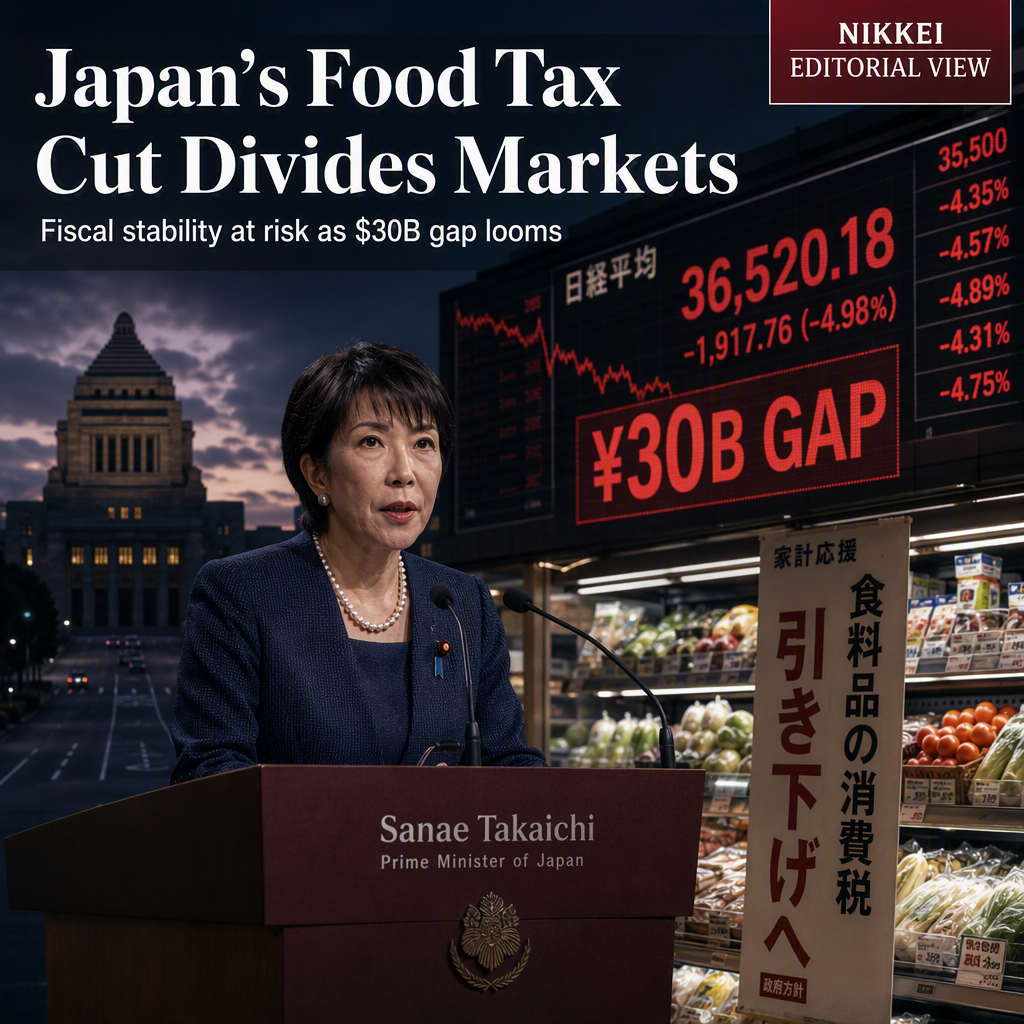
On July 30, Japanese Prime Minister Sanae Takaichi announced a plan to temporarily lower the nation's consumption tax on food, a move intended to provide relief from inflation pressures [1]. However, the Nikkei editorial expresses significant concern that this policy threatens Japan's long-term fiscal stability and discipline [1]. The proposed tax cut is expected to create a $30 billion funding gap, raising questions among market analysts about how the government will address the shortfall without further increasing reliance on deficit-covering government bonds [1].
The editorial warns that reducing the consumption tax on food will erode funding for Japan's social security system and shift the financial burden to future generations, potentially undermining confidence in the government's ability to manage public finances responsibly [1]. The policy is characterized as populist, prioritizing short-term relief over sustainable fiscal management [1].
Market sentiment remains uneasy, especially as Takaichi's approval ratings decline and concerns grow about the direction of interest rates and the sustainability of the government's $2.3 trillion growth drive [1]. The editorial emphasizes the need for responsible and forward-looking policymaking, cautioning against sacrificing long-term fiscal health for immediate political gains [1].
CONCLUSION
Prime Minister Takaichi's plan to cut the consumption tax on food has raised alarm over Japan's fiscal discipline and long-term financial stability. Market analysts and the Nikkei editorial highlight the risks of increased deficits and eroded social security funding, urging the government to prioritize sustainable economic policies.