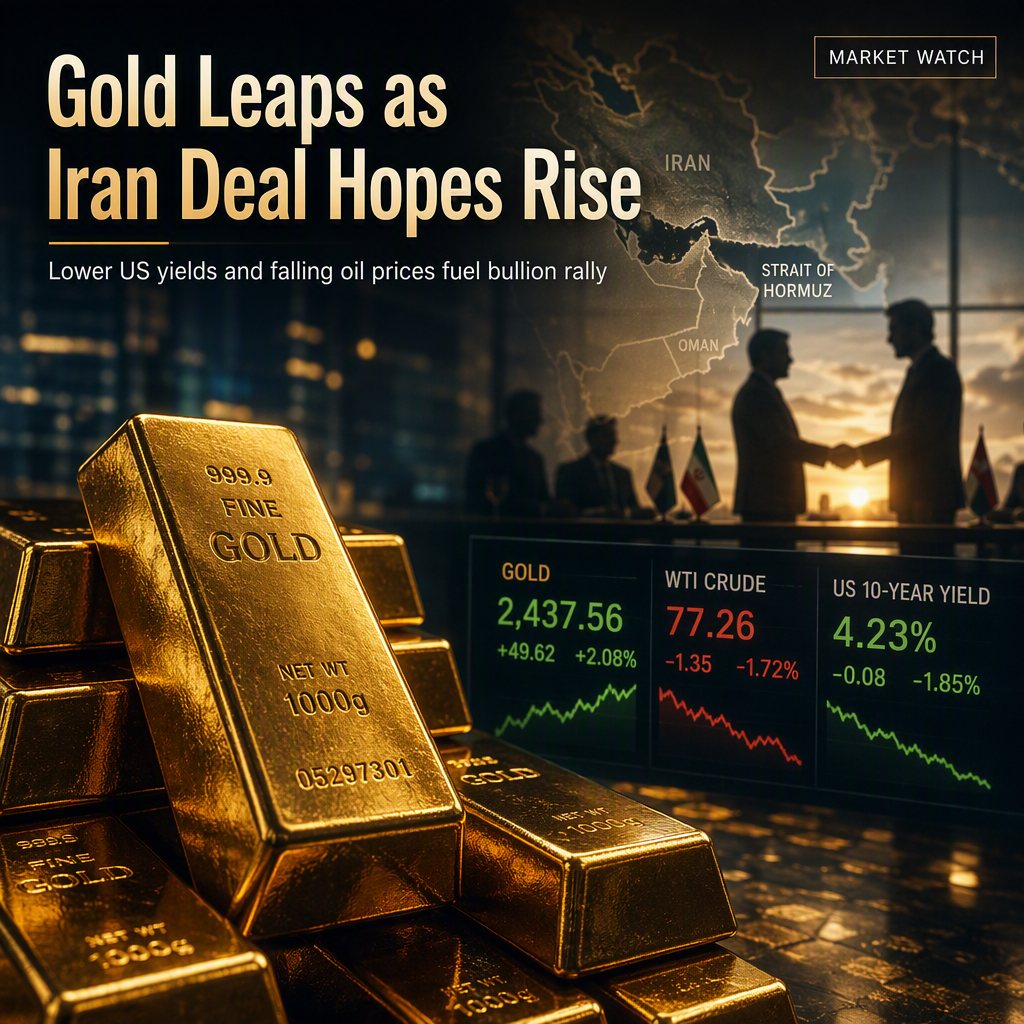
Gold (XAU/USD) advanced by approximately 0.75% on Tuesday, reaching a two-day peak of $4,106, driven by falling oil prices and lower US Treasury yields. The US Dollar Index (DXY) declined by 0.05% amid speculation regarding the potential reopening of the Strait of Hormuz, following reports that Iran and Oman are continuing talks on the matter. Additionally, US President Donald Trump reposted an article suggesting that a deal with Iran is imminent as denuclearization talks are set to restart, further fueling optimism in the market [1].
The decline in oil prices, with West Texas Intermediate (WTI) dropping nearly 5% to $76.09 per barrel, contributed to lower US yields, as markets anticipate reduced inflationary pressures. The US 10-year Treasury note yield fell by 10 basis points to 4.687%. These developments have supported gold prices, which are expected to edge higher if crude prices continue to fall [1].
On the economic front, the US Job Openings and Labor Turnover Survey (JOLTS) for June showed a decrease from 7.537 million to 7.359 million, missing the forecast of 7.4 million. The US trade deficit for June narrowed from -$77.6 billion to -$73.3 billion, slightly above the estimated -$73 billion. Upcoming data releases include the ADP Employment Change for July, with expectations of 70,000 new hires, and Nonfarm Payrolls, with a forecast of 80,000 additional jobs [1].
Money markets are currently pricing in a 59% probability of a Federal Reserve rate hike at the September 16 meeting and an 83% chance for a hike in December. New York Fed President John Williams expressed optimism that inflation pressures will gradually decrease but emphasized the Fed's readiness to raise rates if inflation does not subside as anticipated [1].
Technically, gold is consolidating but approaching the $4,100 level, with bullish momentum indicated by the Relative Strength Index nearing the 50-neutral mark. However, the market structure remains bearish, characterized by a series of lower highs and lower lows [1].
CONCLUSION
Gold prices have risen on hopes of an Iran deal and lower US yields, supported by falling oil prices and expectations of easing inflation. Market participants are closely watching upcoming US employment data and Federal Reserve policy signals, with technical indicators suggesting potential further gains for gold if current trends persist.