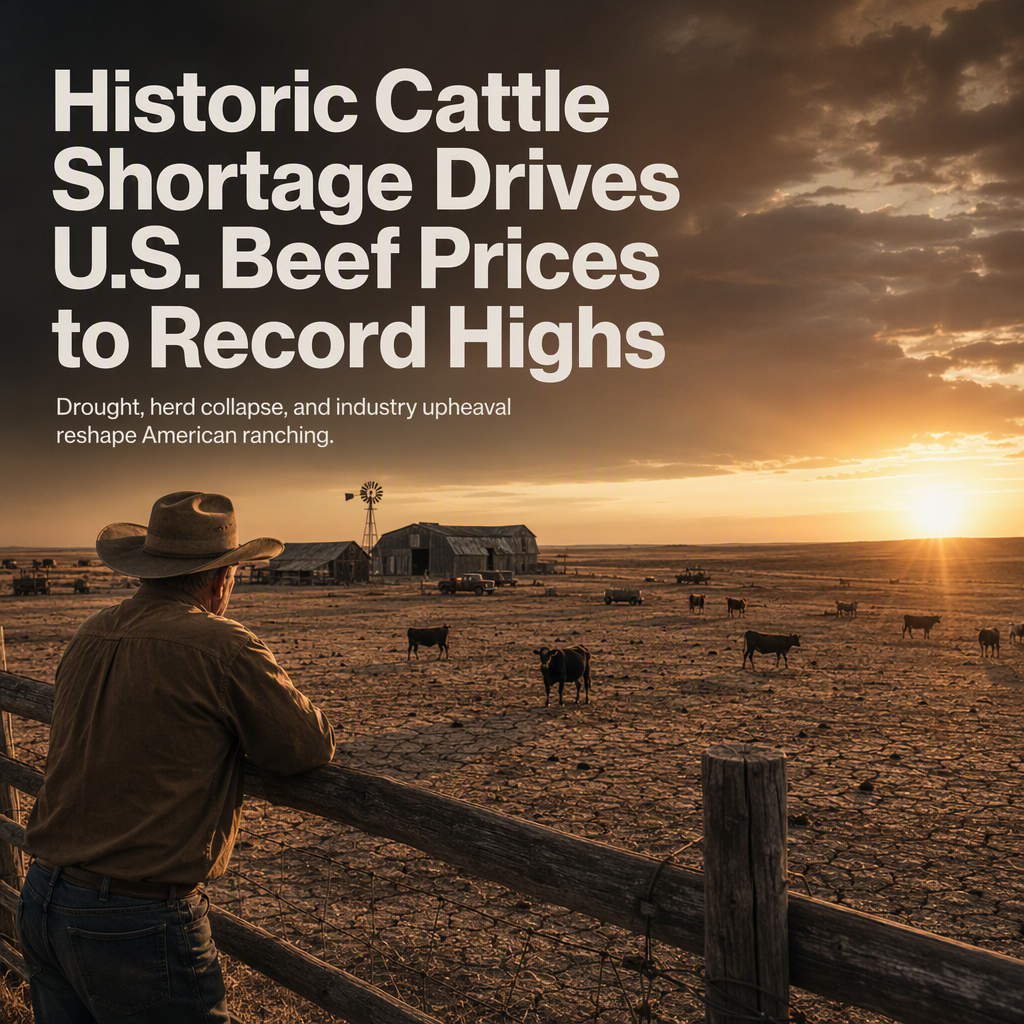
The United States is experiencing a historic shortage in its domestic cattle herd, leading to a significant increase in beef prices and impacting both producers and consumers nationwide. According to Nate Rempe, President and CEO of Omaha Steaks, beef prices have surged by 13% due to the smallest domestic cattle herd in 72 years, with meaningful herd rebuilding and price recovery not expected until 2028 or 2029 [1].
USDA data reveals that the U.S. entered 2026 with approximately 86.2 million cattle and calves, marking the lowest herd size since the early 1950s and a decline of more than 8 million animals from the 94.7 million recorded in 2019 [1]. This supply crunch has led to a 23% increase in the retail value of Choice beef, rising from about $8.51 per pound in August 2024 to $10.49 per pound in July 2026 [1].
Major industry players are responding to the shortage. Tyson Foods recently announced the closure of beef facilities in Illinois and Utah and is pursuing the sale of another in Washington, citing the ongoing cattle shortage as a key factor. The company referenced USDA data indicating that supply constraints are likely to persist [1].
Experts attribute the prolonged shortage primarily to persistent drought conditions, which have depleted grasslands across the West and Plains, forcing ranchers to sell cattle early, including breeding cows essential for herd recovery. Eric Belasco, head of the agricultural economics department at Montana State University, emphasized that years of dry weather have made it difficult for ranchers to sustain their herds, further delaying recovery [1].
For consumers, the effects are evident at grocery stores, with higher beef prices expected to continue until the cattle herd can be rebuilt—a process that industry leaders warn could take several years [1].
CONCLUSION
The U.S. cattle industry is grappling with its smallest herd in over seven decades, resulting in sharply higher beef prices and operational changes among major meatpackers. With drought conditions and supply constraints persisting, both industry experts and executives anticipate that relief for consumers is unlikely before 2028 or 2029.