
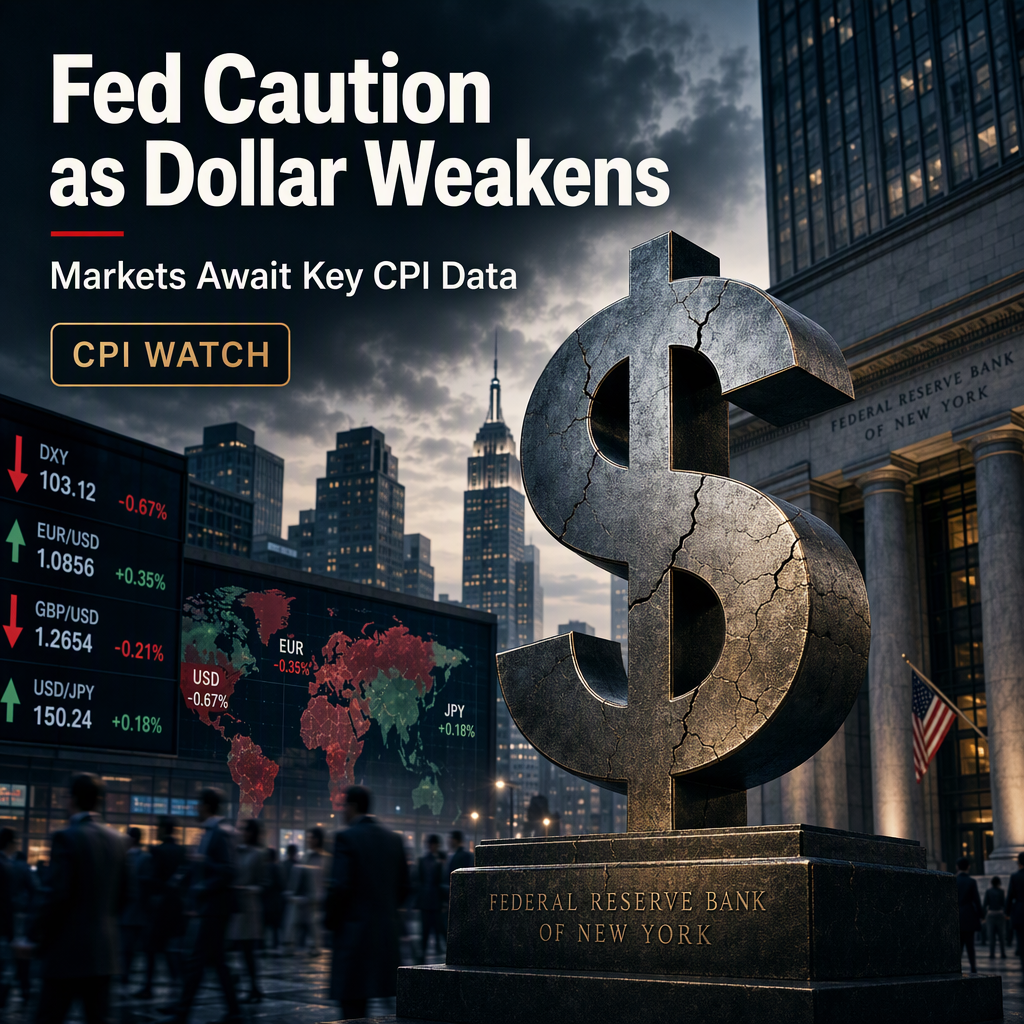
Recent commentary from Federal Reserve officials has highlighted a nuanced outlook for US monetary policy, with implications for the US Dollar's trajectory. Societe Generale’s Kit Juckes noted that the Fed Funds forward pricing is nearing the end of its third upward leg this year, with current expectations just below 5%. This is 20 basis points higher than the highest forecast in the Bloomberg survey and 50 basis points above consensus. Juckes emphasized that further upside in terminal Fed Funds pricing would require a significant upside surprise in US core CPI, suggesting limited additional Dollar strength from rates alone [1].
On the policy front, Richmond Fed President Thomas Barkin stated that persistent inflation warrants action, asserting that 2% inflation is achievable and that acting against enduring inflation makes sense [4]. Meanwhile, New York Fed President John Williams indicated that he sees disinflationary forces at play and expects one more rate hike in 2026, but none in 2027. Williams also highlighted that AI is a key inflation driver he is monitoring, and noted no signs that the labor market is contributing to inflation [5].
Market reactions have reflected these mixed signals. The US Dollar has weakened against several major currencies, including a 0.18% drop against the Swiss Franc, with USD/CHF trading at 0.8331. This occurred despite elevated US Treasury yields and positive US housing data, as risk appetite improved and energy prices retreated [2]. The Euro also edged higher against the Dollar, supported by ECB Governor Stournaras's remarks on continued gradual tightening and confirmation of German September CPI at 3.3%. However, Scotiabank strategists observed that the EUR/USD retains a soft undertone, with their fair value model suggesting equilibrium at 1.1250, above current spot levels [3].
Currency heat maps from multiple sources confirm the Dollar's relative weakness on the day, with the USD strongest only against the Japanese Yen and losing ground to the Swiss Franc, Euro, and other majors [2][4][5]. Money markets currently assign only a 23% probability to a Fed rate hike in October, but a 90% probability for December, underscoring the market's cautious stance ahead of upcoming US inflation data [2].
Looking ahead, both traders and analysts are focused on the imminent US CPI release, which is widely expected to provide further clues on the Fed's policy path. According to Societe Generale, only a core CPI print well above the consensus 2.5% would likely drive further increases in terminal Fed Funds pricing and additional Dollar strength [1].
CONCLUSION
Federal Reserve officials are signaling a cautious but vigilant approach to inflation, with markets awaiting key CPI data for further direction. The US Dollar has softened against major peers as expectations for additional rate hikes moderate, and only a significant inflation surprise is seen as likely to reignite Dollar strength. Market participants remain focused on upcoming economic releases to gauge the Fed's next moves.