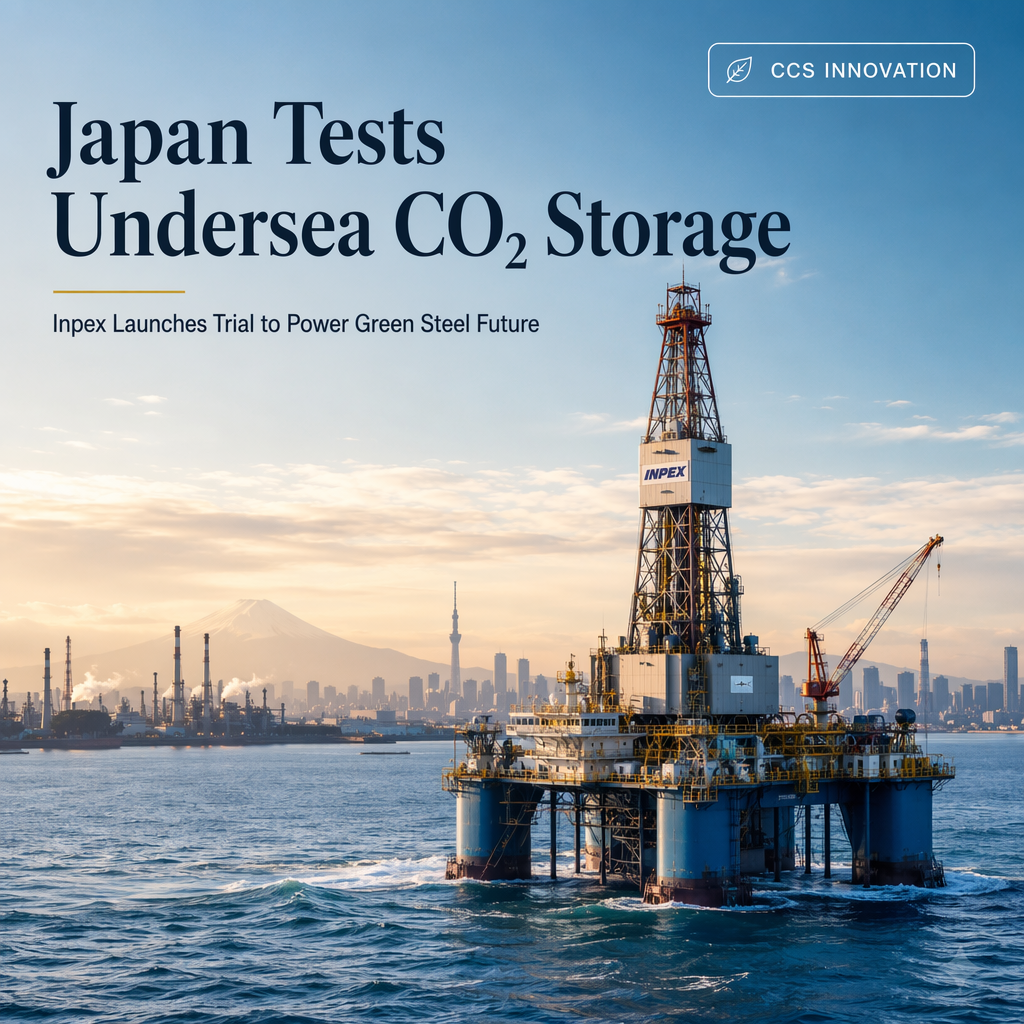
Japanese energy company Inpex has announced the commencement of trial drilling for a carbon capture and storage (CCS) project on the seafloor off the coast of Chiba prefecture, near Tokyo [1]. The drilling rig, located near Kujukuri, will be used to evaluate the suitability of the seafloor for permanent CO2 storage. This initiative is part of a broader effort to help Japan's steelmakers and other heavy industries reduce their carbon emissions, with a particular focus on advancing green steel production [1].
The project aims to enable Inpex and its partners to store carbon dioxide emissions generated by steel plants and other industrial facilities under the sea, contributing to Japan's decarbonization goals [1]. Industry officials cited in the article emphasize that CCS is a critical technology for achieving Japan's climate targets. However, they also highlight that the technology is not yet commercially viable on a large scale due to the high costs associated with capturing, transporting, and storing CO2 [1].
The trial drilling and subsequent feasibility studies are expected to provide valuable data on the economic and technical viability of undersea CO2 storage near Tokyo. No specific financial figures, market reactions, or analyst opinions are provided in the article [1].
CONCLUSION
Inpex's trial drilling for undersea CO2 storage marks a significant step toward decarbonizing Japan's heavy industries, particularly steelmaking. While the project underscores the potential of CCS technology, its commercial viability remains uncertain due to high costs, and further studies will determine its future prospects.