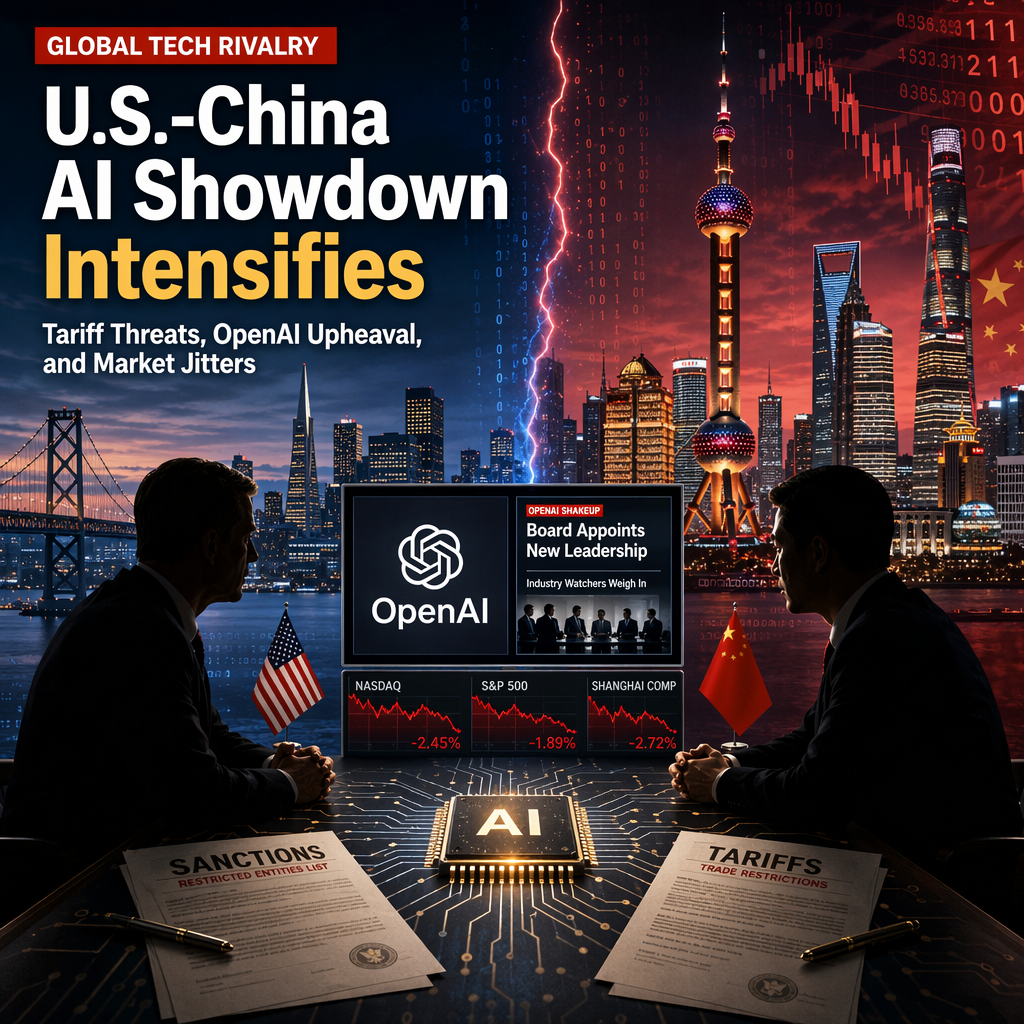
The ongoing competition between the United States and China in artificial intelligence intensified as U.S. Treasury Secretary Scott Bessent announced that the Trump administration will investigate whether Chinese AI models have been derived from American ones, raising the possibility of sanctions against China for alleged 'theft' of U.S. technology [1]. Bessent stated, 'If we see, especially that overseas models are stealing from our great companies, we have the ability to sanction them because of this theft,' highlighting the administration's readiness to take action [1].
In parallel, OpenAI is preparing for a potentially significant initial public offering, following the appointment of financial executives David Vélez and Robin Vince to its nonprofit and for-profit boards of directors [1]. This move signals OpenAI's intent to strengthen its leadership as it navigates the competitive AI landscape. Additionally, lobbying efforts by major AI firms are on the rise, with OpenAI and Anthropic spending a combined $3.17 million in the second quarter, marking a 23% increase from the previous quarter. This uptick in lobbying underscores the industry's push to influence federal policy amid regulatory uncertainty [1].
Trade tensions are also mounting, as U.S. Trade Representative Jamieson Greer hinted at the possibility of another round of tariffs under President Donald Trump, aiming to revive the protectionist agenda that faced setbacks earlier in the year [1]. These developments suggest a renewed focus on safeguarding American technological leadership and trade interests.
Meanwhile, geopolitical risks remain elevated, with the United States Central Command announcing strikes in Iran for the 11th consecutive night. Regional mediators have reportedly presented a 10-day ceasefire proposal, but the conflict continues to add uncertainty to global markets [1].
CONCLUSION
The U.S.-China AI rivalry, potential new tariffs, and OpenAI's board changes are driving heightened market attention and uncertainty. Increased lobbying and ongoing Middle East tensions further amplify the stakes for investors. The combination of regulatory, geopolitical, and corporate developments signals a period of elevated risk and volatility for the technology and broader markets.