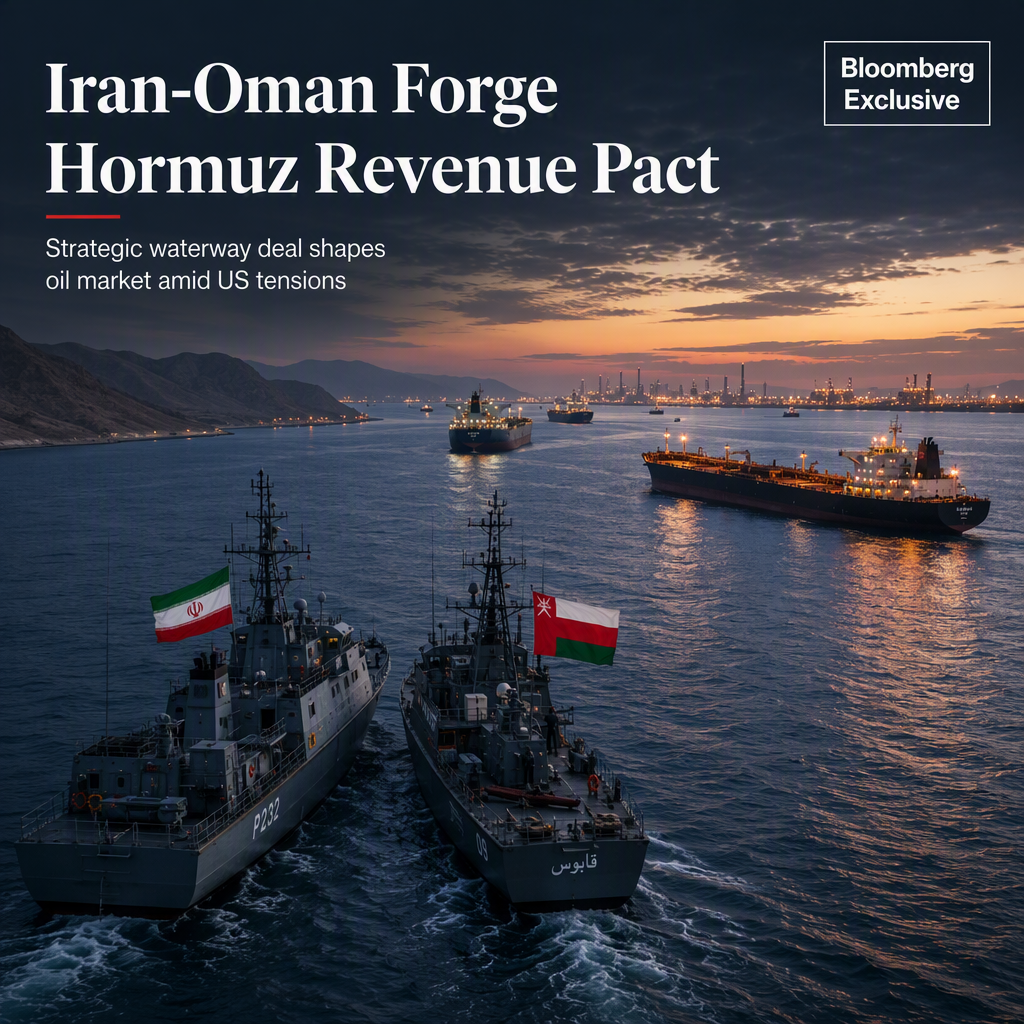
Iran and Oman have reached a revenue-sharing agreement concerning the Strait of Hormuz, according to a statement from the Islamic Revolutionary Guard Corps (IRGC) reported by Bloomberg. IRGC spokesman Hossein Mohebbi announced that the two countries have agreed on each nation's share of the strait's waters as well as their respective shares of revenues generated from the strategic waterway [1].
This development marks a step beyond the joint statement issued by the foreign ministries of Iran and Oman on Tuesday, which only referenced an 'interim framework' for resuming ship transits and did not mention any agreement on fees or revenue sharing. The IRGC also cautioned that reopening the critical waterway would require more than just a deal with Oman, indicating that broader geopolitical issues, particularly the ongoing standoff between Tehran and Washington over control of the strait, remain unresolved [1].
In terms of market reaction, West Texas Intermediate (WTI) crude oil prices rose by 0.72% to $81.32 at the time of reporting, reflecting market sensitivity to developments affecting the Strait of Hormuz, a key chokepoint for global oil shipments [1].
No forward-looking statements or analyst opinions were provided in the article.
CONCLUSION
The revenue-sharing agreement between Iran and Oman on the Strait of Hormuz represents a notable diplomatic development, but broader geopolitical tensions persist. The market responded with a moderate increase in WTI crude oil prices, highlighting the strait's significance to global energy markets. Further progress on reopening the waterway may depend on resolving outstanding issues beyond the bilateral deal.