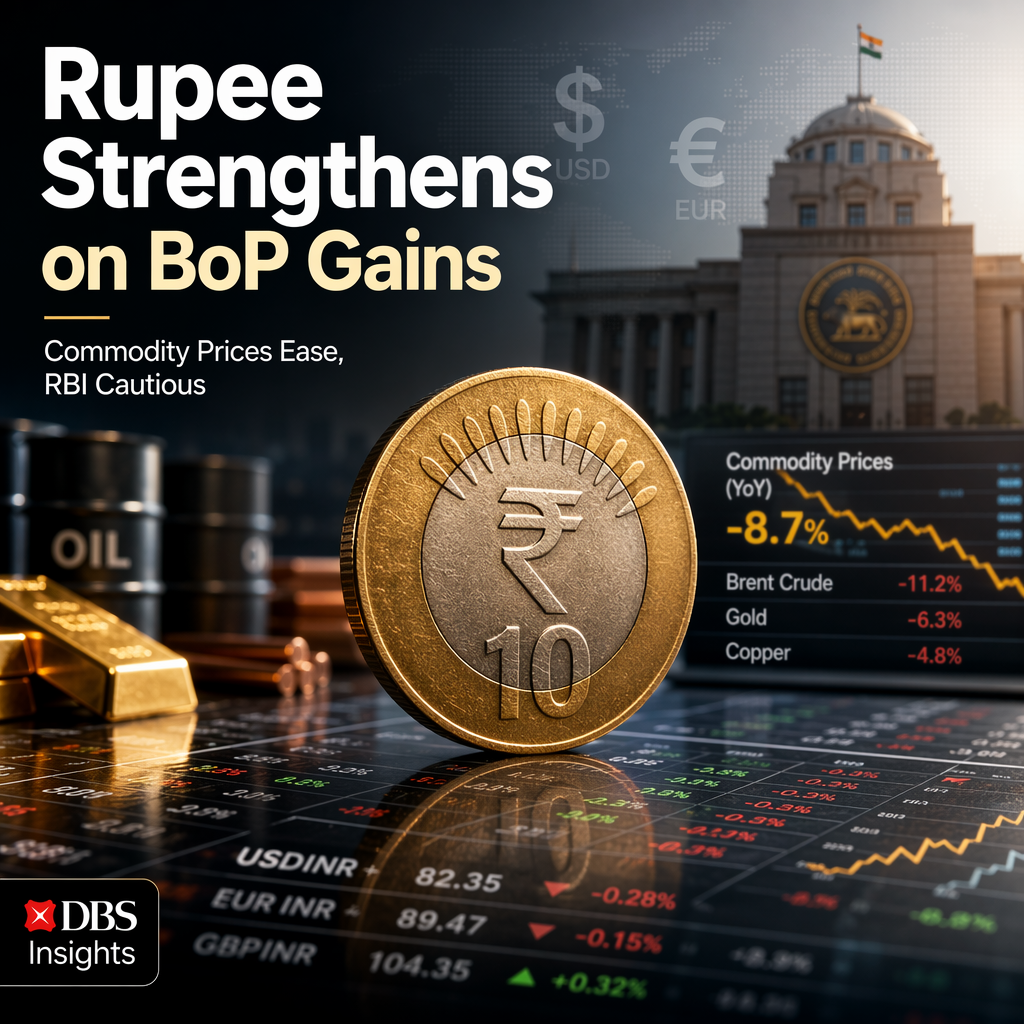
According to DBS economist Radhika Rao, the Indian Rupee (INR) has appreciated, with USD/INR easing towards the mid-94 handle, driven by improvements in India's balance of payments (BoP) and a decline in commodity prices [1]. The near-term outlook suggests the rupee could benefit further from BoP-accretive flows and continued lower commodity prices [1]. However, the downside for USD/INR is limited by the Reserve Bank of India's (RBI) moderation of its forward book (NDF maturities) and a firm US Dollar [1].
DBS expects that, over time, Indian authorities will resume absorbing incremental US dollar inflows to rebuild foreign exchange reserves, which could lead to a gradual upward trend in USD/INR [1]. The bank has revised its rate outlook to an extended pause for the year, reflecting a less aggressive stance on monetary tightening [1].
Domestic bond yields have declined across the curve, attributed to the correction in oil prices and supportive commentary from the RBI in the past week [1]. Expectations for rate hikes have been scaled back following dovish signals from the June Monetary Policy Committee (MPC) minutes and recent remarks by the RBI Governor, who indicated that discussions of rate hikes were premature and would have been signaled by a shift to a tightening stance in June if warranted [1].
CONCLUSION
The Indian Rupee has strengthened on the back of improved BoP and lower commodity prices, with further near-term gains possible. However, the RBI's cautious stance and a firm US Dollar may limit further appreciation, and a gradual upward trend in USD/INR is expected over time.