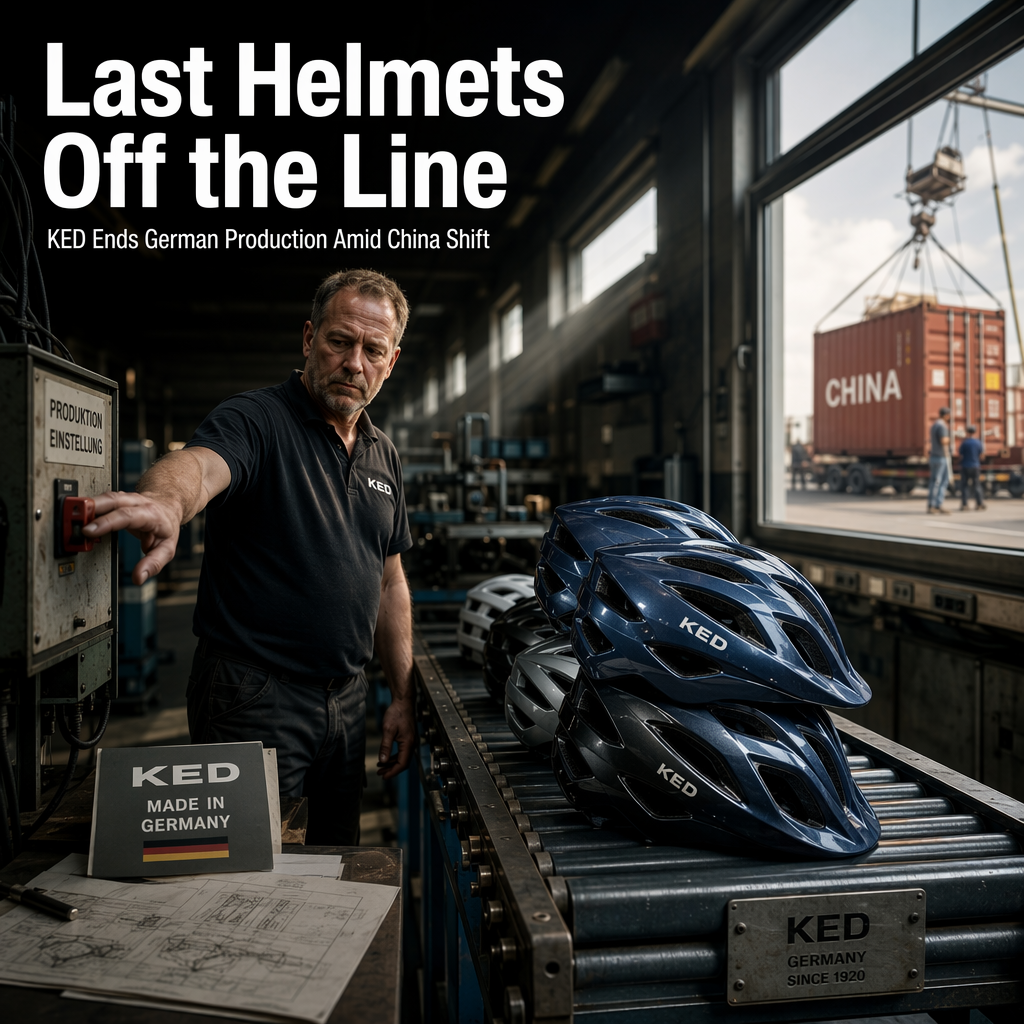
German bicycle helmet manufacturer KED, known for its popularity among families, has announced it will relocate its entire production process to China later this year [1]. This move marks the end of German-based helmet manufacturing, as KED was the last such producer in the country [1]. The decision highlights the ongoing challenges faced by German and European manufacturers in competing with Chinese companies, which benefit from lower labor and production costs, as well as greater production efficiencies [1].
Industry observers cited in the article note that KED's relocation is emblematic of broader issues affecting European manufacturers, including rising energy and labor costs, regulatory burdens, and intensifying competition from Chinese firms supported by economies of scale and government backing [1]. The shift is expected to impact local employment and the supply chain for German-made bicycle components, though no specific figures regarding job losses, production volumes, or anticipated cost savings were provided [1].
The announcement comes amid growing concerns among European policymakers about the continent's reliance on Chinese manufacturing, especially in strategic sectors [1]. The European Union is reportedly considering measures to address the trade deficit with China, which has reached over $1 billion per day, and to bolster domestic manufacturing capabilities [1]. Despite the significance for the local industry, the news has attracted limited international attention, reflecting the normalization of such relocations in the current global economic environment [1].
CONCLUSION
KED's decision to move production to China underscores the mounting pressures on European manufacturers from rising costs and Chinese competition. The shift is expected to affect local employment and supply chains, while also fueling ongoing policy debates about Europe's industrial resilience and trade relations with China.